208 articles
Page 1 of 5
Grafana Cloud's free tier looks cheaper than Honeycomb's until a team adds one high-cardinality field like customer_id. Here's the crossover math that decides which one actually costs less for your traffic.
Garak scans deep like a research tool. Promptfoo runs like a test suite. The real decision isn't about jailbreak coverage — it's about which one survives being wired into a pipeline that runs on every PR.
Two headless browser platforms, two completely different pricing philosophies. One bets on concurrent sessions, the other on connection time, and when autonomous agents start spawning hundreds of short scraping jobs, that difference decides your bill.
Retell AI's pricing page lists one line for 'voice infra' — no visible STT cost. We pulled it apart against Deepgram's Nova-3 rates to see what a 10,000-minute month actually costs each way.
Most comparisons land on 'use both and let them compose.' That answer ignores the real cost of two observability stacks and two upgrade cadences. Here's when picking just one is the correct call.
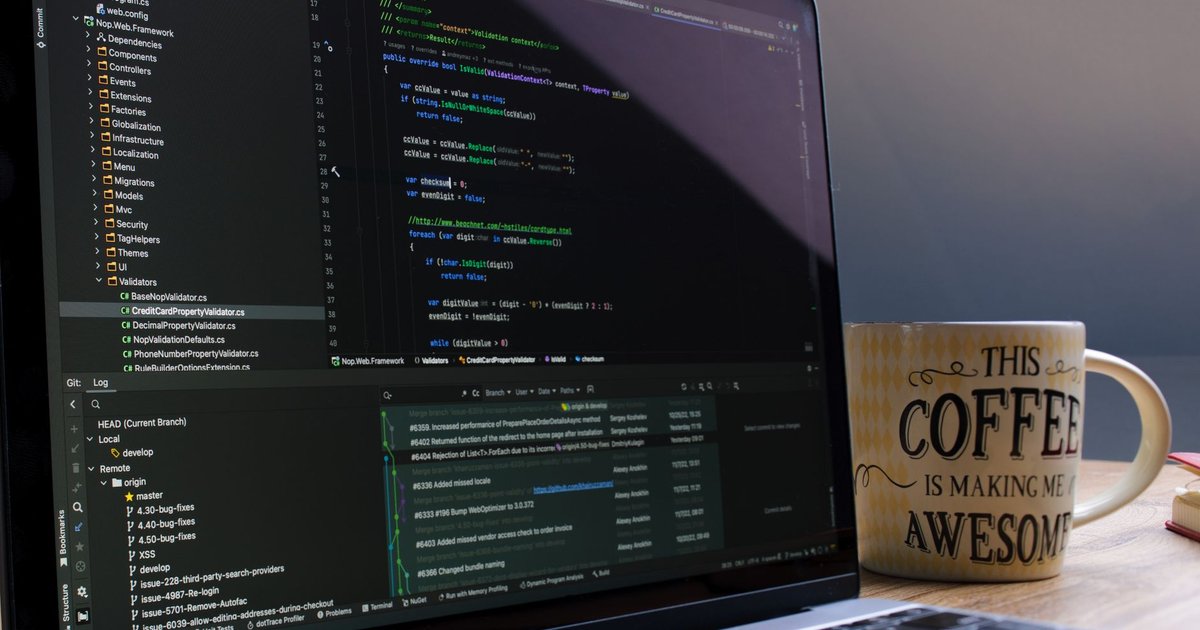
CodeRabbit and Cursor Bugbot both promise to catch bugs before a human reviewer does, but they solve different problems for different teams. The benchmarks each vendor publishes disagree with each other, so the real decision comes down to your editor, your PR workflow, and how your repo's activity maps to cost.

The sales page comparisons won't tell you when enterprise SSO quietly triples your auth bill. This is what the invoice actually looks like at 1,000, 10,000, and 100,000 monthly active users.

Common Room won the generic buyer-intent debate, but PLG dev-tool sellers have a narrower question: who correctly resolves anonymous GitHub stars, pip installs, and CLI runs into a buying committee? Here's where Reo.dev's narrow telemetry bet beats Common Room's broader net, and the threshold for switching.
Framer's AI generator wins the first 60 seconds — a clean marketing page from a one-line prompt. Webflow's AI Assistant wins the next six months, once real content models and dev handoff enter the picture.

Both Suno and Udio sell you a paid tier and a promise of commercial rights. Neither company will fully stand behind a track if a label comes calling. Here's what their actual terms say, and what that means for anyone building a product or ad campaign on top of AI-generated music.

List-price comparisons of Superhuman and Shortwave miss the only question that matters: does the AI triage correctly, or does it quietly bury emails you needed? What each tool's design predicts, and a one-week test to measure it on your own inbox.

Both platforms claim low-latency, natural-sounding voice agents on nearly identical STT/LLM/TTS stacks. But production teams report meaningfully different behavior when a caller interrupts mid-sentence, which matters more than any demo video will show you.

The UI demo always looks clean. The real test is what happens on day two, when you need a users table, a migration, and an auth flow that doesn't break on redeploy. v0 and Replit Agent fail that test in very different, very expensive ways.

Windsurf's compliance page lists SOC 2, HIPAA, and FedRAMP High. Cursor Enterprise lists SCIM and audit logs. One of these is a checklist, the other is a shipped product — here's how to tell which is which before you sign anything.

GPU-hour rates in isolation tell you almost nothing about what Modal or Baseten will actually cost you. The real answer depends on your utilization rate, and the crossover point is narrower than either sales team wants to admit.

Both vendors market an 'AI compliance agent' that flags multi-country hiring risk. We ran a worker misclassification edge case and a benefits-mandate change through both. The gap between the marketing and what gets escalated to a human lawyer is bigger than either sales deck admits.

When Cursor, Devin, or a Copilot workspace spins up a new database branch for every task, your Postgres bill stops behaving like a line item and starts behaving like a variable you have to manage. Here's how Neon and Supabase actually diverge once AI agents enter the workflow.

Run the same dataset through Julius AI twice and you can get two different p-values. Run it through ChatGPT's Code Interpreter across two sessions and the method choice can silently shift too. Neither vendor discloses this, and neither tool is safe for compliance-grade analysis without a deterministic layer underneath.

Gong owns the Zoom sales floor, but door-to-door and home-services reps live in trucks and driveways, not calendar invites. Here's why treating Rilla and Gong as interchangeable misreads the actual capture problem.
Both vendors sell you a cheap entry tier and a dream of unlimited generation. At 1M+ characters a month, the math (and the fine print on cloning slots) tells a different story.

Salesforce sells Agentforce by the conversation, Microsoft sells Copilot Studio by the message. Neither unit maps to what you'll actually pay, so I built a worked cost model for a 10,000-conversation-a-month support agent to find out which one really is cheaper.

Solo creators can live entirely in Descript or entirely in Premiere. Production teams can't — they run a hybrid pipeline, and that handoff has specific, predictable failure points. Here's where the export breaks and how teams route around it.

One Replit user on the $20 Core plan reported a $350 bill in a single day. Another hit $206 in a month from 632 Agent checkpoints and 965 Assistant checkpoints. Here's why checkpoint-based billing behaves nothing like a subscription, and how to model your real exposure before you start a build.

Vanta and Drata both sell 'AI agents' that auto-map compliance evidence, but neither eliminates the manual remediation auditors still demand. Here's what actually happens when their automation meets a real SOC 2 fieldwork request.

The vendor pages show you a 30-second demo clip. Nobody shows you what a custom avatar looks like after 20 minutes of training narration or a mid-sentence language switch. We ran that test.

Motion rewrites your whole day around deadlines; Reclaim quietly slots time blocks around meetings you already have. Here's which approach holds up when your calendar gets messy.

One of these tools sends a visible bot into your Zoom call. The other quietly works off your own microphone. Here's what that difference actually costs you in accuracy, pricing, and enterprise readiness.

n8n charges per workflow execution. Lindy charges per credit consumed per AI action. These are not the same unit, and most comparisons quietly average them into a single number. This post builds the actual cost model and finds the crossover point.

Prototype speed is a solved problem for all three tools. The real question is which lock-in and security-default gap costs you the least once actual users, auth, and billing enter the picture.

A 5-rep sales team doing 3+ hours of daily calls will blow through Fireflies' Pro credit pool and 8,000-minute storage cap within weeks. Here's the actual monthly bill once that happens, compared line-by-line against Fathom's flat pricing.

Both tools promise to turn a text prompt into a working app, but the gap between demo and deployable software shows up fast. Here's what breaks, what holds, and which one an engineering team should actually trust.

Bland AI and Vapi both demo well at low volume. The difference shows up at 10,000 calls a day, when latency, vendor lock-in, and debugging burden decide which stack actually survives.
Attio's real-time data model and AI research agent feel built for how sales teams actually work today. Whether that's enough to justify leaving HubSpot's marketing and service infrastructure behind depends entirely on team size and what you're willing to rebuild.

A board deck has to survive dense data tables, brand-kit scrutiny, and a partner opening your file in PowerPoint at 11pm. We put Gamma and Beautiful.ai through that exact gauntlet to see which one holds up and which one just looks good in the demo.

Cline bills your API key directly with zero markup, Cursor bundles usage into a flat $20/mo plan with overages. This post runs the actual math on Claude Opus and GPT-4 tasks to show where each one wins.

Both vendors market a free tier, but the completion caps, model gating, and burn rate are buried three pages into their docs. Here's what a working developer actually gets before the upgrade prompt shows up.

Every Supabase-vs-Firebase post crowns pgvector the AI-native winner and moves on. The harder question is at what scale that answer flips, and what the migration actually costs when it does.

Everyone's testing Comet and Dia on chat-style demos. Almost nobody is testing whether either one can actually finish a multi-step chore end to end. I ran both through the same tasks to find out.

A client came to me convinced Apollo was cheaper because the invoice said so. Three weeks of match-rate data later, the real cost per verified contact told a different story entirely.

Intercom Fin's per-resolution pricing sounds simple until you look at how 'resolved' is defined. A closer read of the fine print, and the reopen data, suggests many buyers are paying for conversations customers never considered solved.

Airtable sells AI-powered automations as effortless scale, but teams running real operational databases hit sync latency, automation run caps, and AI credit burn long before they touch advertised plan limits. This is what actually breaks, in what order, and when it's time to move to a proper database and workflow stack.

Glean and Guru show up in the same buyer searches and use nearly identical marketing language, but one is an AI search layer over your existing tools and the other is a knowledge base with a chatbot on top. The difference matters more once you look at connector depth and permission handling.