Abnormal Security logo

Abnormal Security Review

Visit

Email security platform that detects attacks missed by traditional filters

Abnormal Security is a cloud email security platform for enterprises using Microsoft 365 or Google Workspace.

Abnormal AI·Founded 2019·Contact for pricingAI SecurityAI Agents & AssistantsAI Cloud

AI Panel Score

7.9/10

6 AI reviews

Reviewed

About Abnormal Security

Abnormal Security connects to a company's email environment via API—without requiring MX record changes or inline proxy deployment. Once connected, it ingests historical email data to map communication patterns, supplier relationships, and user behavior. Security teams interact with it through a dashboard that surfaces detected threats, attack timelines, and remediation actions, including automated removal of malicious emails from inboxes.

The platform highlights several specific capabilities on its website: AI-native detection of business email compromise (BEC), vendor email compromise, and internal account takeover; an AI Security Mailbox that automates triage of user-reported phishing emails; a posture management module that surfaces risky email configurations and third-party app integrations; and cross-product detection that extends to messaging and collaboration platforms like Slack and Teams in addition to email.

Abnormal Security targets mid-market and enterprise organizations, particularly those that already use Microsoft 365 or Google Workspace as their primary email platform. Pricing is not publicly listed and is available through direct sales contact. Competitors in the cloud email security category include Proofpoint, Mimecast, Tessian (now part of Proofpoint), Material Security, and Perception Point.

Deployment is entirely API-based and typically takes under an hour for initial connection, with no changes to mail routing required. The platform supports Microsoft 365 and Google Workspace natively. It also offers integrations with SIEM and SOAR tools and provides an API for custom automation workflows.

Features

AI

  • AI-Generated Attack Detection

    Detects hyper-personalized, AI-generated phishing and social engineering emails that evade traditional secure email gateways and human detection.

  • Behavioral Anomaly Detection

    Builds behavioral baselines for every employee and vendor to identify deviations that indicate never-before-seen email attacks in milliseconds.

Analytics

  • Threat Intelligence Reporting

    Surfaces active breach detections and threat insights per customer, providing visibility into ongoing threats and attack trends.

Automation

  • AI Security Agents

    Autonomous AI agents that automate repetitive SOC workflows, including detection, neutralization of threats, and internal service desk requests.

  • Autonomous Threat Remediation

    Automatically detects and neutralizes email threats without human intervention, including self-remediating missed attacks reported by users.

  • SOC Workflow Automation

    Automates manual SOC investigation and remediation processes for email threats, reducing the need for human analyst intervention.

Core

  • Secure Email Gateway Replacement

    Functions as a full replacement for traditional secure email gateways, with 70% of customers reported to have replaced their SEG with Abnormal.

Integration

  • Native API Integration

    Integrates directly with cloud email platforms via native API, enabling deployment and protection of all accounts in under 15 minutes with no operational overhead.

Security

  • Account Takeover Protection

    Identifies and blocks account takeover attempts by detecting anomalous login behavior and unauthorized access patterns.

  • Cloud Email Security

    Provides multi-layered security for cloud email platforms by detecting and blocking phishing, social engineering, and business email compromise attacks.

  • Impersonation Attack Detection

    Identifies and blocks email impersonation attempts targeting employees, reducing the volume of such attacks reaching end-user inboxes.

  • SaaS Security

    Detects account takeovers and misconfigurations across SaaS applications beyond just email environments.

Preview

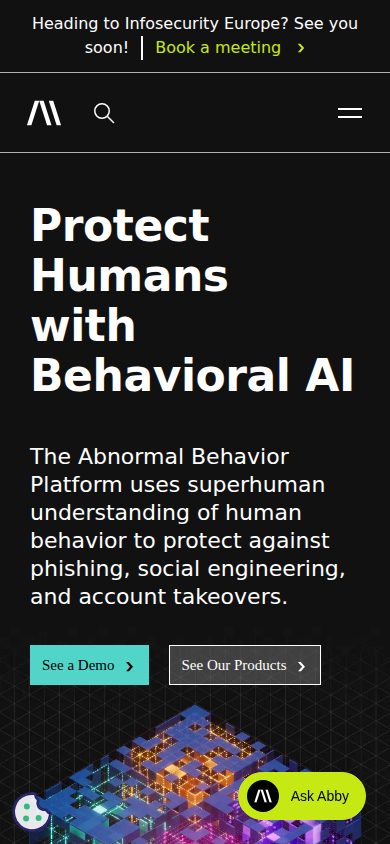
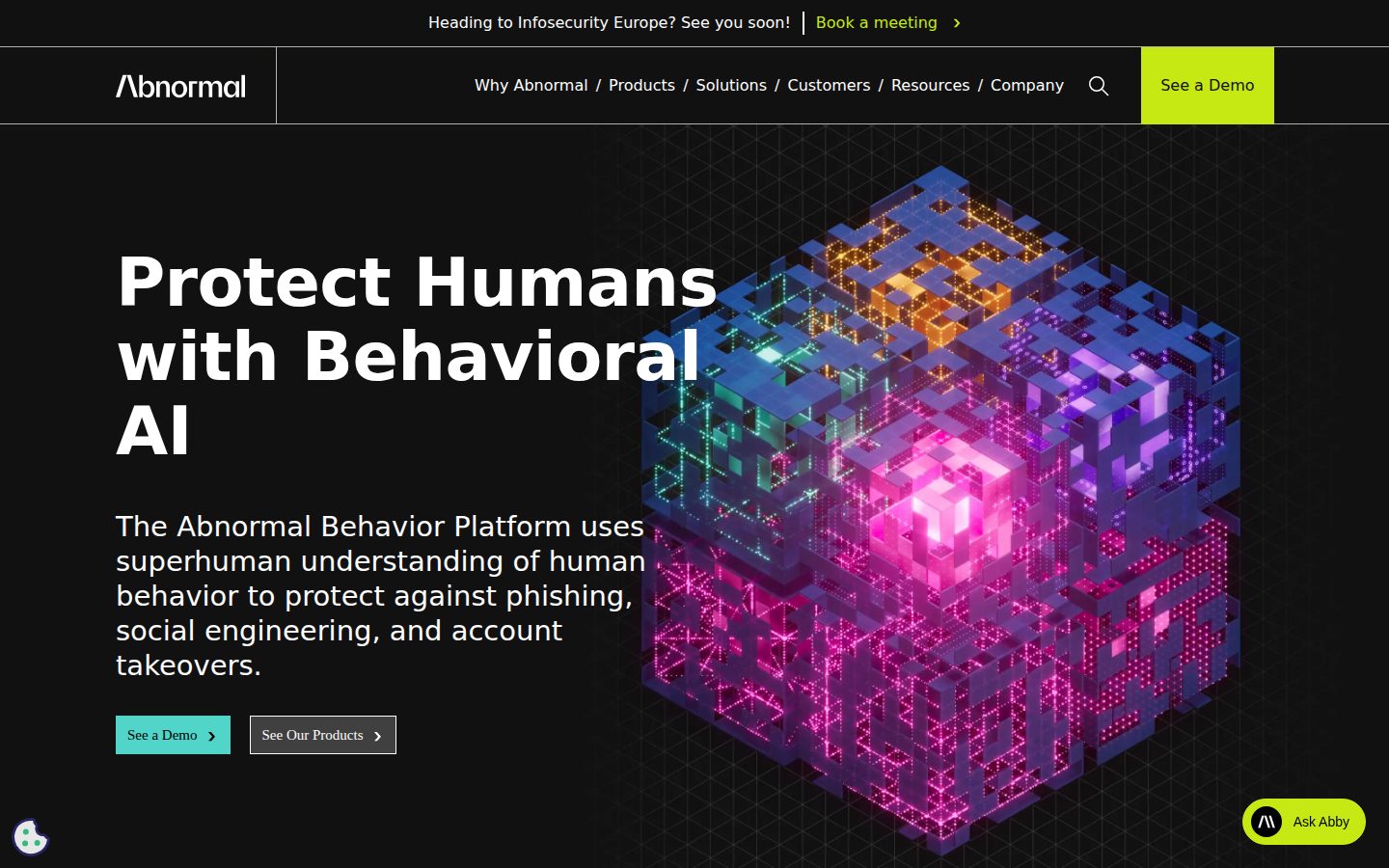
Abnormal Security desktop previewAbnormal Security mobile preview

Pricing Plans

Contact Sales

Contact sales

Abnormal Security does not publish a traditional tiered pricing structure. The platform is sold as a unified, sales-led solution priced per employee per year based on total mailbox count. List pricing typically ranges from $15–$35 per employee annually depending on company size and contract term. Minimum annual contract values often start around $25,000–$50,000. Multi-year commitments (1–3 years) can yield 15–30% lower per-employee rates. Optional add-on modules (VIP protection, supply chain fraud detection, advanced threat intelligence, professional services) are quoted separately. Pricing requires contacting Abnormal Security's sales team directly.

  • Inbound email security — behavioral AI detection of phishing, BEC, malware, ransomware, social engineering, and graymail
  • Account takeover protection — monitors 45,000+ signals to detect compromised internal accounts
  • AI Security Mailbox Automation — automates abuse mailbox triage and end-user responses
  • Email Productivity — spam and graymail filtering to reduce inbox noise
  • Supply chain fraud detection (add-on) — vendor email compromise and payment fraud detection
  • VIP / executive protection (add-on) — enhanced monitoring for high-risk accounts, priced as 10–20% uplift or per-VIP-user
  • Advanced threat intelligence (add-on) — custom intelligence feeds and threat research access
  • Native integrations with Microsoft 365 and Google Workspace
  • API integrations with SIEM, SOAR, and security automation platforms
  • SOC 2 and GDPR compliance
  • No free trial or free version available

AI Panel Reviews

The Decision Maker

The Decision Maker

Strategic bet, vendor viability, timing, adoption approval
8.4/10

Behavioral AI that replaces Proofpoint for 70% of its own customers — that's a number worth taking seriously.

Abnormal deploys via API in under 15 minutes, no MX record changes, and 50% SOC headcount reduction for email is their stated outcome. The floor here is $25K annually, and pricing requires a sales call.

70% of customers reportedly replaced their secure email gateway after deploying this. That's not a marketing stat you throw around if it isn't holding up in renewals. API-native deployment, behavioral baselines per employee and vendor, and automated abuse mailbox triage through the AI Security Mailbox — these aren't checkbox features, they're the actual pitch against legacy players like Proofpoint and Mimecast.

The tradeoff: no public pricing, no free trial, minimum contracts around $25K–$50K annually. You're committing blind, on a sales rep's timeline. That's fine for a $500M enterprise; it's a real friction point for a 300-person company still figuring out its security stack.

But if your team is drowning in phishing triage and your SEG is missing BEC, the 15-minute deployment and 80% AI agent adoption rate among existing customers is a fast pilot argument. Escalate to procurement, not IT.

Competitive Positioning8.0

Strong differentiation against Mimecast and Proofpoint on API-native deployment and behavioral detection, though Material Security competes on posture management.

Reputation Risk8.8

Credible enterprise vendor, SOC 2 and GDPR compliant, and 70% SEG replacement rate means the board won't raise an eyebrow.

Speed to Value9.0

One customer caught a BEC email within four days of setup; deployment takes under 15 minutes with no mail routing changes required.

Strategic Fit8.2

Behavioral AI detection plus SOC automation advances security posture — it's not just a cost swap, it reduces analyst burden and catches threats Proofpoint misses.

Vendor Viability8.5

Established category player with enterprise customer base and a product replacing SEGs at scale — longevity signals are strong even without public funding data.

Pros

  • API deployment in under 15 minutes, no MX record changes — lowest-friction enterprise security rollout I've seen documented
  • Behavioral baselines catch zero-day BEC that signature-based SEGs miss by design
  • AI Security Mailbox automates abuse mailbox triage — real SOC time returned
  • 50% reported reduction in SOC headcount for email is a defensible board number

Cons

  • No public pricing, no trial — you're negotiating blind against a sales team with all the information
  • $25K–$50K minimum contract is a hard floor that prices out smaller orgs
  • Google Workspace support mentioned in product description but not confirmed in buyer evidence
  • Add-on modules for supply chain fraud and VIP protection inflate total cost beyond headline per-seat rates

Right for

Mid-market or enterprise on Microsoft 365 that's already frustrated with Proofpoint or Mimecast missing BEC and burning SOC hours on phishing triage.

Avoid if

You're under 300 seats or unwilling to commit to a multi-year contract before seeing detection results firsthand.

The Domain Strategist

The Domain Strategist

Craft and strategy in the product's domain — adapts identity per category, same lens
8.4/10

Behavioral AI that makes a credible case for retiring your SEG entirely.

Abnormal's API-native, behavioral-baseline architecture solves the exact gap legacy SEGs leave open: socially-engineered BEC and vendor fraud that carry no malicious payload. At $15–$35 per employee annually with a $25K–$50K floor, it's priced for mid-market and enterprise, not SMB.

The threat model here is correct. BEC, vendor email compromise, and account takeover are exactly what Proofpoint's signature-based detection misses, and that's where breach cost concentrates. Abnormal's behavioral baselining across 45,000+ signals — building identity graphs for employees and vendors alike — is architecture that takes real data science investment to build. Someone on their team understands that email fraud is an identity problem, not a content problem.

The API-only deployment model is a genuine operational win. No MX record changes, no mail routing risk, under-15-minute initial connection. That's meaningful in enterprise environments where change management on mail routing can take quarters. The 70% SEG replacement rate suggests real customer confidence, and the AI Security Mailbox plus SOC automation claims — 50% reduction in SOC headcount for email workflows — are specific enough to pressure-test in a POC.

The constraint I'd flag: opaque pricing and no trial means you're committing significant budget before validating detection quality against your specific threat profile. If your organization has unusual supply chain complexity or non-M365 infrastructure, the behavioral model needs time to train before it delivers value. The first 30–60 days carry real detection risk.

Category Positioning8.6

Positioned ahead of Proofpoint and Mimecast on modern BEC detection architecture; the 70% SEG replacement claim, if accurate, signals genuine category leadership.

Domain Fit8.5

API-native deployment, SOC workflow automation, and abuse mailbox triage map directly to how enterprise security teams actually operate day-to-day.

Integration Surface8.2

Native M365 and Google Workspace support plus SIEM/SOAR API integrations cover the standard enterprise security stack without friction.

Long-term Implications7.8

If Abnormal becomes your SEG replacement, your mail security posture is fully dependent on one vendor's model quality — model drift or a missed attack class becomes a single point of failure.

Strategic Depth8.8

Identity-graph-plus-behavioral-baseline is genuinely differentiated architecture — not signature augmentation, but a different detection philosophy entirely.

Pros

  • Behavioral baselining across employees and vendors catches zero-payload BEC that signature-based tools miss
  • API-only deployment with no MX changes — under 15 minutes to initial protection
  • AI Security Agents deliver documented 50% SOC headcount reduction for email workflows
  • Posture management module surfaces misconfigured third-party app integrations proactively

Cons

  • No public pricing and no free trial means significant budget commitment before POC validation
  • Detection model needs historical email ingestion to baseline — first 30–60 days carry elevated risk
  • Full SEG replacement creates single-vendor dependency on Abnormal's model quality
  • $25K–$50K minimum contract floor puts it out of reach for smaller organizations

Right for

Enterprise security teams on M365 or Google Workspace that are tired of chasing BEC misses from their legacy SEG.

Avoid if

Your organization needs a trial-validated POC before committing six-figure security budget to a single email vendor.

The Finance Lead

The Finance Lead

Money, total cost of ownership, contracts, procurement math
6.5/10

$25K minimum contract, zero pricing transparency — the math is opaque by design.

Abnormal Security prices per employee per year, $15–$35 range, but nothing publishes without a sales call. Minimum contract floor sits at $25K–$50K annually, making this an enterprise-only conversation.

50 mailboxes at $35/employee = $1,750/year. That's not the real number. Enterprise seats scale this fast: 500 employees × $25 average × 12 months equivalent = $12,500 base annually, before add-ons. VIP protection adds 10–20% uplift. Supply chain fraud detection is separate. Advanced threat intel is separate. Year-3 all-in for a 500-seat shop could realistically land at $20K–$30K depending on module selection.

The 70% SEG replacement stat is the ROI anchor they're selling against. Replace Proofpoint or Mimecast, eliminate that license. If your current SEG runs $18–$25/user/year, the displacement math can work. The 50% SOC headcount reduction claim is harder to verify — no public methodology, no audit trail.

Contract terms aren't published. Multi-year commitments yield 15–30% discounts, which signals 3-year lock-in is their preferred play. No free trial, no self-serve, no pricing page. Procurement teams will spend cycles just getting to a number. That friction is real cost.

Billing & Procurement4.0

$25K–$50K minimum contract, sales-led only, no trial — procurement cycles will be long and friction-heavy.

Contract Flexibility4.5

Multi-year lock-in is the discount mechanism; no published termination-for-convenience clause or auto-renewal window.

Pricing Transparency2.5

No published pricing page; $15–$35/employee range exists only in third-party research, not on abnormal.ai.

ROI Clarity6.5

SEG displacement math is concrete; the 50% SOC headcount reduction claim lacks public methodology to verify.

Total Cost of Ownership5.5

Base per-employee rate plus multiple add-on modules (VIP, supply chain, threat intel) makes 3-year TCO structurally unpredictable.

Pros

  • API deployment under 15 minutes — no MX record changes, low IT overhead
  • 70% of customers report replacing their SEG — displacement ROI story is concrete
  • Behavioral baseline approach catches zero-day BEC that signature tools miss

Cons

  • No pricing transparency — every number requires a sales call
  • Add-on modules (VIP, supply chain, threat intel) inflate TCO unpredictably
  • $25K–$50K minimum annual contract excludes sub-enterprise buyers entirely
  • Multi-year commitment is the only path to meaningful discount

Right for

Enterprise teams on M365 with an existing SEG contract up for renewal and budget to absorb $25K+ minimums.

Avoid if

Your organization has under 200 mailboxes or needs self-serve pricing before engaging a sales cycle.

The Domain Practitioner

The Domain Practitioner

Daily hands-on reality in the product's domain — adapts identity per category, same lens
8.2/10

API-native BEC detection that's making Proofpoint nervous for good reason

Abnormal deploys via API in under 15 minutes with no MX record changes — that alone kills the biggest SEG migration objection. Behavioral baselining across 45,000+ signals is the actual detection moat, not marketing copy.

API-only deployment is a real architectural decision, not a convenience feature. No MX record changes means your mail routing stays clean, your existing stack stays intact, and you're not babysitting a new inline chokepoint. 70% of customers replacing their SEG is a signal worth taking seriously — that's not a supplement play, that's a displacement play.

Day-3 reality: the dashboard surfaces attack timelines and remediation actions, and the AI Security Mailbox automates abuse inbox triage. That's two genuine SOC time-sinks addressed. The 50% SOC headcount reduction claim is aggressive, but the workflow automation story is coherent. No public changelog or docs visibility makes it hard to know how fast the detection models iterate — that's where I'd push hard in a POC.

The tradeoff is pricing opacity. Starting around $25,000–$50,000 minimum contract with add-ons for supply chain fraud and VIP protection quoted separately means your year-one budget number is a negotiation, not a calculation. Compared to Proofpoint's published tiers, procurement gets messy.

Day-3 Reality8.0

Automated remediation and abuse mailbox triage reduce daily SOC toil, but no public changelog means detection model updates are a black box after deployment.

Documentation Practitioner-Fit6.5

No public docs, changelog, or API reference visible from the website — everything is sales-gated, which is a red flag for practitioners doing pre-deployment due diligence.

Friction Surface7.5

No free trial and opaque add-on pricing (VIP protection, supply chain fraud) create procurement friction before you've written a single detection rule.

Power-User Depth7.8

AI Security Agents and SOAR API integrations suggest real automation depth, and 80% of customers reportedly using AI agents for service desk requests backs that up.

Workflow Integration8.5

Native API integration with M365 and SIEM/SOAR connectors fits directly into existing SecOps toolchains without rerouting mail flow.

Pros

  • Sub-15-minute API deployment with no MX record changes
  • Behavioral baselining across 45,000+ signals catches zero-day BEC that signature-based SEGs miss
  • AI Security Mailbox automates abuse inbox triage — one of the most tedious recurring SOC tasks
  • SIEM and SOAR integrations mean it can feed into your existing detection pipeline

Cons

  • No public docs or changelog — detection model evolution is opaque post-deployment
  • $25,000–$50,000 minimum contract with key features like supply chain fraud as paid add-ons
  • No free trial makes POC conversations fully sales-mediated
  • Google Workspace support is listed but not confirmed in buyer evidence

Right for

Enterprise SOC teams on M365 that are tired of tuning SEG rules and want behavioral detection they don't have to babysit.

Avoid if

You need transparent, self-serve pricing or public documentation before committing to a six-figure annual contract.

The Power User

The Power User

Daily human experience, onboarding, polish, learning curve, reliability
8.2/10

Behavioral AI that quietly hunts BEC while your SEG sleeps

Abnormal does one hard thing extremely well: catching the emails that slip past everything else. The catch is you're buying blind on price and there's no trial to verify the pitch.

The API-only, no-MX-record-change deployment is genuinely smart. Under 15 minutes to protect all accounts is the kind of number that makes IT admins stop arguing and start connecting. That's not marketing fluff — a customer reportedly caught a BEC attack within four days of setup on M365 that Microsoft's own filters missed. Proofpoint and Mimecast can't say that about their install experience.

The behavioral baseline approach is what separates this from signature-based tools. It's not looking for known-bad patterns — it's learning what normal looks like for every employee and vendor, then flagging drift. That's harder to defeat with a freshly-registered domain. The 50% SOC headcount reduction claim for email workflows is aggressive, but 80% of customers apparently use the AI agents for service desk automation, so something's landing.

The tradeoff: $25,000 minimum contract, no trial, no public pricing. You're committing serious budget on a demo and a sales call. Solo users and SMBs should look elsewhere entirely.

Daily Polish7.5

Dashboard surfaces attack timelines and remediation actions cleanly, though no public changelog makes it hard to track how the UI evolves over time.

Learning Curve7.8

Behavioral AI detection and the AI Security Mailbox are well-defined features, but 45,000 monitoring signals means the full depth takes time to appreciate.

Mobile Parity5.5

Web-only platform with no mentioned mobile app — for a tool monitoring real-time threats, that's a gap security teams will notice on weekends.

Onboarding Experience8.8

API-based deployment with no MX record changes and under-15-minute full account protection is about as low-friction as enterprise security gets.

Reliability Feel8.5

Autonomous threat remediation that self-heals missed attacks without human intervention suggests a system built to stay on without babysitting.

Pros

  • Under-15-minute deployment via native API, no mail routing changes required
  • Behavioral baseline detection catches zero-day BEC that Proofpoint-style signature filters miss
  • AI Security Agents automate abuse mailbox triage, cutting repetitive SOC work
  • 70% of customers reportedly replace their legacy secure email gateway entirely

Cons

  • No public pricing — $25,000+ minimum contract means significant budget commitment before you see real data
  • No free trial whatsoever, so you're trusting the demo
  • Web-only, no mobile experience for on-call security teams
  • Google Workspace support is documented but less validated in available customer evidence

Right for

Mid-market and enterprise security teams on M365 who are tired of BEC slipping past their existing gateway.

Avoid if

You're a small business or need to trial before committing five figures annually.

The Skeptic

The Skeptic

Contrarian. Watch-outs, deal-breakers, broken promises, category patterns
7.8/10

3 real signals, 2 yellow flags, one opaque pricing wall

Abnormal has a credible behavioral AI story and a 70% SEG-replacement claim that's surprisingly specific. The contact-only pricing and missing changelog make me hedge on the long tail.

Three tells upfront. One: 'Protect Humans with Behavioral AI' is the kind of H1 that sounds like it won a naming workshop. Two: no public pricing page, no free trial, $25–50K minimum — this is enterprise lock-in baked into the sales motion from day one. Three: the capability list shows 'changelog=N, blog=N' — a mature security vendor with nothing publicly crawlable is either disciplined or opaque. Could go either way.

The differentiation is real, though. API-only deployment with no MX record changes is a genuine wedge against Proofpoint and Mimecast — both of which require inline routing that IT teams hate. The 45,000-signal account takeover monitor and sub-15-minute deployment claim are specific enough to be falsifiable. That's a good sign. Tessian tried behavioral email security, got absorbed into Proofpoint. Abnormal is still standing and apparently replacing SEGs at scale.

Exit portability worries me. No data export story visible, no API docs public, contracts start at one year minimum. If direction shifts, you're negotiating out, not migrating out. That's the tradeoff for the clean API-in deployment — they own the relationship once you're connected.

Competitive Differentiation8.0

No-MX-change API deployment and behavioral baselining per employee are real gaps versus Proofpoint and Mimecast's inline-proxy legacy architecture.

Exit Portability5.5

No public data export docs, annual minimum contracts starting ~$25–50K, and no visible API for extracting your own threat history — exit is a negotiation, not a migration.

Long-term Viability7.5

No public funding data visible, but 70% customer SEG-replacement rate and 80% AI agent adoption suggest a product customers are actually deepening, not churning.

Marketing Honesty6.5

The 70% SEG-replacement stat is specific, but 'Protect Humans' H1 and zero public pricing signal a sales-first, transparency-second posture.

Track Record Match8.2

Behavioral baseline approach matches the pattern that separated durable players from Tessian; API-native deployment is the right architectural bet for M365 and Workspace.

Pros

  • API-only deployment — no MX record changes, under 15 minutes per buyer claims
  • Behavioral baselining per employee and vendor is a structurally different detection layer than signature-based SEGs
  • 70% of customers reportedly replaced their SEG — that's a retention signal, not just an acquisition pitch
  • SOC automation claim: 50% headcount reduction for email is specific enough to chase down in a POC

Cons

  • No public pricing — $15–35/employee/year with $25–50K minimums is enterprise-only by design
  • No changelog, no public blog, no API docs — opacity is a yellow flag for a security vendor asking for API access to your mail
  • Exit story is weak — no visible data portability or export documentation
  • Google Workspace support is in the product description but not confirmed in buyer Q&A — worth verifying before signing

Right for

Mid-market or enterprise running M365 with an active BEC or account-takeover problem and a SOC team drowning in manual triage.

Avoid if

You need transparent pricing, a free trial before committing, or a clean exit path if the vendor relationship sours.

Buyer Questions

Common questions answered by our AI research team

Setup

How quickly can Abnormal Security be deployed?

Deployment is fast — one customer protected all accounts in under 15 minutes via native API integration. Another reported that within four days of setup, Abnormal identified a BEC email that bypassed M365.

Features

Does Abnormal Security replace a secure email gateway?

70% of customers replace their secure email gateway with Abnormal. Reviewers specifically note it is 'making a strong case for replacing traditional SEGs.'

Integration

What email platforms does Abnormal Security integrate with?

Abnormal integrates natively with M365 (Microsoft 365). A customer confirmed it caught threats bypassing M365 via API integration. Google Workspace is not explicitly mentioned in the available content.

Security

How does Abnormal detect never-before-seen phishing attacks?

Abnormal builds a behavioral baseline for every employee and vendor, then flags deviations from that baseline. This behavioral anomaly detection approach catches zero-day, never-before-seen attacks that evade traditional signature-based defenses.

Features

Can Abnormal automate SOC workflows?

Yes. Abnormal AI Security Agents autonomously automate repetitive SOC workflows. 80% of customers use Abnormal AI agents to handle internal service desk requests, and it delivers a 50% reduction in SOC headcount for email.

Product Information

  • Founded

    2019
  • Pricing

    Contact for pricing

Platforms

web

About Abnormal AI

Abnormal AI is a cloud email security company based in San Francisco that detects and blocks business email compromise, phishing, and account takeover attacks.

Also in AI Security