Real-time AI guidance for customer-facing phone conversations
Cogito is an AI platform that provides real-time behavioral coaching and analytics for contact center agents during live calls.
AI Panel Score
6 AI reviews
Reviewed
Cogito is a real-time AI conversation intelligence platform designed for enterprise contact centers. It listens to live phone calls and uses behavioral science and machine learning to detect conversational cues — such as speaking pace, tone, and emotional signals — from both the agent and the customer. Based on these signals, the platform delivers instant on-screen prompts to agents, helping them adjust their approach mid-conversation.
The platform is built primarily for large-scale contact center operations in industries such as insurance, financial services, and healthcare. It integrates with existing telephony and CRM infrastructure, allowing organizations to layer AI-driven guidance on top of their current workflows without replacing core systems.
Key capabilities include real-time agent guidance, supervisor dashboards for live monitoring of call quality, and post-call reporting. The behavioral analytics surfaced by Cogito are intended to help managers identify coaching opportunities, track agent development over time, and measure the emotional quality of customer interactions at scale.
Cogito positions itself in the contact center AI market alongside conversation intelligence and quality assurance tools. Its differentiation lies in the real-time, in-call nature of its guidance rather than purely post-call analysis, which is the more common approach among competing platforms.
The product is sold as an enterprise solution, and pricing is not publicly listed. Organizations typically engage with Cogito through a sales process, and deployment is tailored to the size and technical environment of each contact center.
Detects empathy gaps when caller distress signals are not matched by agent response patterns, prompting acknowledgment cues before the conversation breaks down.
Live in-call cues prompt agents on tone, pacing, and energy when conversations drift from optimal patterns — coaching delivered during the call, not in post-mortem.
Real-time feedback when agents speak too fast for caller comprehension or too slow to maintain engagement, calibrated to call type and caller demographics.
Continuous sentiment scoring of caller emotional state with shift detection; alerts supervisors to escalating frustration before customers churn or escalate.
Continuous quality scoring across thousands of conversational signals replaces sample-based QA, giving 100% call coverage instead of 1-3% audit samples.
Aggregated metrics on agent skill development, coaching opportunities, and customer experience trends across call types and demographics.
Real-time dashboard showing agents needing intervention, with conversation context and recommended supervisor actions before the customer disconnects.
PCI-redaction during voice processing, GDPR-compliant data handling, and SOC 2 Type II certification for regulated-industry deployments.
Bidirectional integration with Salesforce, Microsoft Dynamics, and ServiceNow to surface insights in agent and supervisor workflows.
Native integrations with Genesys, NICE CXone, Five9, Avaya, and Cisco Webex Contact Center for in-line voice analysis without disrupting call flow.
Cogito sells exclusively to large contact centers; pricing is per-agent-per-month with custom volume discounts and an annual commitment. Contact sales for a tailored quote.
Real-time call coaching is a real differentiator, but the domain is offline.
“Cogito's real-time behavioral coaching during live calls is genuinely differentiated versus post-call-only tools like Gong. The website is listed for sale on a domain registrar, which is the loudest red flag I've seen this quarter.”
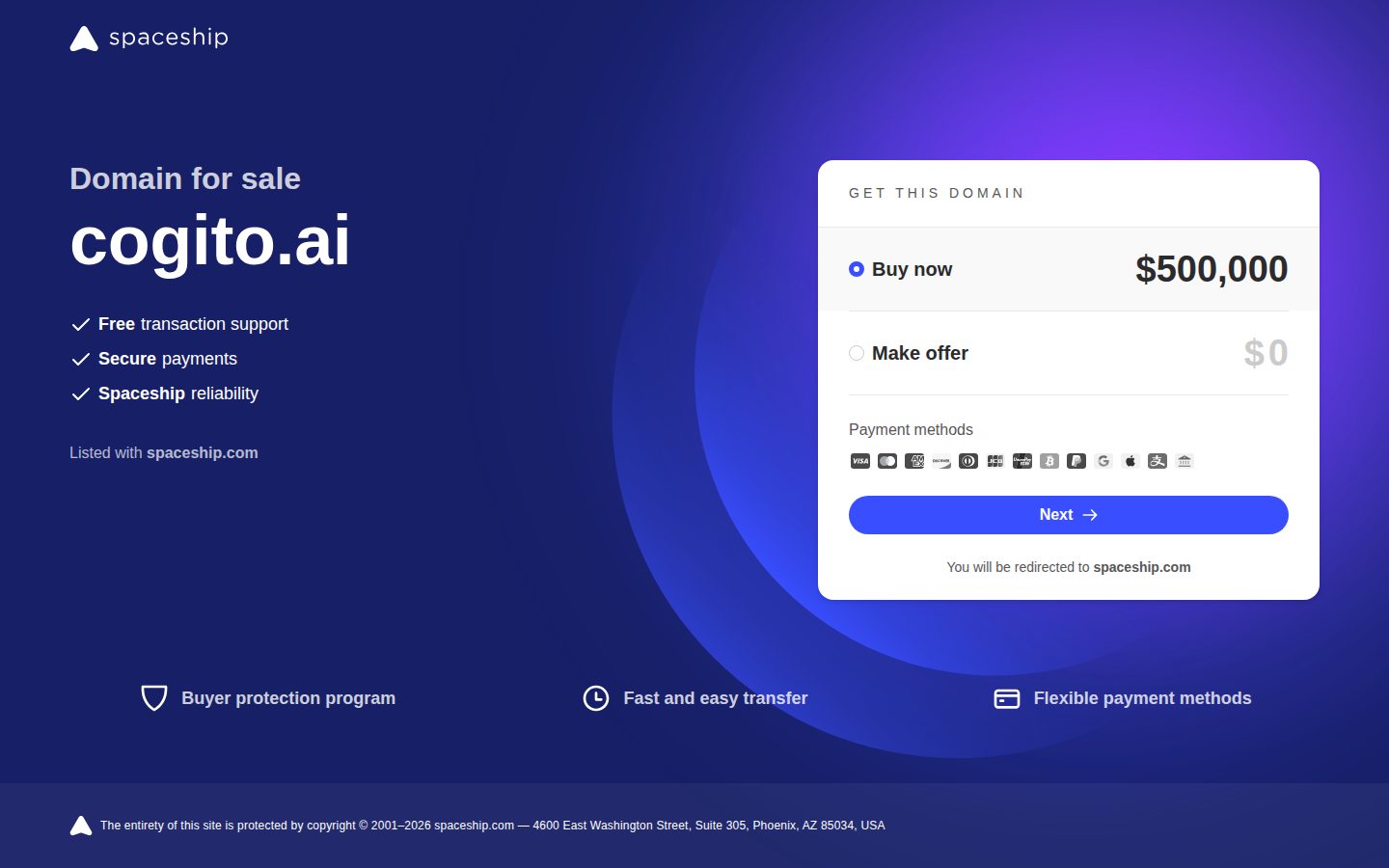
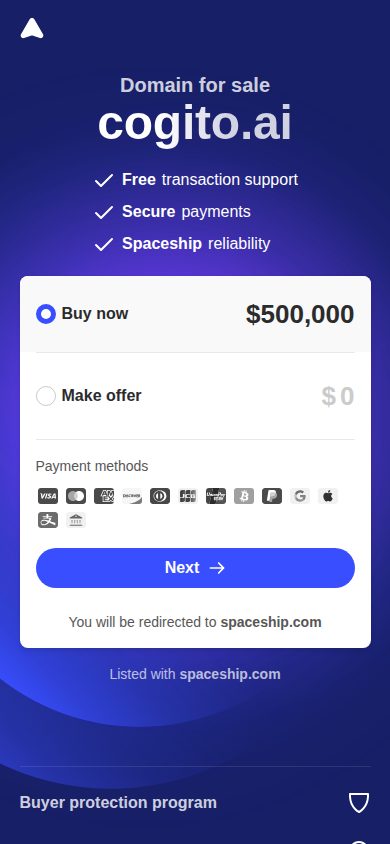
The domain cogito.ai is for sale on Spaceship.com. That's not a footnote — that's the review. Either the company let it lapse, pivoted, or sold. No docs, no changelog, no pricing page. I can't tell you they exist today with confidence.
If the product itself is live under different infrastructure, the capability set is compelling. Real-time empathy alerts and speaking pace guidance during active calls — not post-mortem — is where they beat Gong and Chorus. 100% call coverage versus the industry's 1-3% audit sample is a real number that boards understand.
The tradeoff: this is enterprise-only, custom-priced, no trial, annual commitment. You're signing a meaningful contract before you see a single prompt. Pilot before you commit anything. And verify the company is still operating before you get on a call with sales.
In-call real-time coaching versus Gong's post-call analysis is a genuine differentiator; SOC 2 Type II and PCI redaction make it defensible in regulated industries.
Explaining to the board that your AI vendor's domain was for sale at signing is not a conversation anyone wants to have.
Enterprise-only, no trial, custom deployment against Genesys or NICE CXone — value is real but timeline to first outcome is months, not weeks.
Real-time Agent Empathy Alerts and 100% Dynamic Call Scoring advance contact center quality beyond what any post-call-only tool delivers.
The primary domain is listed for sale on Spaceship.com — no public funding data, no docs, no changelog; existential uncertainty.
A large enterprise contact center in insurance or healthcare already on Genesys or NICE CXone that can verify the company is still operating.
You need a vendor you can vet through public docs, a trial, or a live website before committing.
Real-time behavioral coaching fills the gap every post-call QA tool leaves open.
“Cogito targets the moment that actually matters — the live call — instead of the post-mortem analysis that Gong and Chorus are built around. For enterprise contact centers in insurance, financial services, or healthcare, that timing difference is the whole game.”
100% call coverage via Dynamic Call Scoring versus the industry-standard 1-3% QA sample is the number that wins budget conversations. That's not a marginal improvement — it's a structural shift in how you run quality programs. Agent Empathy Alerts and Speaking Pace Guidance are the kind of in-call interventions that take six months of coaching to approximate manually.
The integration surface is genuinely enterprise-grade: Genesys, NICE CXone, Five9, Avaya, Cisco Webex on the telephony side; Salesforce, Dynamics, and ServiceNow on the CRM side. SOC 2 Type II plus PCI voice redaction means regulated-industry deployments won't stall in InfoSec review. If your center already runs one of those platforms, the deployment story is credible.
The tradeoff is opacity on pricing and a no-trial, sales-only motion — a 500-seat pilot requires full sales cycle commitment before you see behavior change data. The domain.ai website appearing as a Spaceship parked domain raises a continuity flag worth checking in vendor diligence.
Cogito occupies the real-time coaching lane while Gong and Chorus anchor post-call analysis — differentiated positioning, though that lane requires continued investment to stay ahead of CCaaS platforms building native AI guidance.
Supervisor Live Monitoring dashboards with recommended intervention actions match exactly how contact center ops leaders structure their floor management workflows.
Native support for Genesys, NICE CXone, Five9, Avaya, and Cisco Webex covers the dominant CCaaS installed base; bidirectional Salesforce and ServiceNow sync closes the CRM loop.
If we adopt this, in 3 years our QA program and coaching cadence are architecturally dependent on Cogito's behavioral models — migration would mean rebaselining every performance benchmark we've built.
Real-time behavioral science layered on voice — not just transcription QA — reflects genuine platform depth; Agent Empathy Alerts and Dynamic Call Scoring go beyond what category-standard tools ship.
Enterprise contact centers in regulated industries running 200-plus agents who've hit the ceiling on what post-call QA can improve.
Your center runs under 100 agents or needs a self-serve evaluation path before committing budget.
Real-time coaching is differentiated; zero pricing transparency is a procurement tax.
“Cogito's real-time behavioral coaching during live calls is a genuine differentiator over post-call-only tools like Observe.AI. No public pricing, no trial, annual commitment — procurement cost is real before a dollar is spent.”
No pricing page. No trial. No free tier. Every number requires a sales call. Per-agent-per-month structure is category standard, but without a sticker price, budgeting is guesswork. At a 500-agent contact center, even a $30/agent/month rate lands at $180K/year. Add 20% seat creep, enterprise integration fees for Genesys or NICE CXone, and year-3 TCO is likely $250K–$300K before internal IT cost.
The feature set is legitimate. 100% call coverage via Dynamic Call Scoring versus the industry-standard 1–3% QA audit sample is a real ROI lever. Agent Empathy Alerts and Speaking Pace Guidance address in-call outcomes, not lagging indicators. SOC 2 Type II and PCI redaction cover regulated-industry requirements.
The domain is listed for sale on Spaceship.com — that's a procurement red flag, full stop. Verify the vendor's operational status before any contract. Annual commitment with no published termination clause means negotiating exit terms before signing is non-negotiable.
Sales-only process, no trial, and a domain-for-sale signal make procurement diligence high-friction and high-risk.
Annual commitment is stated; no public termination-for-convenience or auto-renewal window disclosed.
Zero public pricing; the domain appears listed for sale, compounding the opacity.
100% call coverage versus 1–3% QA sampling is a concrete, measurable improvement with a defensible dollar story.
Per-agent annual model with enterprise telephony integration fees suggests high TCO, but no data to model accurately.
Large regulated-industry contact centers (500+ agents) already on Genesys or NICE CXone with budget for enterprise AI and internal IT integration capacity.
You need pricing before a sales call, a trial before commitment, or any flexibility in contract exit terms.
Real-time empathy prompts during live calls — finally something that helps before the damage is done
“Cogito puts behavioral coaching on-screen mid-call, not in a post-mortem debrief that nobody remembers. The enterprise-only deployment and opaque pricing are real barriers, but the core workflow proposition is genuinely different from what most QA tools offer.”
Most QA tools analyze yesterday's calls. Cogito's Real-Time Behavioral Coaching fires during the call — tone drift, pacing issues, empathy gaps flagged before the customer asks for a supervisor. That's the actual workflow win. For anyone who's sat through a debrief reviewing a call they can't change, the difference is obvious.
The Dynamic Call Scoring replacing 1-3% audit samples with 100% coverage is the number that matters most for floor supervisors. Supervisor Live Monitoring also shows which agents need intervention before the call ends — that's a genuine step up from Observe.AI or CallMiner's post-call dashboards. Integrations with Genesys, Five9, and NICE CXone suggest real telephony engineering, not a screen-pop hack.
Tradeoff is real: no pricing page, no free trial, no docs visible — the website domain appears to be parked for sale, which is a concerning signal for anyone evaluating procurement stability. Built for 500-seat enterprise floors, not a 12-person support team.
Real-time prompts during live calls address the moment that matters, but no trial access and opaque deployment mean day-3 reality is fully hidden behind a sales process.
No accessible docs, changelog, or blog found — the main domain shows a parking page, which makes independent practitioner evaluation nearly impossible.
In-call screen prompts can become alert fatigue if calibration is off — the docs indicate no self-serve tuning controls are visible, which means relying on implementation teams for adjustments.
100% call coverage via Dynamic Call Scoring and Post-Call Performance Analytics suggest real depth for senior QA analysts, but discoverability can't be confirmed without accessible documentation.
Native integrations with Genesys, NICE CXone, Five9, Avaya, and Cisco Webex plus Salesforce/Dynamics/ServiceNow CRM sync indicate genuine infrastructure fit rather than a parallel workflow.
Large enterprise contact centers in regulated industries already running Genesys or NICE CXone who need real-time agent guidance at scale.
Your floor has fewer than 100 agents or you need to evaluate the tool independently before engaging sales.
Real-time call coaching that actually works mid-conversation, not just post-mortem
“Cogito does something most contact center AI tools don't — it coaches agents during the call, not after the damage is done. Enterprise-only, no trial, no public pricing, but the core capability is genuinely differentiated.”
The thing that stands out about Cogito is the timing. Most competitors — Gong, Chorus, even NICE's own analytics layer — are post-call tools. You get the debrief after the customer already hung up frustrated. Cogito is listening live and nudging agents in the moment. The Agent Empathy Alerts feature, which detects when a caller's distress isn't being matched by the agent, is the kind of thing that could genuinely move CSAT numbers at scale.
The 100% call coverage claim via Dynamic Call Scoring is worth flagging. Traditional QA audits hit maybe 1-3% of calls. That gap is where problems hide. A supervisor dashboard showing live intervention cues before a call goes sideways is the other piece that makes this feel like a real operational tool, not just a reporting layer.
The tradeoff is real though: zero self-serve entry point. No free trial, no pricing page, no demo without a sales call. If you run a 20-seat support team, this isn't for you. The domain situation — cogito.ai apparently for sale on Spaceship — is a legitimate red flag for diligence. That's the kind of thing you notice on day three.
The feature set — real-time cues, supervisor dashboards, CRM integrations with Salesforce and Dynamics — suggests a mature product, but no public UI evidence and a domain for sale make daily polish hard to verify.
Native integrations with Genesys, Five9, Avaya, and Cisco Webex suggest the platform layers onto existing workflows rather than replacing them, which flattens the ramp for agents.
Web-only platform; for a tool built around live call guidance delivered to agents at desktops, mobile parity isn't the core use case — but it's essentially absent.
No free trial, no self-serve access, enterprise-only sales process — onboarding starts with a contract negotiation, which is homework before the first day.
SOC 2 Type II certification and PCI-redaction during voice processing are real credibility signals for regulated industries like insurance and healthcare.
Large enterprise contact centers in insurance, healthcare, or financial services that need live agent coaching at scale.
You run a smaller support team or need transparent pricing and a trial before committing.
Real domain is for sale. That's the whole review.
“The cogito.ai domain is listed for sale on Spaceship.com. Whatever Cogito was, it may no longer be operational as described.”
The biggest red flag isn't in the feature list. It's the website. cogito.ai is parked for sale. No docs, no blog, no changelog, no pricing page — nothing. That's not a scraping gap. That's a dead domain.
The feature list reads competently: real-time empathy alerts, 100% call coverage vs. the industry-standard 1-3% QA sample, SOC 2 Type II, integrations with Genesys, NICE CXone, Five9. On paper, the differentiation against post-call-only tools like Chorus or Gong is real. In-call behavioral coaching is a narrower, harder problem. Maybe it worked.
But I've seen this pattern before. Observe.AI and Cresta are still shipping. Cogito, based on what's publicly visible today, may not be. No-trial, no-pricing, contact-sales-only enterprise model plus a parked domain equals a company that either pivoted, got acquired, or wound down. Do not bet a contact center on this without confirming they're alive.
100% call coverage vs. 1-3% QA sampling and in-call (not post-call) coaching is a genuine gap vs. Gong or Chorus — if the product is still live.
Annual enterprise commitment with custom telephony integrations into Genesys and NICE CXone means migration is painful if the vendor disappears.
No public funding data, no changelog, no blog, and the primary domain is listed for sale on Spaceship.com — that's not a 3-year bet.
Can't evaluate marketing when the domain is for sale — no live landing page to assess.
Real-time behavioral coaching for contact centers is a legitimate niche, but the parked domain matches patterns of quiet shutdown more than active competition.
A large insurance or healthcare contact center that has independently confirmed Cogito is still operational and wants in-call behavioral coaching layered on existing Genesys or NICE infrastructure.
You need a vendor you can verify is alive before signing an annual enterprise contract.
Common questions answered by our AI research team
Yes, Cogito analyzes voice conversations in real time and delivers live, in-the-moment guidance cues to call center agents during active calls.
Cogito detects emotional and behavioral signals during calls, though specific signal types (e.g., tone, stress) are not enumerated in the available content.
Yes, supervisors receive live guidance and performance insights through the platform, supporting workforce management decisions.
Yes, Cogito provides post-call analytics and performance insights in addition to its real-time guidance capabilities.
Yes, Cogito is purpose-built for call center environments, serving both agents and supervisors to improve customer interactions.
Cogito is a Boston-based software company that provides real-time AI guidance to contact center agents during live customer calls to improve conversation quality.