Enterprise-grade search, merchandising, filters and personalization for ecommerce
Findify is an AI-powered onsite search and merchandising platform for ecommerce stores.
AI Panel Score
6 AI reviews
Reviewed
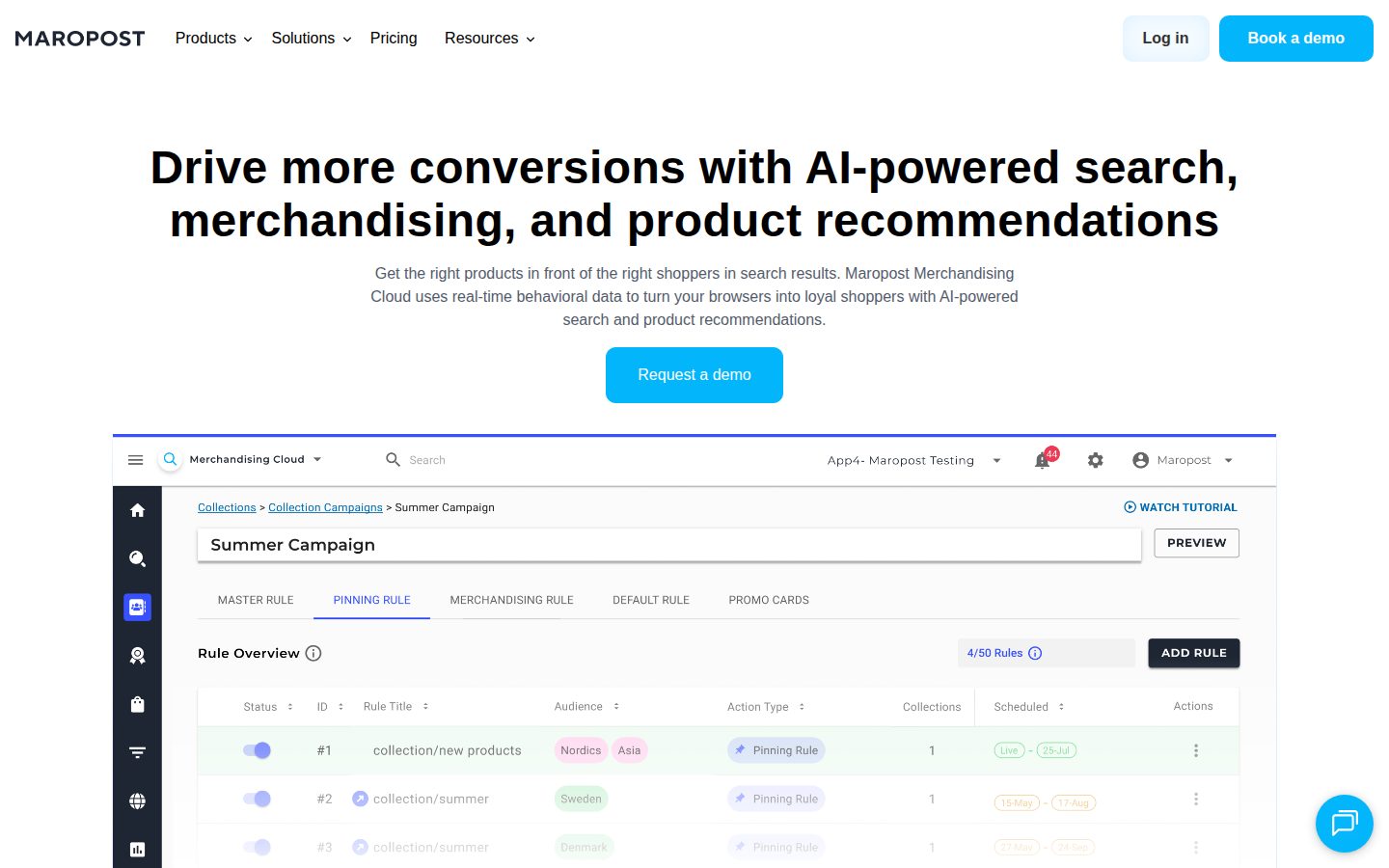
AI Editor ApprovedApproved and published by our AI Editor-in-Chief after full panel analysis.Shoppers interact with Findify through a search bar, autocomplete, filtered category pages, and recommendation widgets embedded in the storefront. The platform indexes product data (including metafields) and keeps it in sync within seconds, then returns results that account for typos, synonyms, and natural-language queries. Merchandisers work in a visual drag-and-drop interface where they can pin, boost, or bury products, build smart collections, and apply rules per market, language, or campaign.
Distinctive capabilities include personalized autocomplete trained on individual shopper behavior, content search alongside product search, multi-store and multi-language support, and integrations with Shopify ecosystem apps such as Yotpo, Stamped, Swym Wishlist, Bold, Flow, and Reach. Findify ships native Shopify Liquid components and exposes APIs for headless or custom front ends, and its merchandising rules can optimize for margin, stock level, or visibility rather than relevance alone.
Findify targets growing direct-to-consumer and mid-market ecommerce brands that have outgrown a platform's built-in search. Pricing is subscription-based on Shopify, starting at $499/month for the Premium tier (100K monthly visits, 20K products, single store), $799/month for Professional (smart collections, multi-store, multi-language), and $1,399/month for Enterprise (personalized recommendations). A 14-day free trial is offered on all tiers. Competitors in the AI ecommerce search category include Algolia, Nosto, Klevu, Searchspring, and Bloomreach.
Findify was acquired by Maropost in June 2022 and is now also distributed as "Maropost Merchandising Cloud," but the product continues to ship under the Findify brand on the Shopify App Store and at findify.io. It integrates with Shopify, BigCommerce, and Neto, and is offered as a web-based SaaS with no desktop or mobile client.

Custom dashboards reporting search queries, conversion, filter usage, and shopper behavior.
Built-in localization for languages, currencies, sizing, and regional trends across markets.
Configurable ranking strategies optimized for margin, stock levels, or visibility across the catalog.
Merchant controls to boost, bury, pin, or exclude specific products in search results and collections.
AI-generated product groupings that auto-populate collection pages based on rules and learned signals.
Tailors product ranking per shopper using real-time behavioral data and machine learning.
Suggests complementary products based on co-purchase patterns across the store.
Cross-sell and upsell widgets embedded on product detail pages and the cart drawer.
Natural-language search engine that interprets shopper intent rather than literal keyword matching.
Real-time query suggestions that surface both products and content pages as the shopper types.
Custom filters and facets that shoppers can combine to narrow product results.
Handles misspellings, stop words, and merchant-defined synonyms so queries still match relevant products.
Entry tier with AI-personalized search and autocomplete for a single store and language. 14-day free trial. Source: apps.shopify.com/findify-search and maropost.com/pricing/merchandising-cloud (Essential tier).
Mid-tier with Smart Collections, multi-store/language support, and AI-based ranking analytics. 14-day free trial.
Top tier with Personalized Recommendations, custom limits, dedicated account manager and priority support. Sales-led for negotiation of custom limits.
Maropost paid $4.45M for Findify in 2022 — capable Shopify search, but the roadmap runs through Toronto now.
“Findify is a Stockholm-built AI search and merchandising app for Shopify, now sold as Maropost Merchandising Cloud after a May 2022 acquisition. Premium starts at $499/month with a 14-day trial, which lands it above Klevu and below Algolia for the same mid-market buyer.”
Maropost paid $4.45M for Findify in May 2022. That price tells you what you need to know — this isn't a category leader being scooped up, it's a capable Shopify app folded into a marketing suite.
The product itself is real. Smart Collections, personalized autocomplete, and rule-based boost-and-bury cover what a mid-market DTC brand needs at $499/month for 100K visits and 20K products. Klevu sits at a similar tier, Algolia goes deeper for headless commerce, and 1,800 brands on the platform isn't nothing.
But the catch is roadmap risk under a new owner. Maropost is bundling this as Merchandising Cloud and extending to BigCommerce and Neto, which means Shopify-only buyers aren't the priority anymore. Pilot Premium for 60 days against your current search conversion before committing past the renewal.
Mid-tier between Klevu and Algolia, with Nosto and Searchspring pulling at the same buyer.
1,800+ brands including Victoria Beckham and Gina Tricot make it a defensible pick.
Days-to-deploy on Shopify with drag-and-drop merchandising and AI ranking visible within two weeks.
Solid fit for Shopify DTC brands needing merchandising depth beyond native search.
Acquired by Maropost in 2022 at $4.45M — survives inside a larger suite, but not independent.
Mid-market Shopify brands who need merchandising controls beyond the native search.
Headless commerce teams who want a search API as their primary surface.
Smart Collections and rule-based merchandising are Findify's real differentiator for Shopify Plus brands.
“Findify ships AI search, autocomplete, and Smart Collections to Shopify Plus brands starting at $499/month for 100K visits. The catch is Maropost owning the roadmap since the June 2022 acquisition.”
Smart Collections is the line that separates Findify from the search-bar layer. Boost, bury, pin, blacklist — rule-based merchandising the buyer runs per market, language, or campaign without filing a ticket. That's how senior ecommerce teams want to work, not how Algolia ships out of the box.
Premium starts at $499/month for 100K visits and 20K products on a single store. Professional adds multi-store and multi-language at $799. Personalized Recommendations live behind the $1,399 Enterprise tier — the ceiling for a mid-market DTC, not a brand running 30 storefronts on Bloomreach.
However, the tradeoff is corporate gravity. Maropost acquired Findify in June 2022 and resells it as Merchandising Cloud, so the standalone roadmap depends on a multi-product owner. For a Shopify Plus brand standardizing one search stack for three years, that's a yellow flag worth scoping into the contract.
Solid mid-market option but pressured by Algolia, Klevu, Searchspring, and Bloomreach in the AI ecommerce search category.
Per-market, per-language, per-campaign rules match how senior ecommerce merchandisers actually segment a catalog.
Native Shopify Liquid components plus Yotpo, Stamped, Swym, Bold, Flow, and Reach connectors cover the ecosystem.
Maropost acquisition in June 2022 puts the Findify roadmap inside a multi-product portfolio, creating ownership risk.
Smart Collections plus rule-based boost/bury/pin gives merchandisers a real control layer above keyword search.
Shopify Plus DTC brands who run merchandising rules per market.
Headless multi-storefront retailers who need an open search index.
Maropost owns the paper since June 2022; sticker starts at $499/month on Shopify.
“Three tiers visible on the app listing, $499 to $1,399 monthly. Acquired counterparty, not a standalone vendor, and that changes the renewal conversation.”
Maropost acquired Findify in June 2022 for roughly $4.45M, per the press release. The counterparty is now Maropost, not a Stockholm startup. Findify still ships under its own brand on the Shopify App Store, but the invoice routes through Maropost Merchandising Cloud.
Three tiers, all published. Premium $499/month for 100K visits and 20K products. Professional $799 adds Smart Collections and multi-store. Enterprise $1,399 unlocks Personalized Recommendations. Annual billing saves 10%. Professional runs $9,588/year sticker, closer to $11K once visit creep hits. Compare Algolia — usage-priced on records and operations, harder to forecast.
But the catch is visit-based metering. No published overage rate. A Black Friday spike past 100K visits surprises the invoice. Enterprise limits are sales-led — that is where negotiation lives. Ask the overage rate and the renewal uplift cap before signing.
Shopify app billing routes through the merchant invoice, removing most vendor onboarding friction.
Monthly billing is visible, but Enterprise is sales-led and no termination terms appear in public docs.
All three tiers published with visit and product limits on the Shopify App Store listing.
Analytics dashboards report search queries, conversion, and filter usage — measurable, not hand-wavy.
Sticker is predictable but visit overage is unpublished, so Black Friday traffic spikes are uncapped.
Shopify brands who want predictable monthly search pricing on a published rate card.
Headless shops who need usage-based pricing with published overage rates.
Drag-and-drop merchandising with personalized autocomplete, but the 20K-product cap on $499 Premium pinches fast.
“Findify ships a mature Shopify search and merchandising stack with Smart Collections, boost-and-bury rules, and per-shopper autocomplete trained on real behavior. The catch is a 20,000-product ceiling on the $499/month Premium tier that forces apparel and variant-heavy stores onto the $799 Professional plan.”
Boost-and-bury rules live in a drag-and-drop UI with pin, blacklist, and per-market scoping — the controls a merchandiser actually reaches for on a Friday before a sale. Smart Collections auto-populate from learned signals instead of hand-curated tags, which kills the spreadsheet workflow for seasonal pages.
Personalized autocomplete is the differentiator — results tune per shopper, not per session. Algolia matches the speed but charges by record and operation; Findify's flat $499/month Premium tier is more predictable for a 20K-SKU Shopify catalog. Multi-language and content search ship in-product.
But the 20,000-product ceiling on Premium bites fast for apparel stores with heavy variants, forcing the $799 Professional jump. Docs lean marketing-heavy compared to Klevu's developer references, and the Maropost rebrand muddies which dashboard owns what.
Drag-and-drop merchandising UI is mature, though the Maropost rebrand splits the dashboard story.
Docs read marketing-heavy compared to developer-grade references from Klevu or Algolia.
The 20,000-product cap on Premium and 100K visit ceiling push growing stores into tier jumps.
Custom ranking strategies, multi-store rules, and APIs for headless front ends scale beyond basic search.
Native Shopify Liquid components plus integrations with Yotpo, Stamped, Swym, Bold, Flow, and Reach.
Shopify merchandisers who run mid-market catalogs under 50K SKUs.
Solo developers who need transparent per-query API pricing.
Smart Collections is the merchandising surface; the acquisition shadow is the bet you're making at $499/month
“Findify is an AI search and merchandising app for Shopify stores starting at $499/month, with Smart Collections, multi-language ranking, and Personalized Recommendations layered into tiers up to $1,399. Maropost acquired it in June 2022 for over $4.45M, and it now ships as both Findify and Maropost Merchandising Cloud.”
Smart Collections is the feature merchandisers actually open a tab for. Drag, pin, bury, boost — the kind of control someone running a Tuesday product drop needs without filing a ticket. Findify built the merchandising surface, then quietly let the AI rank everything underneath it.
$499/month buys Premium with 100,000 visits and 20,000 products on a single Shopify store. Professional jumps to $799 for Smart Collections and multi-language; Enterprise at $1,399 unlocks Personalized Recommendations. Algolia goes broader and headless; Klevu sells a similar Shopify-first story. Findify's edge is the Yotpo and Stamped wiring already there.
But the catch is the acquisition shadow. Maropost bought Findify in June 2022 for $4.45M, and the brand now lives as both Findify and Maropost Merchandising Cloud. Day three the merchandising UI feels like a gift; day thirty you're wondering which roadmap actually ships first.
Drag-and-drop merchandising UI with pin, boost, and bury controls signals a team that sweated the merchandiser workflow.
Merchandiser UI is approachable on day one, but Smart Collections rules and ranking strategies take real time to tune.
Shopper-side mobile experience renders through the storefront, so parity follows the merchant theme rather than a separate Findify app.
14-day trial on every tier and a setup measured in days rather than weeks per the Maropost implementation notes.
Ten years in market, 1800+ brand deployments, and a stable post-acquisition home under Maropost since June 2022.
Mid-market Shopify brands who have outgrown built-in search.
Solo merchants who need a free or sub-$100 plan.
Maropost paid roughly $4.36 million for Findify in 2022 — a modest exit for an eight-year-old vendor.
“Findify is a Stockholm-founded AI search and merchandising layer for Shopify, now sold as Maropost Merchandising Cloud since the May 2022 acquisition. The catch is a reported $4.36 million sale price that doesn't match the enterprise positioning.”
Acquired May 2022. Reported price: $4.36 million. For an eight-year-old vendor with 1,800+ merchants, that's a modest exit. Founded 2014 in Stockholm, Seedcamp-backed. Still ships as Findify on the Shopify App Store, also distributed as Maropost Merchandising Cloud.
The $499/month entry is honest for the segment. Smart Collections and personalized autocomplete are real features, not slideware. Multi-language and multi-store land at $799. Algolia and Klevu sit in the same lane with deeper pockets and bigger engineering teams behind them.
But the modest acquisition price is a yellow flag for long-term roadmap autonomy. Maropost is itself a small-cap holding company that picks up assets cheaply. Exit is reasonable — search layers are swappable. The personalization signal history doesn't port. Watch the Maropost shipping cadence over the next two years.
Smart Collections and Shopify-native components are useful, but Algolia, Klevu, Nosto, and Searchspring all cover similar ground.
Search layers are swappable on Shopify; the personalization signal history does not migrate cleanly to Algolia or Klevu.
Now under Maropost, a small holding company that acquired Findify cheaply; shipping cadence under the new owner is the open question.
Pricing page lists tiers, limits, and trial terms plainly; no inflated "AI" claims beyond what features deliver.
Eight years of operation and a real Shopify install base, but the $4.36M acquisition price fits the small-exit pattern more than the category-leader pattern.
Shopify merchants who have outgrown native search.
Headless brands who need Algolia-grade engineering depth.
Common questions answered by our AI research team
Findify on Shopify starts at $499/month (Premium, up to 100,000 visits and 20,000 products). Professional is $799/month and Enterprise is $1,399/month. All tiers include a 14-day free trial, and annual billing saves 10%.
Yes. Findify is a dedicated Shopify Search & Merchandise app, launched February 2015. It also integrates with Bold, Flow, Reach, Stamped, Swym Wishlist, and Yotpo, and supports English, French, Spanish, and German storefronts.
Yes. Findify is now part of Maropost and is sold as Maropost Merchandising Cloud. The product retains the Shopify app listing and Findify branding, while Maropost extends integrations to BigCommerce and Neto via API.
Findify provides AI-powered search with natural language processing, typo tolerance, synonym groups, autocomplete with content search, and personalized ranking. Machine learning continuously tunes results from shopper behavior, and recommendations include frequently bought together.
Implementation through Maropost Merchandising Cloud typically takes days rather than weeks, with AI ranking improvements visible within roughly two weeks. The Shopify app ships with a drag-and-drop merchandising UI, prebuilt components, and custom CSS for theme styling.