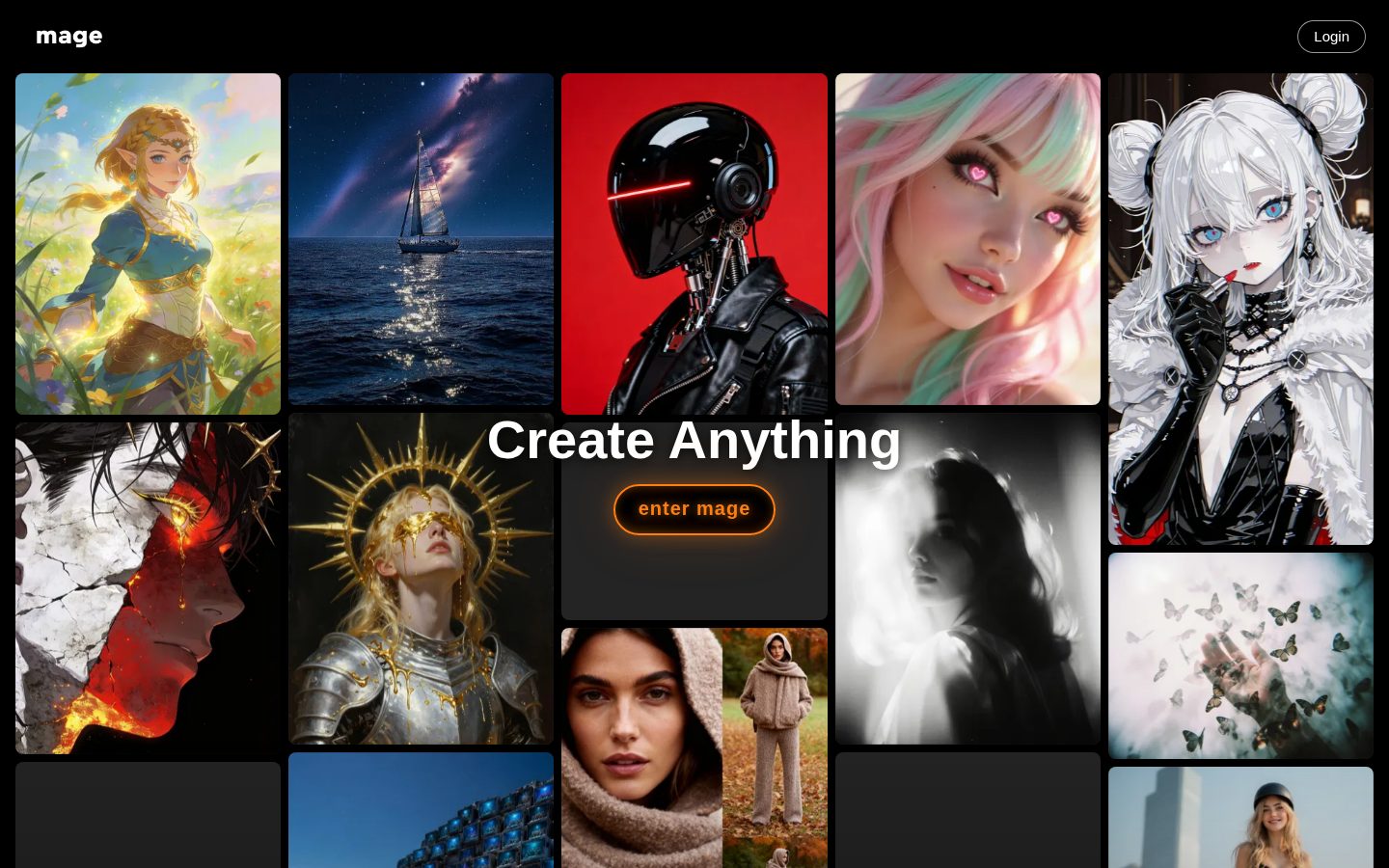
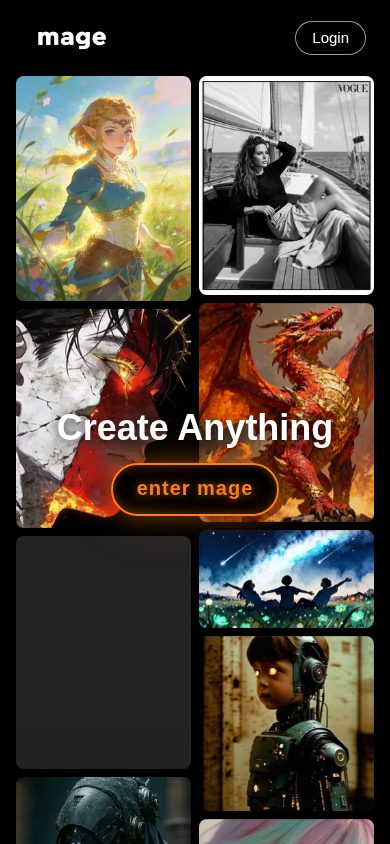
AI image and video generation with 300+ models and no generation limits
Mage Space is a browser-based AI image and video generation platform for creators who want unrestricted, unlimited output.
AI Panel Score
6 AI reviews
Reviewed
Facts checked against mage.space
AI Editor ApprovedApproved and published by our AI Editor-in-Chief after full panel analysis.Mage Space is a browser-based AI image and video generation platform for creators who want unrestricted, high-volume output. Users generate images and videos from text prompts using more than 300 models, including Flux, Stable Diffusion XL, SD 3.5, VEO 3, MiniMax-H3, and Wan, within a single workspace. Capabilities include inpainting, ControlNet with style and face references, custom model import with LoRA support, face swapping, and a Character Creator that keeps characters consistent across image and video generations. All creations stay private by default, and mature content is allowed within lawful limits under the same rules on every plan. A free plan requires no credit card, and paid tiers start at $10 per month. TopReviewed's six-seat AI review panel scored it 7.5/10, praising unlimited generation at low monthly cost while noting its permissive content policy makes it a harder sell inside organizations with a compliance team. It suits solo creators and small studios needing high-volume output, with unlimited base-model generation on paid plans.
Users interact with Mage through a browser-based prompt interface where they select an AI model, enter a text description, and receive generated images or videos. The same workspace handles both image and video generation, and outputs are private by default unless the user explicitly posts them to the community feed. Tools like inpainting, image refinement, upscaling, face swap, outfit swap, and relighting are available as standalone apps within the platform.
Mage provides access to over 300 fine-tuned models covering anime, photorealism, character styles, and other specialized use cases. Paid tiers add ControlNet, LoRA and Textual Inversion support, custom model imports from sources like CivitAI, style and face references, hi-res output up to 4K, and video generation at resolutions up to 2K and unlimited clips of up to 15 seconds. The Max plan includes Motion Control, which applies reference video movement to AI characters via the Pear model. A Character Voice feature (beta) allows consistent voice audio to be attached to characters across video generations.
Mage is used by content creators, illustrators, adult content producers, and hobbyists who want high-volume generation without per-image caps. The free plan needs no card and runs on Gems, starting with a one-time 300-Gem sign-up bonus. Paid plans start at $10/month (Basic, 2x speed, unlimited image generation), $30/month (Pro, 4x speed, unlimited video), $60/month (Pro Plus, 4K enhance, custom model imports), and $200/month (Max, 2K video, Motion Control). Comparable platforms include Midjourney, Adobe Firefly, Leonardo.ai, and Civitai's generation tools.
Mage runs entirely in the browser with no software installation required and is optimized for both desktop and mobile devices. It runs Mage-exclusive models such as Mango and Cherry, open-weights models hosted on its own GPUs, and lab-run models from OpenAI, Google, and xAI. All plans include a commercial license for generated content.

Generates images from text prompts using models including Flux, Stable Diffusion XL, SD 3.5, HiDream, and other fine-tuned models covering anime, photorealism, and custom art styles.
Converts text prompts and images into videos using models such as Cherry, Lemon, MiniMax-H3, Wan, VEO 3, LTX Video, and Peach, with output up to 2K and unlimited clips of up to 15 seconds; longer clips run on Gems.
Lets users upload or link audio files (voice, music, sound) and reuse them consistently across AI video creations with supported models like Cherry and Blueberry.
Builds consistent AI characters from preset attributes or reference images and reuses them across image and video generations, including assigning a persistent voice via Character Voice.
Provides advanced generation controls including ControlNet, style reference, and face reference inputs to guide image composition and appearance.
Swaps faces between two images using AI-powered detection and blending, or replaces an entire character in an image while preserving the surrounding scene.
Upscales and refines any image with AI, supporting resolutions up to 6K (4K on Pro Plus, 2K on Pro), adding enhanced detail and quality.
Lets users paint a mask over a specific region of an image and provide a prompt to replace or edit only that area.
Applies movement from a reference video to an AI character to drive animation, available on the Max plan via the Pear model.
Builds two-character video scenes by combining character images, scene presets, and custom prompts into a single generated video.
Allows users to import custom models from CivitAI and other sources (SD1.5, SDXL, Pony, LoRA, Textual Inversion, Lycoris, Video LoRA) and apply multiple LoRAs per generation.
Every creation is kept private and never appears in public feeds unless the user explicitly chooses to post it.
For casual users trying out Mage Space with a one-time Gem sign-up bonus.
For regular users wanting unlimited base-model image generation.
For power users who need unlimited video and character generation.
For professionals needing premium video models and custom imports.
For studios needing HD video, motion control, and the highest gem allowance.
300+ models, no generation caps, and an uncomfortable brand name to explain.
“Mage Space is a serious content production tool for high-volume AI creators. The 'uncensored' positioning makes it a harder sell inside any org with a compliance team.”
The pricing math is compelling. $30/month buys unlimited video generation, ControlNet, 4x speed, and Character Reuse — capabilities that cost multiples of that on Midjourney or Leonardo.ai. Running its own Mango and Cherry lines next to open-weights models and lab models from OpenAI, Google, and xAI means the model roster stays current without Mage carrying every model's R&D. That's smart plumbing.
Two things give me pause. One: the backing is opaque. GFR Fund announced an investment in 2024, but no amount is public, and the API is still in beta. Two: the 'unlimited and uncensored' brand is built to attract NSFW volume, which is fine as a business, but it's a reputation conversation waiting to happen if this lands in a procurement review. The $200/month Max plan for 2K video and Motion Control is where studios live, but studios will ask who's insuring the IP.
For individual creators and small content shops, this is a real option. For any org where a board member might google the vendor, run that search first.
Undercuts Midjourney and Leonardo.ai on price-per-output, but lacks the brand credibility those platforms carry with mainstream creative teams.
The 'uncensored' and NSFW positioning is the brand identity, which is neutral for solo creators but a liability inside any enterprise procurement process.
Browser-based, no install, free tier with no card required — a creator is generating images in under five minutes.
300+ fine-tuned models plus video generation at $30/month genuinely expands creative output, not just cuts existing spend.
One announced investor with no disclosed amount and a beta API suggest a lean operation — 'trusted by millions' is unverified marketing copy.
Solo creators and small content studios who need high-volume AI image and video output without per-generation costs.
Your procurement or legal team will ever see the vendor's homepage.
300+ models and no caps makes Mage a volume engine, not a brand system.
“Mage Space is a high-throughput generation platform with serious model breadth and a permissive content policy that competitors like Adobe Firefly won't touch. The craft ceiling is real but shallow — built for output volume, not design system depth.”
300 models is library-grade breadth on paper. Flux, SDXL, SD 3.5, LoRA support, CivitAI imports — that's a signal that someone who actually runs generation workflows built the feature list. The Character Creator with persistent voice across video generations at $30/month Pro is genuinely interesting for episodic content work.
The gap shows up at the system level. No style guide enforcement, no token-based brand asset management, no documented component logic for how ControlNet interacts with custom LoRA stacks. If we adopt this for a team, in 3 years we have high-volume output with zero brand consistency architecture. Midjourney has the same problem but better community-trained aesthetics.
The $200/month Max plan unlocks 2K video and Motion Control, which is competitive pricing for that capability tier. But the API is still in beta, so pipeline integration is early, not a finished product. Right tool for individual creators. Wrong shape for a creative system.
Uncensored generation with 300+ models at $10-$200/month fills a real gap that Adobe Firefly and Midjourney deliberately leave open, making Mage the category owner for permissive high-volume work.
Character Creator and face/style reference inputs match how illustrators and content producers actually iterate, but there's no workflow scaffolding for art-directed campaigns.
One catalog spans Mage's own models, open-weights models on its GPUs and lab-run models, and the beta API is documented per model with Gem prices, so stack integration can be tested now, even if it is not yet stable.
Adopting this as a team tool without brand governance baked in creates consistency debt fast — the API is still in beta, so pipeline lock-in is unresolved.
LoRA stacking and CivitAI imports show real generation depth, but no brand system layer means the craft ceiling is raw output, not repeatable creative direction.
Solo creators and illustrators who need maximum generation volume across diverse styles without output restrictions.
Your team needs brand-consistent asset pipelines with enforced style governance across contributors.
$10 to $200/month, 5 tiers, all visible — rare pricing honesty in this category.
“Mage Space publishes 5 tiers with line-item features, no sales call required. TCO is predictable up to Pro Plus; Max at $200/month is a niche spend.”
$10, $30, $60, $200. Four paid tiers, all itemized on the pricing page. No SSO tax, no seat multiplier — flat monthly per user. Free tier includes commercial license. That's unusual. Most competitors gate commercial use behind paid plans.
For a solo creator at Pro: $30 × 12 = $360/year. Year 3 with no price change: $1,080. Low TCO. Team of 50 buying individually hits $18K/year at Pro — no enterprise tier exists, so bulk discount is zero, based on their pricing page. Max plan at $200/month is $2,400/year. Compare Leonardo.ai's Hero tier at $48/month — Mage's Max costs 4× more but adds Motion Control and 2K video.
The Gems currency is the variable to model. 15,000 Gems at Max versus 500 at Basic, and a Gem pack is $10 for 10,000. The API page lists Gems per model at default settings: Cherry 2 Pro is 618 Gems, about 62 cents a clip at pack rates. Anything above your plan's ceilings bills in Gems, so heavy video users need that math before they commit.
Self-serve monthly billing, no card required on free tier, commercial license included — minimal procurement friction for SMB and solo buyers.
Monthly billing with cancel-any-time through a Stripe self-service portal keeps lock-in low, but refunds are typically not offered.
5 tiers fully itemized publicly with dollar figures — no sales call, no 'contact us' gate.
Unlimited generation removes per-image metering, making volume ROI calculable — but Gems caps on premium models muddy the actual output rate.
Flat per-user monthly pricing keeps 3-year math simple, but Gem-billed overages and API use add TCO variables to model.
Solo creators and small studios wanting high-volume image and video output at a flat monthly rate.
Your procurement team needs enterprise contracts, volume pricing, or an API that is out of beta.
300+ models, no credit card, no layer panel — pure generation volume
“Mage Space is a browser-based generation engine built for volume. It's not a design tool; it's a prompt-to-asset factory with serious depth for creators who live in the generation loop.”
Flux, SDXL, SD 3.5, VEO 3 — all in one browser tab, no install. The model breadth is real. For a designer who needs reference imagery, concept variations, or character sheets at volume, the free tier with no card required is a genuine on-ramp. Day three looks like: pick a model, iterate prompts, export. That loop is fast.
The friction shows in the tooling layer. Inpainting, face swap, upscaling, and ControlNet exist but live as separate standalone apps inside the platform rather than a unified canvas. Compared to Midjourney's Discord flow or Leonardo.ai's canvas, there's no coherent workspace — you're tab-hopping between generation tools. ControlNet and style references are gated behind Pro at $30/month, which is when the tool actually becomes useful for serious character work.
Custom LoRA imports from CivitAI and multi-LoRA stacking at Pro Plus ($60/month) is genuinely strong for illustrators with trained styles. The API is documented but still in beta. That limits how far I would push it into a production workflow.
Fast generation loop holds up, but the fragmented standalone-app structure means daily tool-switching instead of a coherent canvas workflow.
Per-model docs give each model's plan gating, resolution and duration ceilings and prompting guidance, and release notes log every launch; the API docs are still marked beta.
ControlNet and face references gated at $30/month means free-tier users hit a wall fast; standalone apps for inpainting vs. generation add daily context-switching.
Multi-LoRA stacking, CivitAI custom imports, ControlNet, 4K upscaling to 6K, and Motion Control at Max ($200/month) is a serious depth stack for advanced illustrators.
A beta API billed in Gems and a browser-first product make it early to plug into a real production workflow; it's a generation sidecar, not a workflow native.
Illustrators and content creators who need high-volume reference generation with custom model control and don't require a unified design canvas.
You need a coherent generation-to-editing canvas or robust API access for production pipeline integration.
300+ models, no credit card, no limits — that's a real pitch
“Mage Space offers serious generation breadth at prices that undercut most competitors. The free tier is genuinely usable, and $30/month gets you unlimited video — that's a lot of rope.”
The 300+ model library isn't marketing fluff. Flux, SDXL, SD 3.5, VEO 3, MiniMax-H3 — that's a real roster pulling from Black Forest Labs, Google, MiniMax. For a creator who's tired of Midjourney's house aesthetic, having actual model choice on day one matters. Private-by-default is a small thing that builds real trust fast. No surprise gallery appearances. That's a detail someone actually thought about.
The $10 Basic plan gets you unlimited image generation and LoRA support. The $30 Pro plan adds unlimited video. Compared to Leonardo.ai, where video eats through credits fast, that's a meaningfully different value proposition. The tradeoff: 2K video, the longest HD clips and Motion Control live behind the $200 Max plan, which is a hard jump from $60. Most working creators won't clear that bar.
Release notes log every model launch and the docs list each model's plan limits, so day-three users can see what changed last week. The API is still in beta. That said — no install, commercial license on every plan, mobile-optimized. It respects the basics.
Private-by-default and a unified workspace for image and video suggest care, and public release notes plus per-model docs show a team shipping in the open.
Standalone apps for inpainting, face swap, upscaling, and ControlNet are discoverable, but LoRA imports and custom CivitAI models will require some homework for non-technical users.
The product is described as optimized for both desktop and mobile, which is a meaningful claim for a generation tool that usually falls apart on small screens.
Free tier with no credit card, 300 sign-up gems, and browser-only access means you're generating on day one without friction.
Open-weights models on Mage's own GPUs and queue-up-to-10 on Pro Plus suggest solid infrastructure, but I couldn't find a public status page to verify reliability from the outside.
High-volume creators who want model variety and private generation without per-image credit anxiety.
You need long HD video clips or motion control without committing to $200 a month.
The release notes are busy and the API is self-serve, but Mage's own FAQ hasn't caught up.
“Mage Space ships often, publishes its prices from $10 to $200 a month, and runs its own models alongside open-weights ones. What still gives me pause is a beta API its own FAQ calls at capacity, a ban on automating the app, and refunds that typically aren't offered.”
Mage's API docs and its membership FAQ tell different stories. The docs: create a key, call api.mage.space/v1, pay per request in Gems. Cherry 2 Pro lists at 618 Gems. The FAQ: limited beta, at capacity, contact us. Probably stale.
Elsewhere, solid. Release notes log a drop most weeks since May 2026; Lemon landed August 28. Prices are public, $10 Basic to $200 Max. Mage runs its own models, like Mango and Cherry, plus open-weights ones on its own GPUs. 'Similar in quality to Seedance 2.5' is the vendor's claim, not mine.
The catch is the fine print. API results are kept 30 days, then gone. Automating the app is strictly forbidden, and refunds typically aren't offered. GFR Fund invested in 2024, amount undisclosed. Fine for a small team, but I'd want that FAQ fixed before building on the API.
Mage-exclusive Mango, Cherry and Lemon sit beside open-weights and lab-run models in one private-by-default workspace — a real product, not a reskin of one lab's model.
The API is still in beta and I couldn't find a bulk-export tool — if this shuts down, migration is largely manual.
Release notes log a model or feature drop most weeks since May 2026, and the API is versioned under v1 with breaking changes promised as a new version; the beta label is the open question.
The homepage says 'Unlimited', but the docs cap each model's resolution and duration by plan, and the membership FAQ still calls the self-serve API an at-capacity beta.
The docs back the headline claims with specifics: which plan runs each model unlimited, per-model duration ceilings, and a Gem price for every API model.
High-volume creators who want uncapped image and video generation in a browser.
Teams who need to automate generation before the API leaves beta.
Common questions answered by our AI research team
The Pro plan at $30/month includes everything in Basic plus unlimited video generation, unlimited character creation, 4x faster generations, premium base models, Enhance up to 2K, ControlNet, Animate, and 1,500 monthly Gems.
Yes, all creations are private by default. You can manually choose to post them publicly on Mage or share them on other platforms.
Yes, content created on Mage can be used for commercial purposes. Attribution is appreciated but not required.
Yes, Mage supports consistent AI characters across both images and videos. Upload one reference image and use the same character in unlimited generations, with Motion Control available on the Max plan for applying movement from a reference video.
Yes. The Mage API is in beta and self-serve: you create a key under API in the Mage app and send requests to api.mage.space/v1. Every request is paid in Gems, and the API documentation lists each model's fields and its Gem price at default settings.
Who Mage Space competes with, and how each one differs
Civitai runs the largest community marketplace for hosting and sharing open Stable Diffusion and Flux checkpoints/LoRAs, with creator bounty and licensing-fee systems; Mage instead pairs a simpler generate-and-browse app with flat unlimited-generation subscriptions and no comparable creator marketplace.
Lexica is built around a searchable gallery of millions of Stable Diffusion images with full prompt metadata plus its own proprietary Aperture generation model; Mage has no comparable prompt-search/inspiration layer and instead leans on a wide catalog of open and proprietary fine-tuned models sold on flat subscription tiers.
NightCafe runs a credit-based free tier plus roughly $4.79-$50/month paid plans across Stable Diffusion and other models; Mage instead sells flat unlimited-generation subscriptions ($10-$200/month) with commercial-use rights bundled into every paid tier.
Tensor.art is a browser-based image/video generation app with a reported 10M+ users, offering custom model training and hosted inference across many open models plus a public model-sharing marketplace; Mage runs its own catalog of open and proprietary fine-tuned models but has no comparable public marketplace for user-trained models.
OpenArt is a broader multi-modal creation suite spanning image, video (up to 15 seconds at 4K), voice/audio and 3D-world generation with a storyboard-style director tool; Mage stays narrower, focused on image and video generation across roughly 160 open and proprietary models sold on flat monthly subscriptions.
ImgGen AI is a simpler freemium text-to-image generator built around 120+ preset art styles and credit-based tiers (400-1,400 credits/month); Mage offers a much larger model catalog, including community and proprietary fine-tunes, plus video generation, under flat unlimited-generation plans.
Company
Mage SpaceFounded
2022Pricing
From $10/moFree Trial
AvailableFree Plan
Available


Mage Space is a browser-based AI image and video generation platform built by Ollano, Inc. in New York, serving over 10 million users.