Exscientia logo

Exscientia Review

Visit

AI-driven drug design from molecule to clinical candidate

Exscientia is an AI-powered drug discovery and design platform for pharmaceutical research.

AI Panel Score

7.4/10

6 AI reviews

Reviewed

About Exscientia

Exscientia is a UK-based AI-first drug discovery company that develops proprietary technology to design and optimize small molecule drug candidates. The platform integrates machine learning models with experimental data to predict molecular properties, enabling researchers to explore chemical space more efficiently than traditional methods. Its end-to-end approach covers target identification, hit discovery, lead optimization, and candidate selection.

The company operates a hybrid model, maintaining its own internal pipeline of therapeutic programs while also partnering with major pharmaceutical and biotechnology companies. Partners have included Sanofi, Bristol Myers Squibb, and Bayer, among others. These collaborations typically involve applying Exscientia's AI platform to a partner's therapeutic targets in exchange for milestone payments and royalties.

A notable aspect of Exscientia's approach is its use of closed-loop automation, where AI-designed molecules are synthesized and tested by robotic systems, and the resulting experimental data feeds back into the models. This iterative cycle is designed to accelerate candidate progression timelines significantly compared to conventional drug discovery workflows.

Exscientia has reported moving several drug candidates into clinical trials, positioning itself as one of the further-advanced AI drug discovery companies in terms of pipeline progression. Its technology is aimed at drug hunters, medicinal chemists, and biopharma R&D organizations looking to improve the efficiency and success rate of early-stage drug development.

As a company rather than a conventional software-as-a-service product, Exscientia does not publicly list subscription pricing. Access to its platform and capabilities is typically negotiated through enterprise partnerships or collaborations rather than self-service plans.

Features

AI

  • AI-Driven Molecule Design

    Designs highly optimized molecules using AI models trained on proprietary biological and chemical datasets to fuel a pipeline of potential first-in-class and best-in-class medicines.

  • Cell Image-Based AI Training

    Uses images of cells to train artificial intelligence models that identify cellular disruptions driving disease across vast unknown biological space.

  • Machine Learning Target Identification

    Trains intelligent machine learning models to rapidly identify new biological targets for drug discovery and development.

Analytics

  • Patient Data Integration

    Incorporates de-identified patient data into the discovery platform to enhance AI model training and improve drug development insights.

  • Proprietary Biological and Chemical Dataset

    Aggregates over 50 petabytes of fit-for-purpose data spanning phenomics, transcriptomics, proteomics, ADME, and de-identified patient data to power drug discovery models.

Automation

  • Automated Wet Lab with Robotics and Computer Vision

    Utilizes robotics and computer vision to capture millions of cell experiments per week, enabling rapid generation of experimental data.

Collaboration

  • Pharmaceutical and Technology Partnerships

    Enables strategic partnerships with pharmaceutical industry leaders, computational technology companies, and next-generation data partners to accelerate drug discovery and expand patient impact.

Core

  • BioHive-2 Supercomputer

    A biopharma supercomputer built in partnership with NVIDIA, designed to process the massive biological and chemical datasets used across the Recursion OS platform.

  • Drug Pipeline Management

    Tracks and manages an advanced pipeline of therapeutic candidates across Oncology and Rare Disease indications from Preclinical through Phase 3 stages.

  • Recursion Operating System (Recursion OS)

    An integrated drug discovery and development platform that connects data, AI models, and compute in a continuously improving feedback loop from hit identification to IND-enabling studies.

Preview

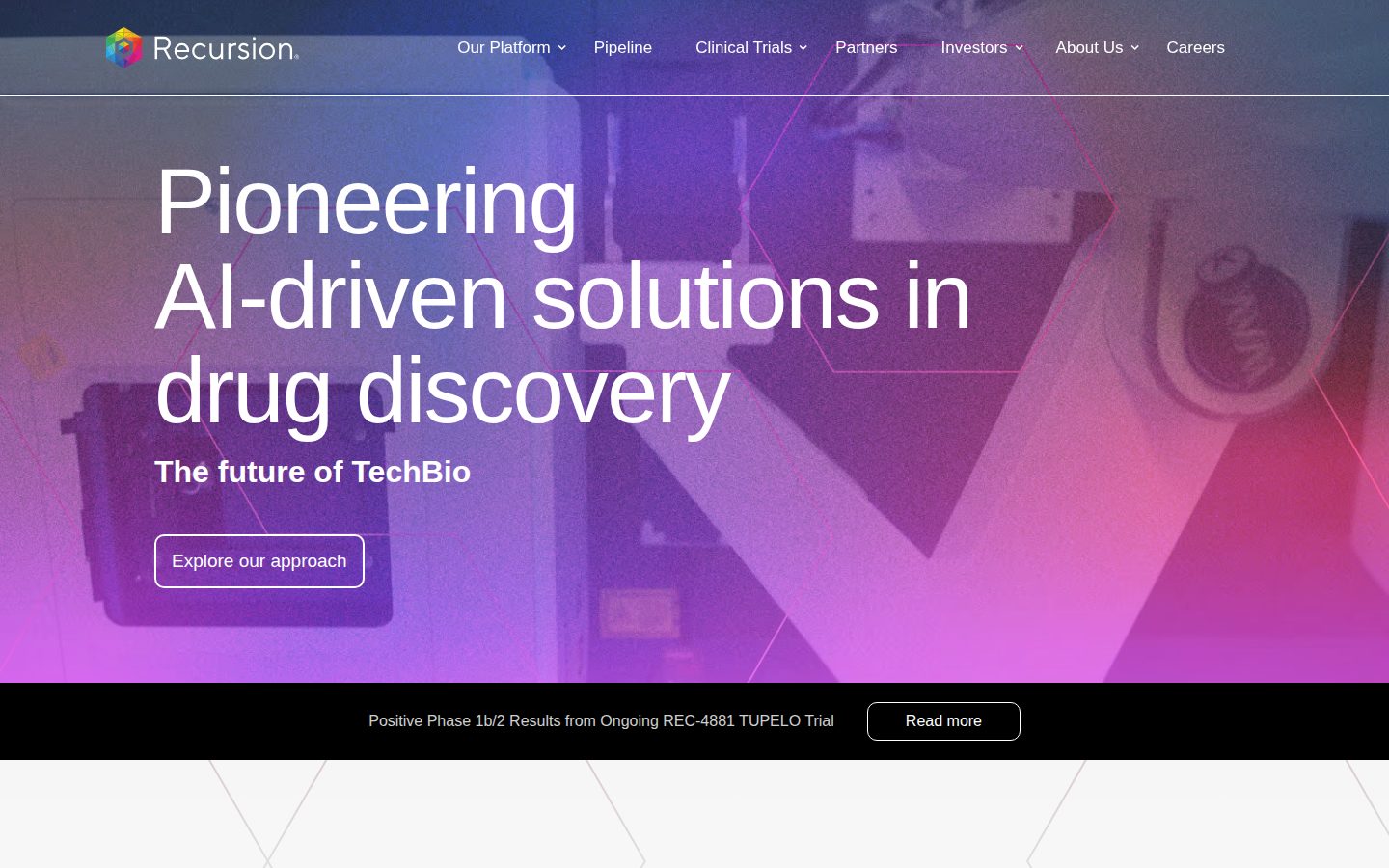
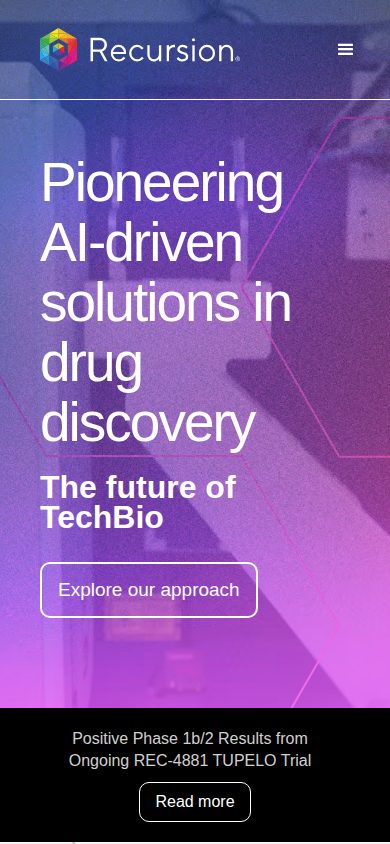
Exscientia desktop previewExscientia mobile preview

Pricing Plans

Enterprise

Contact sales

Exscientia operates as a drug-discovery partner rather than a self-serve SaaS — engagements are structured as multi-year discovery collaborations or platform licensing deals. Contact the business-development team for terms.

  • AI-driven small-molecule design
  • Patient-tissue precision-medicine platform
  • Joint discovery programs
  • Platform licensing options
  • Dedicated scientific & engineering teams

AI Panel Reviews

The Decision Maker

The Decision Maker

Strategic bet, vendor viability, timing, adoption approval
7.8/10

Exscientia is now Recursion — evaluate the combined balance sheet, not the legacy AI drug-design brand.

Exscientia closed its all-stock merger with Recursion in 2024, valued at roughly $193 million, and now operates inside Recursion Pharmaceuticals. The combined company is publicly traded with cash runway guided into 2027.

Three questions before this review even matters. Did the 2024 Recursion merger close? Yes. Is Exscientia still an independent vendor? No. Is the combined company worth a 36-month bet? That's the actual conversation.

Recursion OS is the asset you're actually licensing — closed-loop AI design feeding a wet lab that captures millions of cell experiments weekly, all crunched on BioHive-2, the NVIDIA-built supercomputer. Sanofi signed for $100 million upfront and up to $5.2 billion in milestones in 2022. That's the validation Schrödinger and Insilico Medicine still chase.

But this isn't software you procure. There's no pricing page, no self-serve tier — engagements are multi-year discovery partnerships negotiated by BD. Pilot a single target program before anyone talks about platform licensing, and watch the cash runway, which management has guided into 2027.

Competitive Positioning8.2

Most pipeline-advanced AI drug discovery platform; ahead of Schrödinger and Insilico on clinical progression.

Reputation Risk8.0

Sanofi, BMS, Bayer, and NVIDIA collaborations make the choice defensible to any pharma board.

Speed to Value6.8

Drug discovery cycles measured in years; no quarterly payback even with closed-loop automation.

Strategic Fit7.7

Genuine fit for pharma R&D buyers seeking AI-led discovery partners, less so for software procurement.

Vendor Viability7.8

Combined Recursion-Exscientia entity reported ~$850M cash post-merger with guided runway into 2027.

Pros

  • Post-merger combined entity reports ~$850M cash with runway into 2027 — rare durability among AI-biotech peers.
  • BioHive-2 supercomputer built with NVIDIA gives compute scale most AI drug shops cannot match.
  • Sanofi's $100M upfront and up to $5.2B milestone deal in 2022 is concrete pharma validation, not a pilot.
  • End-to-end stack from target identification through preclinical candidate selection sits under one platform.

Cons

  • No published pricing or self-serve tier — every engagement is a bespoke business-development negotiation.
  • Merger integration risk is real: two cultures, two pipelines, one budget, less than two years in.
  • Drug-discovery economics mean payback is measured in five-to-ten years, not quarters.

Right for

Biopharma R&D leaders who want a discovery partner backed by public-company disclosure.

Avoid if

Software buyers expecting a SaaS tier or a self-serve trial.

The Domain Strategist

The Domain Strategist

Craft and strategy in the product's domain — adapts identity per category, same lens
8.0/10

Two AI drug-discovery pipelines under one Recursion OS — the moat is data scale, not molecule design.

Recursion closed the $688M all-stock Exscientia acquisition in late 2024, inheriting REC-3565 MALT1 and REC-4539 LSD1 alongside its own RBM39 program REC-1245. The catch is that closed-loop AI discovery still has to clear Phase 2 readouts — Insilico Medicine and Isomorphic Labs are racing the same clock.

Recursion finished absorbing Exscientia in late 2024, an all-stock deal valued near $688M, leaving roughly $850M cash and a projected $100M in annual synergies. Exscientia's REC-3565 MALT1 and REC-4539 LSD1 began Q1 2025 dosing, joining Recursion's REC-1245 RBM39 degrader.

Recursion OS is the integrating layer — phenomics, transcriptomics, proteomics and de-identified patient data on the same substrate, with BioHive-2 (built with NVIDIA in 2024) running the models. 50 petabytes of fit-for-purpose data is the moat against Insilico Medicine's Pharma.AI and Isomorphic Labs, neither of which owns a closed-loop wet lab at this image-throughput scale.

However, the three-year call is biology, not software. Recursion deprioritized REC-4881 in 2024 and surviving oncology programs are still early Phase 1; no AI-discovered molecule has cleared Phase 3 anywhere in the category. The bet is whether closed-loop phenomics shortens cycles before pipeline attrition forces another consolidation.

Category Positioning8.5

Post-merger, the combined company is the most-capitalized public AI drug discovery platform with $850M cash and a four-program oncology pipeline.

Domain Fit8.0

Enterprise discovery-partnership model with Sanofi, Bristol Myers Squibb and Bayer matches how biopharma R&D actually procures platform tech.

Integration Surface7.5

Partnership-only access fits pharma enterprise stacks but rules out self-serve integration for smaller biotech teams.

Long-term Implications7.5

Recursion OS lock-in is real and pipeline still has to deliver Phase 2 wins before the architecture pays off.

Strategic Depth8.5

BioHive-2 with NVIDIA plus 50 petabytes of phenomics, transcriptomics and ADME data is best-in-class craft depth for AI drug discovery.

Pros

  • BioHive-2 supercomputer with NVIDIA and 50 petabytes of fit-for-purpose data drive a closed-loop discovery cycle few competitors match.
  • Combined pipeline now spans MALT1, LSD1, RBM39 and CDK7 oncology targets across three early-clinical assets.
  • $850M cash position post-merger funds multi-year runway through upcoming Phase 1 and Phase 2 readouts.
  • Existing pharma partnerships with Sanofi, Bristol Myers Squibb and Bayer validate the platform's enterprise fit.

Cons

  • No AI-discovered molecule from any vendor has cleared Phase 3 yet, so platform ROI remains unproven.
  • Enterprise-only access model rules out smaller biotechs and academic groups who want pay-per-use.
  • REC-4881 deprioritization in 2024 shows even the most-advanced programs can stall on biology.

Right for

Biopharma R&D leaders who need closed-loop AI discovery at petabyte data scale.

Avoid if

Solo researchers who want a self-serve molecular design tool.

The Finance Lead

The Finance Lead

Money, total cost of ownership, contracts, procurement math
6.5/10

Recursion absorbed Exscientia in a $193M all-stock deal November 2024 — no standalone SKU survives.

No published pricing — Exscientia engagements now invoice through Recursion Pharmaceuticals as multi-year discovery partnerships. Sanofi's 2022 deal anchors the comp at $100M upfront against $5.2B in clinical milestones.

Recursion absorbed Exscientia in a $193M all-stock deal closed November 2024. There is no Exscientia SKU anymore — the platform invoices through Recursion Pharmaceuticals. Public NASDAQ counterparty under ticker RXRX, audited financials, real cap table. Procurement at least gets a real legal entity.

No published pricing. Engagements run as multi-year discovery partnerships, milestone-plus-royalty paper. Sanofi's 2022 deal anchors the comp — $100M upfront, up to $5.2B across 15 small-molecule programs. Most biotechs will not see that scale. Mid-size buyers negotiate target-by-target.

Recursion OS and the NVIDIA-built BioHive-2 supercomputer with 504 H100 GPUs are real assets. Compare to Isomorphic Labs — Google-backed, partnership-only, similar gating on access. But the catch is ROI on a discovery deal does not land for five to seven years. Milestones tie to clinical phases, not quarterly budget reviews.

Billing & Procurement7.0

NASDAQ-listed counterparty (RXRX) with audited financials reduces legal-entity vendor risk.

Contract Flexibility6.0

Multi-year discovery partnerships with milestone-plus-royalty paper, negotiable per deal but not standardized.

Pricing Transparency4.5

No published pricing anywhere — every engagement requires a business-development sales call.

ROI Clarity5.5

Discovery ROI tied to clinical phases over five to seven years, not quarterly metrics.

Total Cost of Ownership5.5

Sanofi anchor is $100M upfront against $5.2B milestones across 15 programs — most buyers cannot model their own version.

Pros

  • Public NASDAQ counterparty (RXRX) with audited financials reduces vendor-risk surface.
  • Sanofi 2022 deal — $100M upfront, $5.2B in potential milestones — anchors enterprise comp.
  • Recursion OS plus BioHive-2 supercomputer (504 NVIDIA H100 GPUs) are real, capitalized assets.
  • Milestone-plus-royalty paper aligns vendor payment with clinical progress, not seat count.

Cons

  • No published pricing — procurement walks into every conversation blind.
  • ROI horizon is five to seven years against clinical milestones, not quarterly budget cycles.
  • Post-merger integration risk — Exscientia brand is sunset, contracts re-paper through Recursion.

Right for

Biopharma R&D leaders who need AI-driven small-molecule discovery.

Avoid if

SMB buyers who need self-serve SaaS pricing.

The Domain Practitioner

The Domain Practitioner

Daily hands-on reality in the product's domain — adapts identity per category, same lens
7.6/10

Centaur Chemist designs molecules a med chem team can defend, but the platform now lives inside Recursion.

Exscientia's Centaur Chemist platform compresses lead optimization by scoring potency, selectivity, and ADME in one design pass instead of three separate assay rounds. After the November 2024 Recursion merger, the tool is no longer accessible as a standalone partnership — it ships as part of Recursion OS.

Centaur Chemist scores potency, selectivity, ADME, and synthetic tractability in one multi-parameter pass — work a med chem team normally splits across three weekly assay reviews. DSP-1181 with Sumitomo Dainippon reached candidate after about 350 compounds, versus the roughly 2,500 a conventional program burns through. That's the number every deck cites.

The closed loop matters in practice. Designs go to the automated wet lab, synthesis and assays run, results feed the next iteration — no chemist hand-copying CSVs into Schrödinger LiveDesign. Atomwise stayed virtual-screen-only; Exscientia owned the synthesis loop, which is where most AI design platforms fall over.

But after the November 2024 Recursion merger, Exscientia stopped existing as a standalone partner. Centaur Chemist now ships inside Recursion OS alongside BioHive-2. Chemists who just wanted the small-molecule design layer are buying into a phenomics-first platform.

Day-3 Reality7.5

Closed-loop design-make-test is real, but post-merger practitioner access runs through Recursion business development.

Documentation Practitioner-Fit6.5

Public technical material is limited to SEC filings, partner press releases, and a handful of conference papers.

Friction Surface7.0

No self-serve entry — every engagement is a multi-year discovery collaboration negotiated through sales.

Power-User Depth8.0

Multi-parameter optimization across potency, selectivity, ADME, and tractability is genuinely deep for a chemistry workflow.

Workflow Integration7.8

Owns the synthesis loop end-to-end, eliminating CSV handoffs to external design tools like Schrödinger LiveDesign.

Pros

  • Centaur Chemist runs multi-parameter optimization in a single design pass instead of three sequential assay rounds.
  • Closed-loop automation feeds synthesis and assay results back into models without manual data wrangling.
  • Six Exscientia-designed molecules have entered clinical trials — pipeline-validated approach, not just decks.
  • BioHive-2 supercomputer built with NVIDIA handles the 50+ petabytes of biological and chemical training data.

Cons

  • No self-serve access — multi-year discovery collaboration through business development is the only entry point.
  • After the November 2024 Recursion merger, Exscientia no longer exists as a standalone engagement option.
  • Practitioner documentation is sparse — mostly SEC filings, conference papers, and partner press releases.

Right for

Medicinal chemists who want closed-loop AI design tied to automated synthesis.

Avoid if

Teams who need standalone small-molecule tooling without committing to Recursion OS.

The Power User

The Power User

Daily human experience, onboarding, polish, learning curve, reliability
7.5/10

Exscientia is a tab on Recursion's website now, and the merger price was $193 million in stock.

Recursion absorbed Exscientia in 2024 for about $193 million all-stock, and the combined company runs as Recursion Pharmaceuticals. The platform is enterprise-only — partnerships and licensing deals, no self-serve, no pricing page.

The link from this page lands you on recursion.com. The Exscientia name lives on press releases and SEC filings, but the product is the Recursion OS now. One company's stack, another's brand on the side.

The technical bench is real. BioHive-2, the NVIDIA H100 supercomputer they stood up in 2024, hit #35 on the TOP500 list and runs four times faster than BioHive-1. A 50-petabyte phenomics dataset is the moat. Schrödinger sells chemistry simulation software, not 2 million wet-lab experiments a week feeding the models.

But there's no product to buy. No pricing tier, no trial, no docs — just a contact button and a multi-year discovery collaboration on the other side. Mobile is moot when there's no app at all; the whole platform is web-only and behind enterprise sales. Day three for a researcher means MSA negotiation, not a sandbox.

Daily Polish7.5

Website and brand collateral are clean post-merger, though Exscientia-branded pages now redirect to Recursion.

Learning Curve6.8

No public docs or changelog; the platform is taught through partner engagements, not self-discovery.

Mobile Parity7.5

Neutral score for enterprise scientific infrastructure where mobile is not a relevant surface.

Onboarding Experience6.5

There is no onboarding — every engagement starts with a contact-sales button and a partnership conversation.

Reliability Feel8.0

BioHive-2 with 504 NVIDIA H100 GPUs and multi-year deals with Sanofi, Bayer, and Roche signal a real operating bench.

Pros

  • BioHive-2 supercomputer ranks #35 on the TOP500 — real infrastructure, not marketing copy.
  • 50-petabyte proprietary phenomics dataset feeds models with hard-to-replicate experimental data.
  • Partner roster includes Sanofi, Bayer, and Roche — pharma majors actually paying for access.
  • Closed-loop robotic wet-lab generates roughly 2 million cell experiments per week.

Cons

  • The Exscientia brand effectively folded into Recursion in 2024; buyers contract with the combined entity.
  • No public pricing, no trial, no docs — every engagement starts with a sales call.
  • Multi-year discovery deals shut out anyone without a Big Pharma R&D budget.

Right for

Pharma R&D teams who can sign multi-year discovery deals.

Avoid if

Solo researchers who need self-serve access today.

The Skeptic

The Skeptic

Contrarian. Watch-outs, deal-breakers, broken promises, category patterns
6.8/10

Recursion absorbed Exscientia in an all-stock deal valued at $193M in August 2024.

Exscientia closed into Recursion Pharmaceuticals last year, and the platform now ships under the Recursion OS banner with BioHive-2 compute behind it. The AI drug-design pitch is real, but the standalone Exscientia thesis is gone.

The brand on the door says Exscientia. The website redirects to Recursion. That's the first thing to know — the all-stock merger closed in 2024 at roughly $193M, and Exscientia shareholders ended up with 26% of the combined entity. Not the merger of equals it was sold as.

What survived is the platform. Recursion OS now sits on 50 petabytes of phenomics and ADME data, BioHive-2 runs the compute via NVIDIA, and the closed-loop wet lab keeps shipping experimental cycles weekly. Real infrastructure, not a slide deck.

But the clinical scoreboard is mixed. DSP-1181, the AI-designed OCD candidate Exscientia trumpeted in 2020, was discontinued by Sumitomo by 2022. Isomorphic Labs has Alphabet money and DeepMind talent. Insilico Medicine has more Phase 2 readouts. The platform is durable; the differentiation isn't obvious anymore.

Competitive Differentiation6.5

Real wet-lab plus compute moat, but Isomorphic Labs and Insilico Medicine crowd the same pitch.

Exit Portability5.5

Discovery partnership engagements are not extractable software; you exit by ending the contract.

Long-term Viability7.5

Combined entity held roughly $850M cash at close with runway into 2027 and public-market discipline.

Marketing Honesty6.0

Product page still markets Exscientia, but the URL and brand have already shifted to Recursion post-merger.

Track Record Match6.5

DSP-1181 discontinuation and the absorbed-by-acquirer pattern mirror earlier struggling AI-bio cohort.

Pros

  • Recursion OS integrates AI molecular design with closed-loop wet-lab automation at petabyte scale.
  • BioHive-2 supercomputer through the NVIDIA partnership provides real compute backing, not a slide-deck claim.
  • Combined company held roughly $850M cash at merger close with runway extending into 2027.

Cons

  • Exscientia brand survived in name only — the platform now ships as Recursion OS post-merger.
  • Lead AI-designed candidate DSP-1181 was discontinued by Sumitomo after Phase I trials.
  • Access requires multi-year enterprise partnership; no self-serve evaluation path exists.

Right for

Pharma R&D teams who want a multi-year discovery collaboration with embedded AI design and wet-lab cycles.

Avoid if

Biotech buyers who need self-serve software or short engagement contracts.

Buyer Questions

Common questions answered by our AI research team

Features

How does Exscientia use AI in drug discovery?

Exscientia applies AI-driven molecular design to accelerate drug discovery, combining machine learning with robotic laboratory automation to design and optimize drug candidates faster and at lower cost than traditional methods.

Features

Does Exscientia combine robotics with AI for lab work?

Yes, Exscientia combines AI-driven molecular design with robotic laboratory automation, integrating computational and physical lab processes to streamline preclinical drug development.

Features

What stage of drug development does Exscientia cover?

Exscientia covers drug development from target identification through preclinical candidate selection, spanning the early discovery phases before clinical trials begin.

Integration

Does Exscientia partner with pharmaceutical companies?

Yes, Exscientia partners with major pharmaceutical companies alongside developing its own internal drug pipeline.

Features

What is Exscientia's core mission?

Exscientia's core mission is to use AI and automation to radically reduce the time and cost of developing new medicines, addressing the high failure rates of traditional drug discovery.

Product Information

  • Company

    Exscientia
  • Founded

    2012
  • Pricing

    Contact for pricing

Platforms

web

About Exscientia

Exscientia was an Oxford-based AI drug discovery company using machine learning to design novel small molecules, acquired by Recursion in October 2024.

Resources

Blog

Also in AI Healthcare