AI agent that builds presentations, websites, apps, and documents from a prompt
Runable is an AI agent platform for creating finished work such as presentations, websites, apps, reports, and videos from a prompt.
AI Panel Score
6 AI reviews
Reviewed
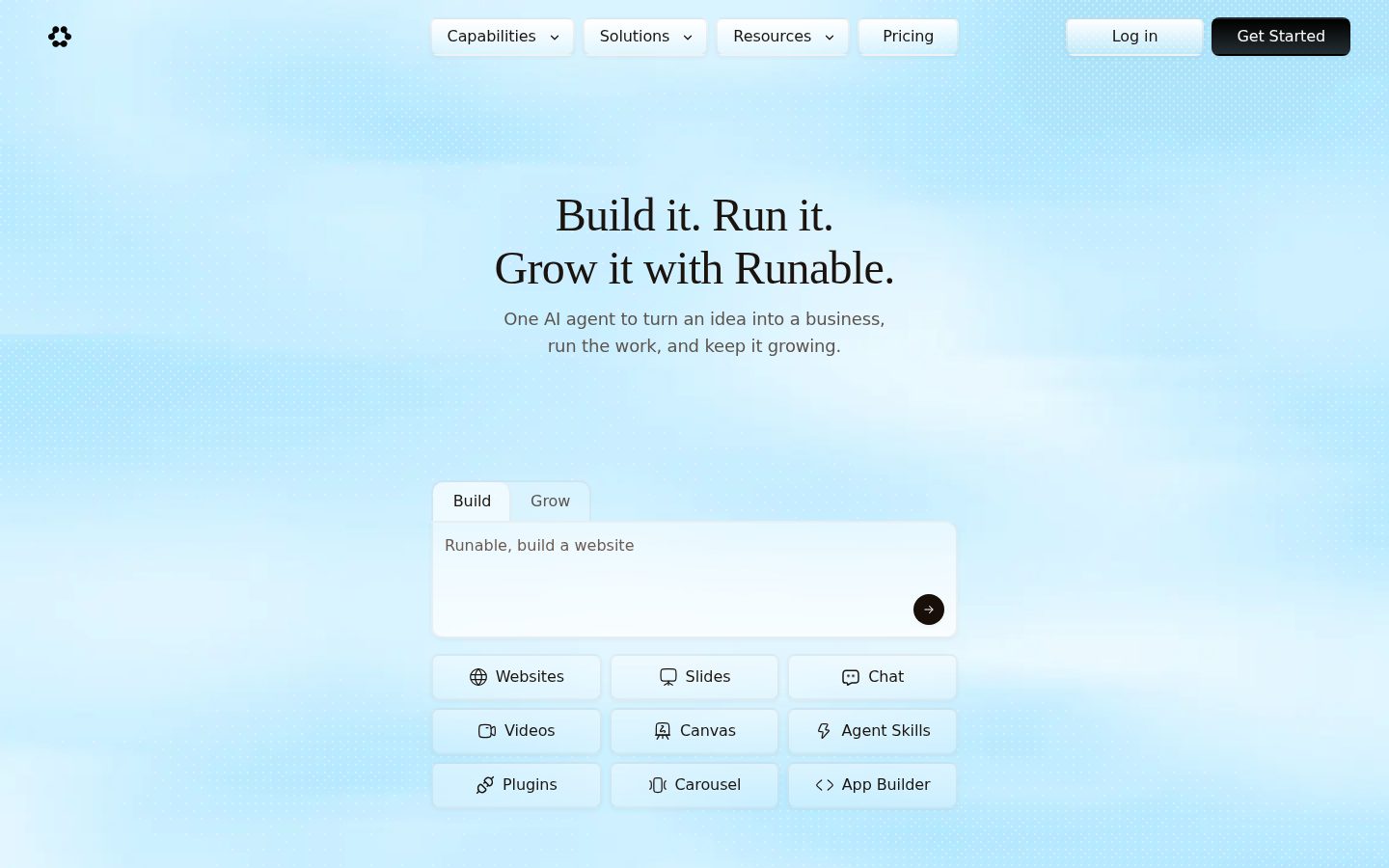
Runable works by accepting a prompt describing what a user wants built or completed, then planning and executing the task to produce a finished output. Visitors can enter a request while signed out, but the platform requires authentication before it will actually execute the task. Outputs described on the site include presentations, websites, apps, reports, documents, images, videos, carousels, and workflows, positioning Runable as a general-purpose execution agent rather than a single-format tool.
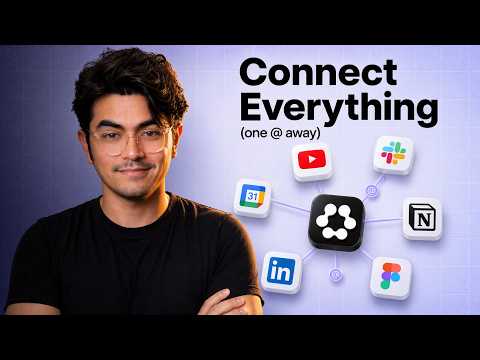
Beyond the core prompt-to-output agent, Runable offers three named products that extend its reach into other work contexts: Claw, which runs the Runable agent from within messaging and collaboration applications; Meet, which converts meetings into notes, summaries, and action items; and Flow, which turns speech into polished writing inside other applications. The website also publishes direct comparisons against other AI agent products, including Manus and Lovable.
Runable is aimed at individuals and businesses that want to generate finished digital work from a text or voice prompt rather than building it manually. Pricing is handled through public USD plans with monthly and annual billing, credits, and usage limits, as detailed on Runable's pricing page, though the specific price points are not included in the content reviewed here.

Takes a written request and executes it end-to-end to produce finished outputs like presentations, websites, apps, reports, documents, images, videos, carousels, and workflows.
Turns speech into polished writing inside other applications.
Turns meetings into notes, summaries, and action items.
Provides public USD pricing plans with monthly and annual billing, credit allotments, usage limits, and exclusions.
Offers a Runable application available for download.
Lets users compare Runable's cost and capabilities against separate AI products and specific competitors like Manus and Lovable.
Runs the Runable agent from within messaging and collaboration applications.
Serves a Markdown version of any public page by appending .md to the URL, generated from the same HTML the page serves.
Get started with Runable, no subscription needed
Higher limits and priority tools for regular users
For power users who want to go beyond limits and imaginations
One agent, eight output types, and a pricing page that names its own competitors.
“Runable bets on breadth: presentations, apps, websites, video, all from one prompt. The Pro tier at $20/month is cheap for what's promised, but breadth like this usually means depth suffers somewhere.”
Runable's pitch is prompt-to-finished-output, and the list is long: websites, apps, slides, reports, video, carousels. The free plan gives 1,500 credits daily with no card required, which is a real way to kick the tires before paying anything.
Two things stand out. One: they publish direct comparisons against Manus and Lovable on their own site, which takes some nerve and suggests they know their category cold. Two: the model roster listed — Claude Opus 5, Gemini 3.5 Flash, Grok 4.6 among others — is unusually wide for a $20/month tier.
The tradeoff is the same one every general-purpose agent carries: a tool that builds websites, decks, and video equally will rarely out-execute a specialist at any single one of them. Max jumps to $100/month for Slack and Teams access — steep if you only need the core agent.
Naming Manus and Lovable directly on its own comparison page is a confident move that only works if the underlying execution holds up.
Credit-based limits and multiple bundled sub-products (Claw, Meet, Flow) mean unclear boundaries on what happens when you hit exclusions or want to cancel.
Free tier with 1,500 daily credits and no signup wall to try it means value shows up immediately, not after a sales call.
Useful if you need one tool to cover many output formats; less useful if you already have specialist tools doing each job well.
Public docs, blog, and a detailed pricing page with credit mechanics suggest active building, though I couldn't find a changelog to confirm release cadence.
Teams that want one agent covering many output formats instead of juggling several specialist tools.
Skip it if you need best-in-class depth in a single format like websites or slides alone.
A general-purpose execution agent with no visible architecture story behind the multi-model pitch.
“Runable wires up nine model backends and eight output formats behind one prompt box, which is an integration bet, not a product bet. That's a fine wedge for individuals, but it's a shaky foundation to build a team workflow on for three years.”
Multi-modal chat across ChatGPT 6 Astra, Claude Opus 5, Gemini 3.5 Flash, Grok 4.6, DeepSeek V4.1 Flash and four others is an orchestration layer, not a moat. It tells me Runable is a routing product sitting on top of vendor APIs it doesn't control. If any of those upstream providers change pricing, deprecate a model, or throttle access, Runable's cost structure and output quality move with them, and I have no visibility into how they'd absorb that shock.
The .md-on-URL page serving is a nice touch for anyone scripting docs retrieval, and it's the one piece of technical craft here that reads as deliberate rather than assembled. But I couldn't find an API reference, which matters if you want to call Runable programmatically rather than through chat or Claw.
Three years out, this is a tool you rent for output, not infrastructure you build on. Fine for solo builders; risky as a dependency for anyone needing a stable execution contract.
Publishing direct comparisons against Manus and Lovable shows they know their competitive set, but positioning as a general agent invites comparison on every axis at once.
Prompt-to-finished-output matches how solo operators and small teams want to work; less clear for engineering-led teams needing reproducible builds.
Claw for messaging apps and the Markdown-on-URL page serving are genuine integration points beyond the chat box, though Slack/Teams/Discord access is gated to the $100/month Max tier.
Dependence on third-party model APIs (Claude, Gemini, Grok, DeepSeek) means Runable's own roadmap is partly hostage to upstream vendor decisions.
Breadth across nine models and eight formats is real, but nothing in the docs signals proprietary execution logic beyond routing.
Solo builders and small teams who want one prompt box to reach many models without managing separate API keys.
Skip it if you need a stable, versioned API contract to build a dependent internal workflow on top of.
$20 to $100 is a 5x jump. Credits, not seats, drive the real cost.
“Three tiers, all priced in public. Credit pools across daily and monthly resets make year-3 cost hard to pin down before you've run a month of usage.”
Free: 1,500 credits daily, no card. Pro: $20/month, 25,000 monthly credits plus 1,500 daily. Max: $100/month, 150,000 monthly credits. Math is visible. That's rare enough to note.
TCO scenario: team of 50 on Pro, $20 × 50 × 12 = $12K/year, before anyone hits a credit ceiling on a heavy video or app-build month. Credit exhaustion mid-cycle means either throttled output or an upgrade nobody budgeted. That's the real line item — not the sticker.
No termination terms, renewal window, or contract length visible on the pricing page I reviewed. Monthly billing suggests month-to-month, which is good for exit, but I couldn't confirm auto-renewal behavior on annual billing. ROI is genuinely measurable per output — count decks, sites, docs produced against credits burned — better than most agent tools on this front.
Self-serve USD billing with no visible seat minimums keeps procurement friction low for small teams.
Monthly and annual billing options exist, but I couldn't confirm renewal or cancellation terms on the pricing page.
Three tiers with exact prices and credit counts are public; no sales call needed to see Pro at $20 or Max at $100.
Finished outputs (decks, sites, docs) per credit spent give a countable unit of value most agent tools lack.
Dual credit pools (daily plus monthly) make forecasting cost at scale harder than a flat per-seat model.
Small teams that want predictable monthly billing and can monitor credit burn against output volume.
Avoid if your finance team needs multi-year contract terms locked in before signing.
Nine models behind one prompt box, but no API reference means it stays a chat window, not infrastructure.
“Runable executes end-to-end from a prompt, which is a fun demo but a different job than fitting into an existing build pipeline. Without a visible API or changelog, I can't tell if this is meant to sit in CI or just live in a browser tab.”
The pitch is 'describe it, get a finished artifact' — slides, apps, sites, videos, all from one prompt. Day one that's impressive. Day three the question becomes: how do I call this from a script, a cron job, a CI step? I couldn't find an API reference, so integrating Runable output into an actual engineering workflow (versioned repo, PR review, deploy pipeline) looks manual — you're copy-pasting outputs, not piping them.
The .md-suffix trick for public pages is the one detail that reads like it was built by someone who ships tools, not marketing copy. That's a good sign for the docs team, less clear for the product's programmatic surface.
Credits (1,500 daily free, 25,000 monthly on the $20 Pro tier) mean cost isn't linear with usage, which is friction if you're trying to forecast spend across a team. Nine model backends is genuinely useful for avoiding single-vendor lock-in, but you inherit each one's quirks and outages.
Prompt-to-output is strong for one-off artifacts but I found no clear path to repeatable, scripted use after the novelty wears off.
The .md-suffix page access is a practitioner-built detail; docs and blog exist, though I couldn't find a changelog to judge shipping cadence.
Dual credit pools and manual output handoff are small frictions that compound across a working week of real usage.
Access to nine named model backends and 100+ curated workflows on Pro gives real depth, but advanced routing controls aren't clearly surfaced.
No visible API reference means it sits beside an engineering stack rather than inside it, unlike tools built for CI or repo integration.
An engineer who wants a fast one-off artifact — a deck, a landing page, a quick app — without opening five separate tools.
Skip it if you need programmatic, API-driven integration into an existing build or deploy pipeline.
Builds everything, but nobody's told you what it feels like when it breaks
“Runable promises finished websites, decks, and apps from a prompt, with three companion tools bolted on for meetings and messaging. That's a lot of surface area for a product I can't find a changelog for, which makes me nervous about day-90 stability.”
Here's my worry with any tool that claims to output presentations, websites, apps, reports, images, videos, carousels, and workflows from one box: something's getting the B-team treatment. The free plan gives you 1,500 daily credits to test all of it, which is generous, but generous breadth usually means thin depth somewhere, and I can't tell where yet.
The first ten minutes matter here more than most tools, because you're signed out, typing a real request, then hitting a wall asking you to authenticate before it'll actually run. That's a reasonable gate, but it's also a moment where the whole thing could feel like a bait-and-switch if the copy doesn't handle it gently.
What I can't assess from outside: does it autosave mid-generation, what happens when a video render fails at 80%, is there a mobile app or just a website you're squinting at on your phone. The $100/month Max tier adds Slack and Teams access, which tells me they're thinking about where people actually live day to day. That's a good sign. Whether the daily experience holds up past the demo is the real question.
Wide output range across slides, sites, apps, and video, but I found no detail on empty states or error handling to judge the finish.
One prompt box covering nine output types plus Claw, Meet, and Flow suggests a low floor to start but real depth to master by month three.
A downloadable application is mentioned but platforms are unclear, so I can't confirm whether phone use is a real workflow or an afterthought.
Letting you type a request while signed out is a smart hook, though the authentication wall before execution risks feeling like a bait-and-switch if not handled with care.
No visible renewal, cancellation, or failure-state information on the pricing page leaves reliability an open question for a tool doing end-to-end execution.
Someone who wants one prompt box to spin up a rough website, deck, or report without opening five separate tools.
Skip it if you need certainty about reliability and mobile support before committing real work to it.
One agent claiming presentations, apps, video and Slack. Pick one and I'd believe it more.
“Runable bets on breadth: eight-plus output formats, nine model backends, and a direct comparison page against Manus and Lovable. The bet works only if none of it is shallow, and I can't check that from a pricing page.”
'Build it. Run it. Grow it.' That's the H1. It's the kind of confident, sweeping language that shows up right before a category-defining vendor becomes a footnote. Comparing yourself to Manus and Lovable directly is bold — it's also an admission you're being evaluated as a substitute, not a category of one.
The model list is the real hook: ChatGPT 6 Astra, Claude Opus 5, Grok 4.6, DeepSeek V4.1 Flash, nine backends total. Convenient. Also means Runable's roadmap is partly whatever OpenAI and Anthropic decide next, not something the team controls.
$20 gets you 25,000 monthly credits. $100 gets you Slack and Teams access. That's a wide net cast across websites, apps, video, and docs — jack of all formats, and I've watched that exact positioning struggle once users compare each output against a dedicated tool built for just one job.
Publishing direct comparisons against Manus and Lovable shows confidence, but also frames Runable as an alternative rather than a category apart.
No API reference visible means outputs likely leave the platform via copy-paste, not integration.
Docs and blog pages exist; no changelog found to gauge how fast the multi-model routing gets maintained.
'Build it. Run it. Grow it.' is aspirational framing for a tool still asking authentication only at execution time.
Named outputs are specific but I found no shipping cadence or changelog to confirm they hold up at scale.
Someone who wants one subscription to try many output types without committing to a single-purpose tool yet.
You need one format done exceptionally well and a documented API to wire it into existing tools.
Common questions answered by our AI research team
Runable's free plan gives 1,500 credits daily with no subscription needed, plus meeting recording via Notetaker, speech-to-text writing via Flow, DM access to the agent, websites, slides, carousels, images, videos, document/research tools, max performance, and 3000+ plugins.
Pro costs $20/month and includes 25,000 credits monthly plus 1,500 credits daily.
Runable offers multi-modal chat access to ChatGPT 6 Astra, Claude Opus 5, Claude Sonnet 5.0, Gemini 3.5 Flash, GLM 5.3, Grok 4.6, Runner, DeepSeek V4.1 Flash, and Kimi K3.
Yes, the Max plan lets you run Runable from Slack, Microsoft Teams, Telegram, iMessage, and Discord.
Max costs $100/month with 150,000 credits monthly plus 1,500 daily, unlimited chats in Ask mode, and messaging app access via Slack, Microsoft Teams, Telegram, iMessage, and Discord — features not included in Pro.
Company
RunablePricing
From $20/moFree Plan
Available


Runable develops an AI agent platform designed to autonomously plan and execute multi-step tasks for building, running, and growing software products.