Open-source AI image generation from text prompts
Stable Diffusion is an open-source AI model that generates images from text descriptions.
AI Panel Score
6 AI reviews
Reviewed
AI Editor ApprovedApproved and published by our AI Editor-in-Chief after full panel analysis.Stable Diffusion is an open-source deep learning model created by Stability AI, in collaboration with academic and industry researchers, and released in 2022. It is designed to generate detailed images from natural language text prompts using a process called latent diffusion, which compresses image data into a lower-dimensional space before applying the diffusion process. This approach makes it more computationally efficient than some earlier diffusion models, enabling it to run on consumer-grade hardware with a modern GPU.
The model supports several modes of use beyond basic text-to-image generation. These include image-to-image generation, where an existing image is used as a reference alongside a text prompt, as well as inpainting, which fills in masked or missing areas of an image, and outpainting, which extends an image beyond its original borders. Multiple versions of the model have been released over time, with improvements to image quality, resolution, and instruction-following capability.
Because the model weights are publicly released under open licenses, Stable Diffusion has been widely adopted by independent developers, researchers, and businesses. It can be self-hosted on local machines, deployed via cloud infrastructure, or accessed through Stability AI's own API and consumer products. A large ecosystem of third-party tools, fine-tuned model variants, and community resources has grown around it.
Stability AI also offers access to Stable Diffusion and newer proprietary models through its DreamStudio web interface and a developer API. These hosted options operate on a credit-based usage model, providing an alternative for users who prefer not to manage their own infrastructure. The product sits in a competitive market alongside other AI image generation tools such as Midjourney and DALL-E, but distinguishes itself primarily through its open-source availability and flexibility for customization.

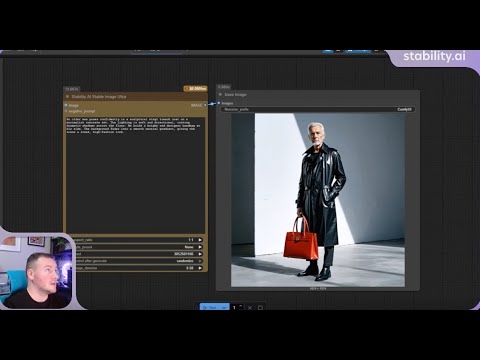
Builds immersive worlds using volumetric generative media through 3D and 4D video model generation.
A fully managed creative production platform designed for enterprise teams to create branded content.
Creates high-quality on-brand assets for marketing campaigns using AI-powered image generation and editing capabilities.
Provides image and video tools for entertainment production workflows from storyboarding through to color grading.
Partners with customers to build custom workflows that meet their specific production standards.
Seamlessly integrates production-ready media generation and editing tools with no infrastructure to manage.
Deploys models in a cloud environment for advanced customization without self-managed infrastructure.
Provides indemnification, compliance support, and safe scalable integration for enterprise deployments.
Deploys models within the customer's own environment for advanced customization and control of their data.
Offers expert implementation support as part of enterprise solutions deployment.
Start creating in Brand Studio with everything included in the Core plan, free up to first 1000 credits.
For creative professionals who want both powerful AI capabilities and precise control.
For teams who need to create on-brand content at scale with deeper customization.
Open-source foundation with real enterprise packaging, but Stability AI's survival is the bet.
“Stable Diffusion is the most flexible AI image model on the market. The vendor risk is real and you shouldn't ignore it.”
Released in 2022, Stable Diffusion runs on consumer GPUs, integrates with Amazon Bedrock at 1,000+ images per minute, and supports inpainting, outpainting, and image-to-image — capabilities Midjourney won't let you self-host at any price. The $50/month Core tier with 5,000 credits is an easy pilot budget. The open-source model weights mean you're not fully vendor-locked even if Stability AI disappears tomorrow.
That survival question is real. Stability AI has had well-documented executive turnover and funding pressure. The enterprise tier includes indemnification and Brand Studio, which tells me they're trying to build a defensible commercial layer on top of the open model. Whether that works in 36 months is the actual bet.
Two things: self-hosted deployment gives you data control competitors won't match, and the ecosystem of fine-tuned variants is unmatched. But if Stability AI folds, your managed API contracts get complicated fast. Pilot the Core plan, test against your actual creative workflow, and keep a fallback option.
Midjourney and DALL-E can't match self-hosted flexibility or the fine-tuning ecosystem; that's a durable differentiation for teams with custom brand requirements.
Enterprise indemnification and Amazon Bedrock integration make this defensible to a board; open-source provenance carries some content-licensing perception risk.
1,000-credit free trial and a fully managed API with no infrastructure setup means a working prototype in days, not quarters.
Self-hosted deployment, custom workflow building, and Brand Studio's end-to-end generation make this an accelerant, not just a cost-saver.
Public funding pressure and leadership instability are documented; the open-source model weights partially hedge this risk, but the managed API depends on Stability AI's survival.
Creative or product teams that need custom brand fine-tuning or on-prem data control that Midjourney and DALL-E won't provide.
Your team has no tolerance for vendor instability and needs a guaranteed managed SLA over the next two years.
Open-source backbone with enterprise muscle — the CD's infrastructure bet, not their sketchpad.
“Stable Diffusion is the model layer underneath half the industry's AI creative stack, now wrapped in a Brand Studio suite with indemnification and enterprise governance. The $50/month Core tier and 1,000+ images-per-minute throughput on Amazon Bedrock signal production-grade ambition, not hobbyist tooling.”
Brand Central with Brand ID Models is the feature worth watching. That's Stability AI making a real play for brand system integrity — not just prompt-to-pixel chaos — and it sits exclusively on the Enterprise tier. If your creative team is running more than five campaigns simultaneously, the Core plan's 5,000 monthly credits won't hold, and the gap between Core and Enterprise has no documented price anchor, which is a procurement headache.
The open-source foundation is a genuine structural advantage over Midjourney, which is closed, opaque, and platform-dependent. Self-hosted deployment plus enterprise indemnification means legal and brand governance travel together. That combination is rare at this model tier.
If we adopt Brand Studio at the enterprise level, in three years we have a proprietary fine-tuned model trained on our brand assets, embedded in our production pipeline. The constraint is that Stability AI's financial instability is public knowledge — no public funding data since 2023 turmoil — so the continuity bet is real. Custom workflow building mitigates some lock-in, but the model dependency doesn't disappear.
Open-source moat plus enterprise governance puts this in a different category from Midjourney — closer to infrastructure than creative SaaS.
Producer Mode for multi-step workflows and Precision Inpainting map directly to how senior creatives actually run campaign production, not just ideation.
Fully managed API plus verified Amazon Bedrock integration at 1,000+ images per minute is a serious integration surface for a creative technology stack.
Open weights mean no forced migration, but Stability AI's corporate stability is an unresolved counterweight to that architectural freedom.
Inpainting, outpainting, image-to-image, plus Brand ID Models suggests library-grade depth — someone has shipped real production systems here.
Enterprise creative teams who need brand-governed AI generation embedded directly in their production pipeline.
Small studios or solo CDs who need a ready-to-use creative tool without infrastructure decisions.
$50/month Core tier — but enterprise pricing is a blank check.
“Stable Diffusion's open-source roots keep solo and SMB costs predictable. Enterprise pricing is fully opaque, which is where the real spend happens.”
Core plan: $50/month flat, 5,000 credits, no rollover. That last part matters — unused credits expire. At 50 users, the math depends entirely on whether Core is per-account or per-seat; the pricing page doesn't clarify. Trial gives 1,000 free credits, then cuts off. Midjourney charges per seat; Stable Diffusion's credit model is harder to forecast but potentially cheaper for bursty workloads.
Enterprise tier lists SSO, Brand ID Models, Producer Mode, and unlimited seats — but zero published price. Custom credits bundle, annual expiration. That's a negotiated contract with no anchor. Procurement teams will spend cycles on this. Self-hosted deployment adds infrastructure cost the pricing page ignores entirely.
Amazon Bedrock integration hits 1,000+ images per minute — throughput story is credible. ROI math for marketing teams is measurable if you track asset output per credit. The open-source foundation means year-3 TCO can diverge wildly: near-zero if self-hosted competently, unpredictable if on managed enterprise credits.
Core tier is low-friction; Enterprise requires negotiation, custom bundling, and no published payment terms — procurement overhead is real.
Enterprise carries a custom credits bundle with annual expiration — no public cancellation or auto-renewal terms disclosed.
Core at $50/month is visible; Enterprise pricing is fully gated behind a sales call with no public anchor.
1,000+ images per minute on Bedrock integration gives measurable throughput; credit-per-asset math is trackable if teams instrument it.
Self-hosted path is cheap at year 3; managed enterprise credits with annual expiration and no rollover inflate TCO unpredictably.
Marketing or creative teams with predictable monthly volume who can live within 5,000 credits at $50.
You need enterprise-scale deployment with a fixed, predictable annual contract before signing.
Open-source image gen that rewards tinkerers and frustrates everyone else
“Stable Diffusion's open model weights and self-hosted deployment give designers control that Midjourney never will. The daily workflow depends entirely on how much infrastructure you're willing to babysit.”
The $50/month Core plan with 5,000 credits is a reasonable entry for creative professionals who want managed access without spinning up their own GPU. Brand Studio's Precision Inpainting and Product Insertion are the features that actually matter for production work — not text-to-image novelty, but surgical asset editing inside existing layouts. That's where day-three value lives.
Friction splits hard by user type. Self-hosted gives you the layer-panel control designers crave — custom fine-tunes, ControlNet, whatever the community built last week — but you're also the IT department. The managed API removes that pain but puts you in a credit-counting mindset mid-project. Midjourney has neither problem because it never pretended to be infrastructure.
Documentation evidence is thin — the scraped site shows no public docs, changelog, or API reference pages. For a tool this technically deep, that's a real gap. Power users already know the ecosystem. New practitioners will hit a wall fast.
Managed Brand Studio smooths early adoption, but 5,000 monthly credits with no rollover creates a budgeting headache on heavy production weeks.
No public docs, changelog, or API reference detected in the scraped evidence — deep tool, thin official guidance.
Self-hosted path offloads friction onto the designer's own machine; managed path trades that for credit anxiety and less model control.
Open model weights, custom workflow building, self-hosted deployment, and a massive community fine-tune ecosystem make the ceiling genuinely unlimited.
API with no infrastructure management and Amazon Bedrock integration at 1,000+ images per minute fits existing production pipelines cleanly.
In-house design teams or agencies with technical support who need model-level control over branded asset generation at scale.
You want a clean, self-contained interface like Midjourney where the tool just works without touching a terminal or counting credits mid-sprint.
The most powerful image tool you'll ever need a PhD to fully unlock
“Stable Diffusion is genuinely category-defining open-source tech wrapped in a hosted product that's still finding its footing. The $50/month Core plan with 5,000 credits is a real option — but the experience gap versus Midjourney is real too.”
Released in 2022, Stable Diffusion basically changed what was possible for everyday image generation. The open weights, self-hosted option, inpainting, outpainting, image-to-image — that's a serious toolkit. For a developer or a studio building custom workflows, nothing touches it for flexibility. The Amazon Bedrock integration reportedly hits 1,000+ images per minute. That's not a feature, that's infrastructure.
The hosted experience through Brand Studio is a different story. The trial gives you 1,000 free credits, which is generous enough to actually evaluate it. But the scraped website evidence is thin — no docs page, no changelog visible, no blog. That's not a good sign for day-three users who hit a wall and start Googling.
The tradeoff is honest: raw power versus approachability. Midjourney wins on feel, on onboarding, on that magic-from-minute-one sensation. Stable Diffusion wins on control, on customization, on not being locked inside someone else's Discord server. Know which one you actually need before you swipe the card.
Brand Studio has Precision Inpainting and Curated Model Routing, but the website evidence shows no visible changelog or docs, which suggests the polish isn't being maintained loudly or consistently.
Text-to-image is approachable, but 3D/4D video models, custom workflow building, and self-hosted deployment are not beginner terrain — the ceiling is high, the floor is bumpy.
Web-listed as a platform but no mobile app evidence; for a creative production tool calling itself enterprise-ready, that's a meaningful gap.
1,000 free trial credits is a real on-ramp, but self-hosted deployment and custom workflow building imply significant homework before you see results.
Fully managed API with no infrastructure to manage, plus enterprise indemnification and SSO, suggests a stable production foundation for paying tiers.
Studios or developers who need deep customization, self-hosting, or high-volume API image generation.
You want polished, guided, day-one magic without touching infrastructure or reading documentation.
Open-source moat is real; Stability AI the company is a different story
“The model itself is category-defining. The company selling access to it has had a rougher run. Those are two separate bets.”
Three tells worth noting. One: the scraped site shows no changelog, no API docs, no blog — that's a gap for a product claiming enterprise readiness. Two: 'enterprise-ready creative partner' is the kind of tagline that ages poorly when your company has had public leadership churn. Three: 5,000 credits at $50/month with no rollover is a quiet penalty clause.
The open-source angle is the real differentiator. Midjourney is a black box. DALL-E lives behind OpenAI's terms. Stable Diffusion weights are public — self-hosted, fine-tuned, forked. That exit portability is genuinely strong. Amazon Bedrock integration at 1,000+ images per minute is a credible enterprise signal.
The tradeoff: you're buying two different things here. The model is durable. The company providing hosted access — DreamStudio, Brand Studio, the API — has faced real stability questions. If Stability AI disappears, the model survives. Your Brand Studio workflows don't.
Open weights vs. Midjourney's closed system and DALL-E's API dependency is a genuine structural advantage, not a marketing claim.
Model weights are publicly licensed — you can self-host, fork, or migrate to any of dozens of community deployments if the hosted product shuts down.
No visible changelog, no public funding signal in evidence, and Stability AI has had documented C-suite departures — the company's 3-year trajectory is a real question mark.
'Enterprise-ready creative partner' headline with no public changelog, no visible API docs, and no pricing transparency on Enterprise tier is a mismatch.
2022 launch, multiple model versions shipped, Amazon Bedrock integration — solid pattern, but public reporting on Stability AI's financial and leadership instability is a real category warning.
Teams who want open-weight flexibility and can separate their model dependency from their vendor dependency.
You need a single stable vendor relationship with SLA guarantees and predictable enterprise pricing.
Common questions answered by our AI research team
Yes, Stability AI offers a Self-Hosted deployment option that lets you deploy their models in your own environment for advanced customization and control of your data. There is also a Cloud Service option for deploying models in your environment with advanced customization.
The API is fully managed with no infrastructure to manage. It allows you to seamlessly integrate production-ready media generation and editing tools.
The enterprise deployment package includes indemnification, expert support, compliance, and safe scalable integration, according to the content.
Brand Studio is listed as a standalone application described as 'our fully managed creative production platform for enterprise teams' with its own plans available to view. It appears to be available as a distinct offering alongside the API and Cloud Service options.
Yes, Stable Diffusion can be integrated with Amazon Bedrock, as evidenced by Stride Learning launching a personalized storytelling app using Stable Diffusion on Amazon Bedrock. That integration can produce 1,000+ images per minute.
Company
Stability AIFounded
2019Pricing
From $50/moFree Trial
Available


Stability AI is a London-based AI research company known for releasing the Stable Diffusion family of open-source image and media generation models.