Thoughtworks Moogsoft logo

Thoughtworks Moogsoft Review

Visit

AIOps platform for automated noise reduction in IT operations

Moogsoft is an AIOps platform for IT operations teams that automates alert noise reduction and anomaly detection.

Moogsoft·Founded 2012·From $833/moAI DevOpsAI AnalyticsAI Security

AI Panel Score

6.9/10

6 AI reviews

Reviewed

What is Thoughtworks Moogsoft?

Thoughtworks Moogsoft is an AIOps platform that applies machine learning to IT event data, reducing alert noise and surfacing actionable incidents for operations teams. It targets mid-to-large enterprise NOC, ITOps, and SRE teams overwhelmed by raw alert volume from complex multi-tool monitoring stacks. A free tier is available, the Team plan costs $833 per month with unlimited users, and Enterprise pricing is quote-based. Key capabilities include AI-powered anomaly detection, situation-based event correlation, automated root cause analysis, and a workflow engine, plus single pane of glass observability, an open API, and 50-plus integrations covering Datadog, Splunk, ServiceNow, and Jira. TopReviewed's six-seat AI review panel scored it 6.9/10, praising NLP-driven correlation that avoids brittle static rule maintenance while noting the absence of a public changelog or roadmap creates uncertainty following the Thoughtworks acquisition. It fits teams needing measurable noise reduction without building rule libraries.

About Thoughtworks Moogsoft

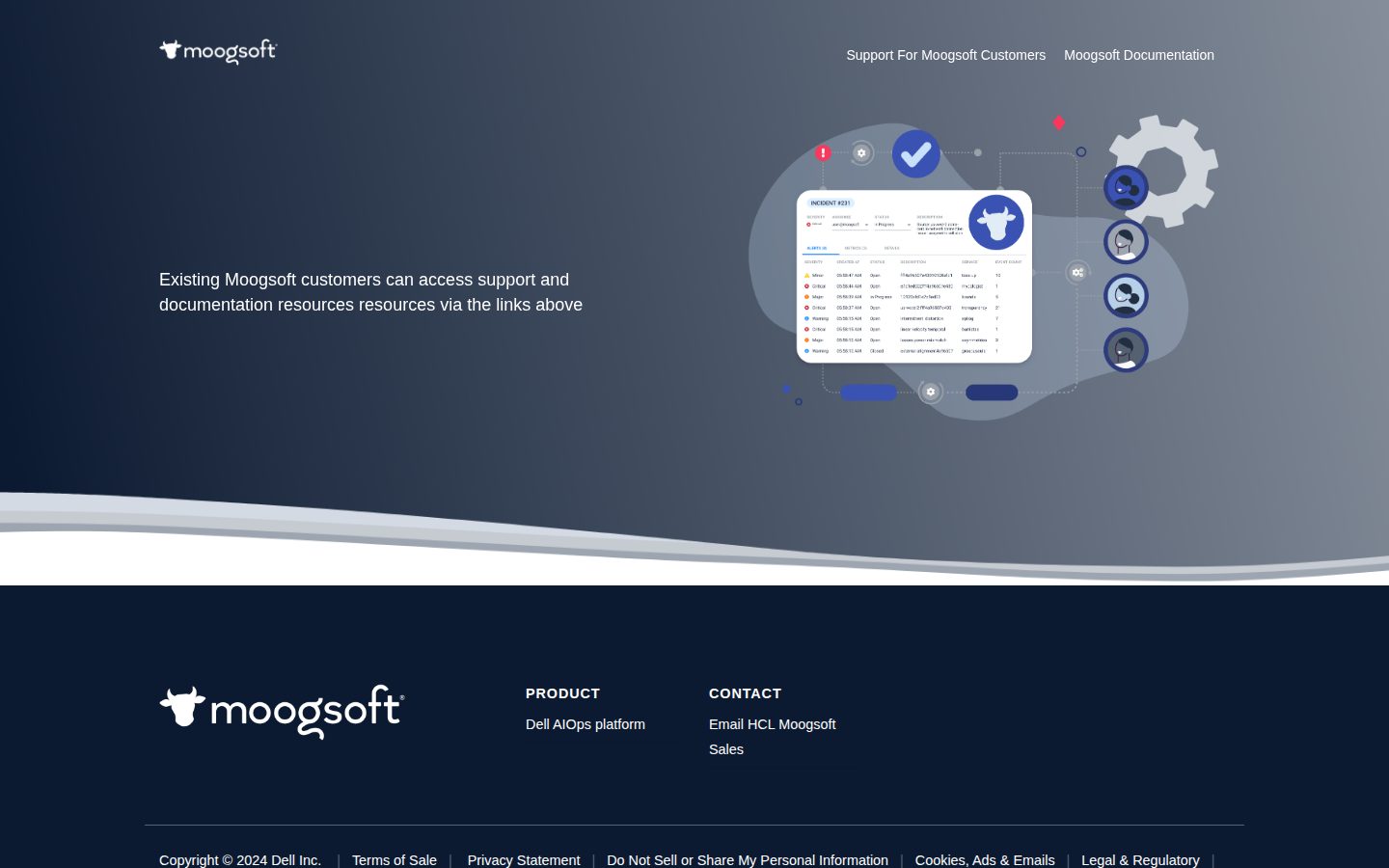
In practice, Moogsoft ingests alerts and events from across an IT environment and uses AI-driven correlation to group related signals into a smaller set of actionable situations. Operators work from these consolidated incidents rather than raw alert streams, reducing the manual triage burden and accelerating response times.

The platform's highlighted differentiators include its anomaly detection algorithms, which the product positions as industry-leading, and its automated noise reduction capabilities. These features are designed to filter out irrelevant or redundant alerts before they reach on-call engineers, allowing teams to focus on genuine service degradations.

Moogsoft targets IT operations, SRE, and NOC teams at mid-to-large enterprises managing complex, high-volume alert environments. It competes in the AIOps category alongside products such as PagerDuty, BigPanda, Splunk ITSI, and ServiceNow Event Management. Pricing details are not publicly listed; prospective customers are directed to contact the vendor.

Moogsoft is now owned by Thoughtworks following an acquisition. The platform offers documentation and support resources for existing customers, suggesting an established deployment base. Integration breadth with monitoring and observability tooling is a practical consideration for teams evaluating fit.

Features

AI

  • AI-Powered Anomaly Detection

    Uses machine learning algorithms with adaptive thresholds and pattern recognition to continuously monitor IT systems and identify deviations from normal behavior that could signal potential incidents.

  • Natural Language Processing (NLP) for Correlation

    Makes alert relatedness decisions based on NLP rather than static rules or topology, enabling more intelligent and context-aware grouping of incidents.

  • Situation-Based Event Correlation

    Groups related alerts and anomalies from disparate systems into coherent 'Situations' using patented machine learning algorithms that identify relationships between seemingly unrelated events.

Analytics

  • Automated Root Cause Analysis (RCA)

    Employs advanced analytics and historical time-series data to automatically pinpoint the root cause of complex incidents, dramatically reducing manual troubleshooting time.

  • Predictive Maintenance

    Analyzes historical trends and patterns to forecast potential infrastructure failures before they occur, enabling proactive maintenance scheduling to maintain continuous service availability.

Automation

  • Workflow Engine

    A configurable workflow engine that lets users process monitoring data with sequences of actions to ingest, enrich, automate, ticket, and collaborate across incident response workflows.

Collaboration

  • Situation Room (ChatOps Collaboration)

    Offers a virtual Network Operations Center (NOC) Situation Room where teams can collaborate throughout the incident management lifecycle regardless of physical location, with integrated ChatOps support.

Core

  • Alert Noise Reduction

    Automatically applies statistical calculations and noise-reduction algorithms to deduplicate and filter incoming alerts, reducing operational alert volumes by up to 99% while keeping critical issues visible.

  • Multi-Domain Data Enrichment

    Enriches ingested alert data with key contextual metadata such as location, department, business criticality, service relationships, runbook references, and escalation processes.

  • Single Pane of Glass Observability

    Aggregates cross-source data from monitoring tools, logs, metrics, and ticketing systems into a unified view so teams do not have to navigate multiple interfaces to synthesize operational information.

Integration

  • Open API & Custom Integrations

    Provides a REST API, webhooks, and a 'Create Your Own Integration' feature enabling custom connectivity with over 50 out-of-the-box tools including ServiceNow, Splunk, AppDynamics, New Relic, and Jira.

Security

  • SSO & Encryption Security Controls

    Integrates security throughout the software development lifecycle with strong encryption for data at rest and in transit, and supports comprehensive authentication methods including Single Sign-On (SSO).

Preview

Thoughtworks Moogsoft desktop previewThoughtworks Moogsoft mobile preview

Pricing Plans

Free

Free

Entry-level plan for small teams or individuals evaluating Moogsoft. Limited to 3 users with basic observability and correlation capabilities.

  • Up to 3 users
  • Up to 500k metrics
  • 1 correlation configuration
  • Alert noise reduction
  • Anomaly detection
  • REST API and webhook integrations
Popular

Team

$833/monthly

For growing DevOps, ITOps, and SRE teams that need expanded metrics capacity, unlimited users, and more correlation configurations. Billed annually.

  • Unlimited users
  • 1.5M metrics + 15k events
  • 10 correlation configurations
  • AI-driven alert correlation and noise reduction
  • Multi-domain data enrichment
  • Incident management and Situation Room collaboration
  • 14-day free trial available

Enterprise

Contact sales

Built for large-scale enterprise IT operations requiring unlimited correlation configurations and high-volume event and metrics ingestion. Pricing requires contacting Moogsoft sales (salesinfo@moogsoft.com or moogsoft.com/contact-us).

  • Unlimited correlation configurations
  • 200k events + 20M metrics
  • Full AIOps platform capabilities
  • Advanced ML-based event correlation
  • On-premise licensing option available
  • Dedicated support and onboarding
  • Custom integrations via REST API and webhooks

AI Panel Reviews

The Decision Maker

The Decision Maker

Strategic bet, vendor viability, timing, adoption approval
6.8/10

Solid AIOps core, but Thoughtworks ownership raises real longevity questions.

Moogsoft's noise reduction and Situation-based correlation are proven capabilities at $833/month for the Team tier. The Thoughtworks acquisition is the thing I'd want to understand before signing anything.

The feature set is real. Alert noise reduction claiming up to 99% deduplication, NLP-driven correlation, and a Situation Room for ChatOps collaboration — that's a complete AIOps story. The Team plan at $833/month with unlimited users is honest pricing against BigPanda and PagerDuty, both of which charge per seat and get expensive fast.

Vendor viability is the genuine concern. No changelog, no public funding data, and the Thoughtworks acquisition puts this in a familiar pattern — acquired platform, rationalized roadmap, slower execution. I've seen that movie. The docs suggest an established install base, which matters, but I'd want to know what the product org looks like today.

The tradeoff is straightforward: rich capabilities for mid-to-large ITOps teams, weaker case for anyone who needs confidence in 36-month roadmap continuity. Pilot it if you're in a noisy NOC environment. Don't standardize until you've spoken directly to someone on the product team.

Competitive Positioning7.0

Holds its own against PagerDuty and BigPanda on correlation depth, but neither of those peers carries the same acquisition uncertainty.

Reputation Risk6.5

Moogsoft is a known AIOps name, but explaining a Thoughtworks-owned platform to the board in 18 months could get awkward.

Speed to Value7.8

99% noise reduction is a fast, measurable win — the Team tier's 14-day trial means you can validate that claim before committing $833/month.

Strategic Fit7.5

Situation-based correlation and automated RCA directly reduce MTTR for NOC and SRE teams managing high-volume alert environments.

Vendor Viability5.5

Acquired by Thoughtworks with no public funding data, no changelog, and no visible shipping cadence — longevity is a real question.

Pros

  • Unlimited users at $833/month undercuts per-seat competitors significantly
  • NLP-driven correlation and patented Situation grouping are genuinely differentiated vs. rule-based tools
  • 50+ out-of-the-box integrations including Datadog, Splunk, ServiceNow, and Jira
  • Free tier with anomaly detection and REST API lets you validate fit without a sales call

Cons

  • No changelog and no public roadmap — hard to know what's actually being shipped
  • Thoughtworks acquisition creates strategic uncertainty for a platform-level commitment
  • No free trial on Enterprise tier and no public pricing — forces a sales conversation too early
  • API capabilities listed but marked as not externally confirmed in evidence

Right for

Mid-to-large enterprise NOC or SRE teams drowning in alert volume who need measurable noise reduction fast.

Avoid if

You need a vendor with a clear, independent product roadmap and verifiable shipping momentum.

The Domain Strategist

The Domain Strategist

Craft and strategy in the product's domain — adapts identity per category, same lens
7.2/10

Solid AIOps noise reduction engine, but the Thoughtworks acquisition creates real 3-year uncertainty.

Moogsoft's Situation-based correlation and NLP-driven alert grouping are genuinely differentiated from rule-based competitors. The acquisition by Thoughtworks and missing public roadmap make this a harder bet than it was two years ago.

The core architecture here is sound. NLP-based correlation instead of static topology rules is the right design choice — it handles ephemeral infrastructure and microservice churn better than BigPanda's rule-heavy approach. The '99% alert noise reduction' claim is marketing language, but the underlying Situation model — grouping disparate signals into coherent working incidents — is how mature SRE orgs actually want to operate. The $833/month Team tier with 1.5M metrics and unlimited users is competitively priced for mid-market ITOps teams.

The Thoughtworks acquisition is where I slow down. No public changelog, no pricing page, API documentation status is unclear — these are signals of a product in organizational transition, not active development velocity. If we adopt this in year one, by year three we're either on a thriving roadmap or migrating off a product that's been quietly sunsetted into a Thoughtworks consulting bundle.

The 50+ out-of-the-box integrations including ServiceNow, Splunk, and Datadog give this real deployment viability. But no free trial on Enterprise and contact-only pricing above the Team tier means the evaluation cycle gets long fast. For teams that can live within the Team tier ceiling, this is a capable platform. For anyone needing the Enterprise event volume, the procurement friction is real.

Category Positioning6.8

Competes credibly against PagerDuty and ServiceNow Event Management on correlation depth, but lacks the ecosystem momentum and funding visibility of those category leaders.

Domain Fit8.0

Situation Room ChatOps, multi-domain enrichment with runbook references, and single-pane observability map directly to how NOC and SRE teams structure incident response.

Integration Surface7.5

50+ out-of-the-box connectors including Datadog, Splunk, AppDynamics, and ServiceNow cover most enterprise monitoring stacks; REST API enables custom paths.

Long-term Implications5.5

No public changelog and post-acquisition organizational ambiguity create meaningful roadmap risk over a 3-year deployment horizon.

Strategic Depth7.8

Patented ML-based Situation correlation and NLP grouping show genuine algorithmic investment beyond basic threshold alerting.

Pros

  • NLP-based correlation avoids brittle static rule maintenance that plagues legacy AIOps deployments
  • Team tier at $833/month with unlimited users and 1.5M metrics is strong mid-market value
  • Situation model aligns with how mature SRE teams actually triage — consolidated incidents, not raw alert queues
  • 50+ native integrations including Datadog, Splunk, and ServiceNow reduce connector build burden

Cons

  • No public changelog or roadmap signals — hard to assess development velocity post-Thoughtworks acquisition
  • Enterprise pricing is contact-only with no trial, extending procurement cycles for high-volume environments
  • No public API documentation status raises integration depth questions beyond listed connectors
  • Acquisition context creates real 3-year platform continuity risk that PagerDuty or Splunk ITSI don't carry

Right for

Mid-market ITOps and SRE teams with complex multi-tool monitoring stacks who need correlation depth without building rule libraries.

Avoid if

Your 3-year roadmap requires a vendor with demonstrable active investment and transparent product development cadence.

The Finance Lead

The Finance Lead

Money, total cost of ownership, contracts, procurement math
6.2/10

$833/month Team tier, but Enterprise pricing vanishes behind a sales call.

$833/month annually for unlimited users is structurally sound. No public Enterprise pricing kills procurement momentum.

Team tier: $833/month billed annually, $9,996/year. Unlimited users — no seat tax. That's rare and genuinely good math for a 50-person NOC team. Free tier exists: 3 users, 500K metrics, basic correlation. Useful for a proof of concept, not production. Compare to PagerDuty, which charges per user and layers on AIOps features at additional cost. Moogsoft's flat-user model wins on paper.

Enterprise pricing: contact sales. No published rate. The evidence lists Enterprise as '$0.00' — a data artifact, not a deal. 200K events plus 20M metrics is the stated ceiling, but overage rates aren't published anywhere. That's where the invoice surprises live. Year-3 TCO is genuinely unknowable without a contract in hand.

Thoughtworks acquired Moogsoft — ownership changes carry integration risk and roadmap uncertainty. No changelog visible, no API docs linked. Contract terms aren't disclosed publicly. Auto-renewal window, termination rights — all opaque. At $9,996/year for Team, the entry cost is manageable. The risk is what sits above that tier.

Billing & Procurement5.5

Flat-user Team pricing reduces per-seat friction, but Enterprise procurement requires a sales cycle with no anchor number to negotiate against.

Contract Flexibility4.5

Team tier billed annually; no public termination-for-convenience clause, auto-renewal window, or cancellation terms disclosed.

Pricing Transparency5.5

Team tier at $833/month is published; Enterprise requires a sales call with zero public rate card.

ROI Clarity6.5

Up to 99% alert noise reduction is a specific, measurable claim tied to the core Alert Noise Reduction feature — if the number holds, it's quantifiable.

Total Cost of Ownership5.0

No published overage rates for events or metrics above tier limits makes 3-year TCO unmodelable at Enterprise scale.

Pros

  • Unlimited users on Team tier — $9,996/year flat, no seat creep math needed
  • Free tier includes anomaly detection and REST API: real evaluation possible
  • 50+ out-of-the-box integrations including ServiceNow, Splunk, and Datadog
  • SSO included — no SSO tax, unlike most category competitors

Cons

  • Enterprise pricing fully opaque — no public rate, no overage schedule
  • Thoughtworks acquisition creates roadmap and support continuity uncertainty
  • Annual billing only on Team tier — no monthly flex, no termination-for-convenience published
  • No public changelog or API docs — harder to assess active development velocity

Right for

Mid-market ITOps or SRE teams with high alert volume who can negotiate Enterprise terms and have procurement bandwidth for a sales cycle.

Avoid if

You need a fully transparent, self-serve pricing model with predictable year-3 costs before talking to a vendor.

The Domain Practitioner

The Domain Practitioner

Daily hands-on reality in the product's domain — adapts identity per category, same lens
7.6/10

Moogsoft's alert correlation is real — but the integration setup will own your first two weeks

Solid AIOps core with genuine noise reduction claims (up to 99%) and NLP-based correlation that goes beyond static rules. Pricing is transparent at $833/month for the Team tier, but the zero-changelog and no-API-docs signals give pause.

The 'Situations' model is the right abstraction. Grouping correlated alerts into actionable clusters before they hit the on-call queue is exactly what SRE teams need at scale. NLP-driven correlation over static topology rules is a meaningful differentiator versus BigPanda's rule-heavy approach. Ten correlation configurations on the Team tier is workable for most mid-size environments.

Day three is where integration debt lands. Fifty-plus out-of-the-box connectors sounds complete until you hit the third custom webhook that needs the 'Create Your Own Integration' path. No public API docs visible from the evidence. That's a friction multiplier — every non-standard data source becomes a support ticket, not a self-serve config.

The Thoughtworks acquisition adds uncertainty. No changelog visible, blog activity unknown, and enterprise pricing is opaque. PagerDuty and Splunk ITSI both publish changelogs. For tooling that sits in your alert path, knowing what changed last Tuesday matters. The free tier at 3 users and 500k metrics is evaluation-only; don't mistake it for a real pilot.

Day-3 Reality7.2

Situations-based triage is genuinely better than raw alert streams, but 10 correlation configs on Team tier and no visible changelog signals post-demo friction.

Documentation Practitioner-Fit6.5

Docs exist (docs=Y) but changelog is absent and API docs aren't surfaced publicly, which suggests documentation written for buyers, not operators.

Friction Surface6.9

No public API docs visible and no self-serve trial on Enterprise means every edge case routes through sales or support rather than engineering.

Power-User Depth7.5

Workflow engine, multi-domain enrichment, automated RCA, and REST API webhooks give advanced operators real configuration surface, though discoverability beyond the UI is unclear.

Workflow Integration7.8

Datadog, ServiceNow, Splunk, Jira integrations cover the core SRE stack; the Situation Room ChatOps model fits incident response workflows without forcing a context switch.

Pros

  • NLP-based correlation beats static-rule competitors — more resilient in dynamic environments
  • 50+ out-of-the-box integrations including Datadog, AppDynamics, New Relic cover most SRE stacks
  • Team tier at $833/month with unlimited users is competitive for mid-size on-call teams
  • Situation Room ChatOps reduces context-switching during active incidents

Cons

  • No public changelog — dangerous for tooling that sits directly in your alert path
  • API docs not publicly surfaced; custom integrations likely require support engagement
  • No free trial on Enterprise; 3-user free tier isn't enough to validate at realistic event volume
  • Post-Thoughtworks acquisition trajectory is unclear, adding platform longevity risk

Right for

Mid-to-large SRE or NOC teams drowning in multi-source alert volume who have budget for a dedicated AIOps layer and engineering time to configure integrations.

Avoid if

Your team needs self-serve API documentation and transparent product velocity signals before committing to alert-path infrastructure.

The Power User

The Power User

Daily human experience, onboarding, polish, learning curve, reliability
7.6/10

Moogsoft's 99% noise reduction promise is serious — but the Thoughtworks acquisition shadow lingers

Solid AIOps muscle for overwhelmed NOC and SRE teams. The pricing structure is clearer than most enterprise tools in this category, which is a pleasant surprise.

The $833/month Team tier unlocking unlimited users is genuinely good math for mid-size ops teams. You're not paying per seat while your on-call rotation grows. The Situation Room concept — grouping related alerts into consolidated 'Situations' instead of flooding engineers with raw noise — is the right idea, and the NLP-based correlation instead of static rules is what separates this from older tools like ServiceNow Event Management doing the same job with rigid topology maps.

That said, no changelog visible anywhere. No public pricing page until you dig. The free plan caps you at 3 users and 500k metrics, which barely gets a real ops team through evaluation. PagerDuty gives you a real trial. Moogsoft's 14-day trial is Team-tier only, and you have to find that detail buried in the plan comparison.

The Thoughtworks acquisition is the thing I'd want answered before signing anything. Roadmap clarity, support continuity, whether enterprise deals still close smoothly — none of that is visible publicly. Web-only platform means mobile is nonexistent, which for on-call work isn't a minor gap.

Daily Polish6.5

No changelog and no H1 on the homepage suggests the marketing surface isn't being actively tended — that usually reflects inward product attention too.

Learning Curve7.0

Docs are available and the Situation-based model is conceptually clean, but 10 correlation configurations on the Team tier means teams have to be deliberate about setup from day one.

Mobile Parity3.5

Web-only platform — for a tool whose whole job is catching on-call engineers before incidents escalate, that's a real operational gap.

Onboarding Experience6.8

The 14-day trial exists for the Team tier, but the free plan's 1-correlation-config limit makes genuine evaluation feel staged rather than open.

Reliability Feel7.5

An established enterprise deployment base and documented REST API and webhook integrations suggest the core platform is mature and battle-tested.

Pros

  • Unlimited users at the $833/month Team tier — rare for this category
  • NLP-based correlation beats static-rule competitors on complex multi-system environments
  • 50+ out-of-the-box integrations including Datadog, Splunk, ServiceNow, and Jira
  • On-premise licensing option at Enterprise tier, which regulated industries actually need

Cons

  • No changelog — product velocity is invisible, which matters post-acquisition
  • Mobile is nonexistent for a platform built around urgent incident response
  • Free plan at 3 users and 1 correlation config is too thin to evaluate honestly
  • Thoughtworks acquisition adds roadmap uncertainty that sales calls won't fully resolve

Right for

Mid-to-large enterprise ITOps or SRE teams drowning in alert volume who need ML-based triage, not another rules engine.

Avoid if

You need mobile visibility for on-call work or want a vendor with a transparent public roadmap right now.

The Skeptic

The Skeptic

Contrarian. Watch-outs, deal-breakers, broken promises, category patterns
6.2/10

Thoughtworks acquisition + no changelog + no pricing page = caution flags stacking up

Moogsoft has real AIOps bones — NLP correlation, 99% noise reduction claims, 50+ integrations. But the Thoughtworks acquisition shadow, missing changelog, and no public pricing page are classic pre-sunset signals.

Three tells before I go deeper. One: 'industry leading' is in the meta description. Two: no changelog visible. Three: the Enterprise plan lists price as 'Free' in the data — that's a scrape artifact, but it signals the pricing page isn't maintained. Not great hygiene for a vendor asking for an enterprise contract.

The product itself isn't thin. Situation-based correlation with patented ML, NLP-driven alert grouping, $833/month Team tier with unlimited users — that's a reasonable offer. BigPanda and PagerDuty charge more for less flexibility at that scale. The 99% noise reduction claim is the kind of superlative that ages poorly, but the mechanism — adaptive thresholds plus NLP correlation — is at least specific.

The Thoughtworks acquisition is the real watch item. Category history is littered with AIOps acquisitions that turned into slow sunsets: Moogsoft pre-acquisition was already competing against Splunk ITSI and ServiceNow Event Management. No free trial visible on the main site, no changelog cadence, API listed as absent in capabilities scrape despite the docs claiming REST API exists. Could go either way. I'd want a 12-month roadmap in writing before signing.

Competitive Differentiation6.5

NLP-based correlation over static rules is a real differentiator vs. BigPanda's topology-first approach, but ServiceNow Event Management has closed that gap for enterprises already on that stack.

Exit Portability5.8

REST API and webhook integrations exist per the Team tier, but no public API docs confirmed in scrape and Situations data model is proprietary — migration wouldn't be clean.

Long-term Viability5.2

No changelog, no visible funding signal post-Thoughtworks acquisition, no free trial on the main site — the maintenance signals are weak for a platform asking for annual contracts.

Marketing Honesty5.5

'Industry leading anomaly detection algorithms' in the meta with no benchmark data and no H1 on the homepage — aspirational copy, not grounded claims.

Track Record Match6.0

AIOps correlation platforms have a mixed survival rate post-acquisition; Moogsoft fits the pattern of a niche leader absorbed and deprioritized, not the Splunk/PagerDuty survivor pattern.

Pros

  • Situation-based ML correlation with patented algorithms — not just rule-based deduplication
  • $833/month Team tier includes unlimited users, which undercuts PagerDuty's per-seat model
  • 50+ out-of-the-box integrations including ServiceNow, Splunk, and Datadog
  • On-premise licensing option available at Enterprise tier — rare in this category

Cons

  • No changelog visible — no evidence of active shipping cadence
  • Thoughtworks acquisition creates roadmap opacity; category norm is acqui-hires go quiet within 18 months
  • 99% noise reduction claim is unverified; no benchmark or third-party validation cited
  • No free trial surfaced on main site despite Team tier listing one — inconsistent

Right for

Mid-size ITOps or NOC teams drowning in alert volume who need NLP-driven correlation and can negotiate a short initial contract.

Avoid if

You need a vendor with a visible roadmap and active changelog before committing to a multi-year AIOps platform contract.

Buyer Questions

Common questions answered by our AI research team

Features

Does Moogsoft reduce alert noise automatically?

Yes. Moogsoft applies machine learning algorithms to IT event data to automatically reduce alert noise, surfacing actionable incidents so operations teams are not overwhelmed by raw alert volume.

Features

How does Moogsoft detect anomalies in IT events?

Moogsoft uses machine learning algorithms applied to IT event data to perform anomaly detection, identifying unusual patterns and correlating related events to surface meaningful incidents.

Integration

Does Moogsoft support custom integrations?

Yes. Custom Integration is listed as a core platform capability alongside noise reduction, enrichment, anomaly detection, correlation, collaboration, and self-service.

Integration

Does Moogsoft work with Datadog?

Yes. Datadog is listed as a specific technical use case and integration area on the Moogsoft platform.

Also in AI DevOps