vLex logo

vLex Review

Visit

Legal research and drafting AI grounded in a billion documents from 100+ countries

vLex is an AI-powered legal research and drafting platform for lawyers.

AI Panel Score

7.9/10

6 AI reviews

Reviewed

AI Editor Approved

What is vLex?

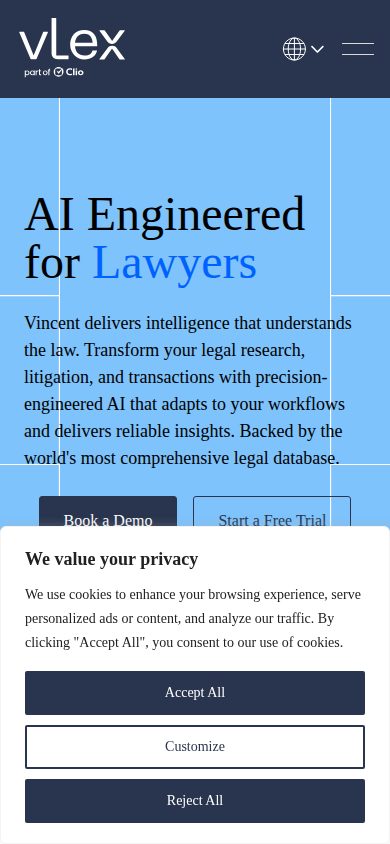
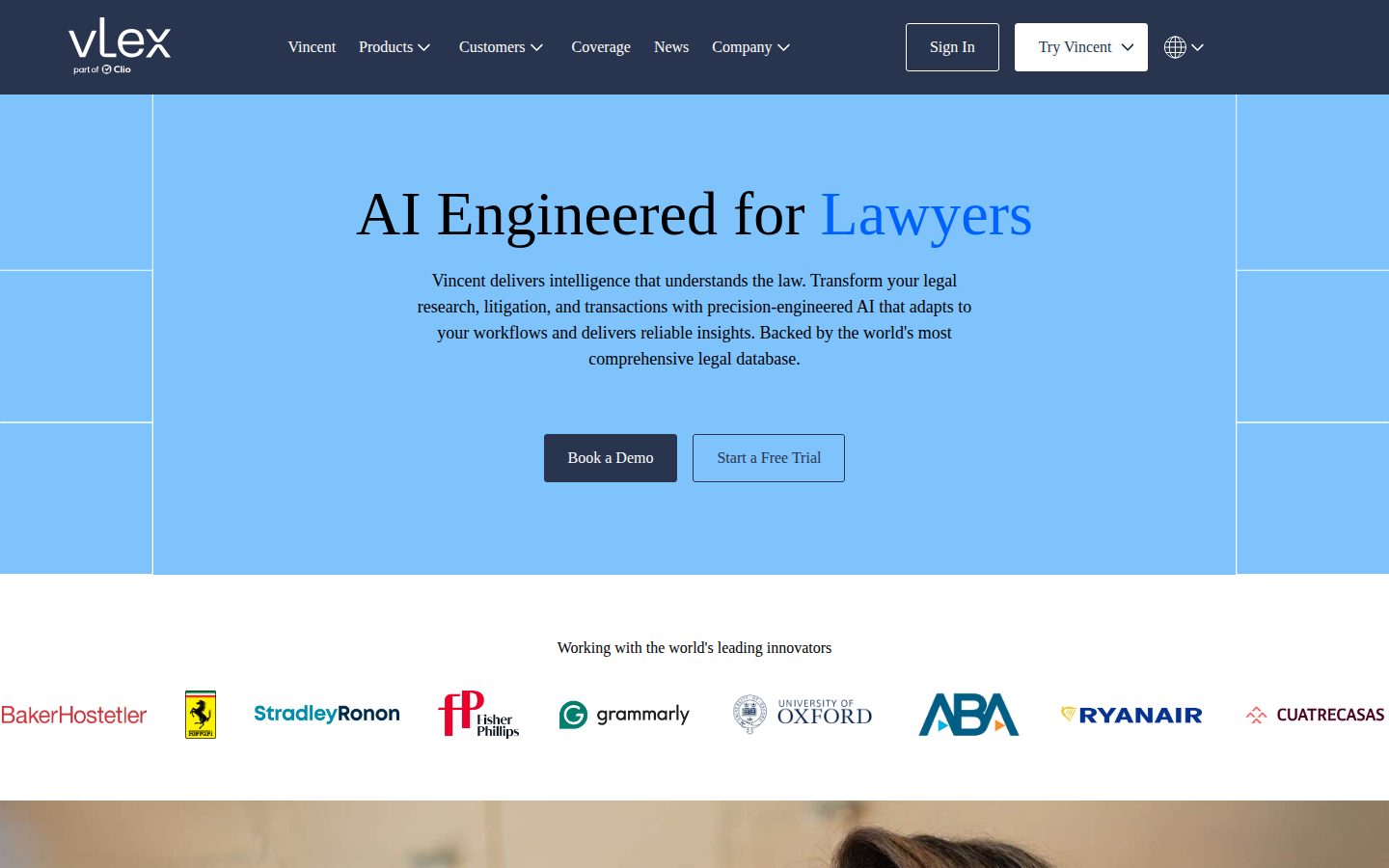
vLex is an AI-powered legal research and drafting platform that helps lawyers, from solo practitioners to AmLaw 100 firms, find cited answers across a database of more than one billion documents from over 100 countries. Its Vincent AI assistant answers questions in natural language and returns case law, statutes, and commentary with links to every source, pairing generative and rules-based AI to keep results grounded. Pricing is quote-based, with a self-serve plan reported around $65 per user per month, a free trial, and free access for members of 40-plus US state bar associations. Vincent runs more than 20 workflows, including Build an Argument, Compare Jurisdictions, Extract and Analyze Claims, contract redlining, deposition summaries, and the Legal Pad drafting space, plus connectors for iManage, NetDocuments, and Docket Alarm. It suits litigation, appellate, and cross-border practices that need research they can trace to primary sources, and competes with Thomson Reuters Westlaw and LexisNexis Lexis+ AI.

About vLex

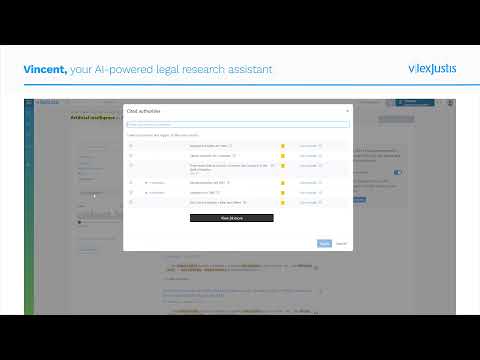
Lawyers query vLex in plain language through its Vincent AI assistant, which searches a corpus of over a billion legal documents and returns answers with inline citations to the case law, statutes, and secondary sources behind them. Vincent's hybrid pipeline combines generative models with rules-based checks, so each response links to verifiable material in the vLex Library rather than free-form text.

Beyond research, Vincent runs more than 20 pre-built workflows. Build an Argument drafts a persuasive position from a lawyer's facts and chosen jurisdiction; Compare Jurisdictions places the law of different countries or states side by side; Extract and Analyze Claims maps the causes of action, facts, witnesses, and parties inside a complaint. It also analyzes and redlines contracts, builds document timelines, summarizes depositions, and drafts in a side-by-side workspace called Legal Pad. Connectors reach into iManage, NetDocuments, SharePoint, and Google Drive, and a Docket Alarm integration adds US docket data with judge and party profiling.

vLex fits solo practitioners, litigation and appellate boutiques, and AmLaw 100 firms that need cited research and drafting across borders. Pricing is quote-based, with a self-serve entry point reported around $65 per user per month and free access for members of 40-plus US state bar associations through the Fastcase benefit. It competes with Thomson Reuters Westlaw and LexisNexis Lexis+ AI with its Protégé assistant.

The platform covers legal material from more than 100 countries and exposes APIs for custom integrations. Vincent is now part of Clio following vLex's acquisition, and independent benchmarking has reported productivity gains and higher answer reliability versus general-purpose language models.

Features

Document Processing

  • Analyze Document

    Reviews an uploaded document to surface key points, generate summaries, and find related materials in the vLex Library.

  • Contract Analysis and Redline

    Identifies legal risks in contracts, performs redline analysis with legal context, and produces side-by-side document comparisons.

Drafting

  • Build an Argument

    Constructs a persuasive position from the lawyer's facts and selected jurisdiction, ready to adapt into briefs or client letters.

  • Legal Pad

    A side-by-side workspace that turns research into structured first drafts.

Integration

  • Docket Alarm Integration

    Adds US docket data with judge and party analytics for litigation research and profiling.

  • Document Management Integrations

    Connects to iManage, NetDocuments, SharePoint, and Google Drive to work with a firm's own files.

Litigation

  • Deposition Summary

    Generates structured summaries of deposition transcripts for faster review.

  • Extract and Analyze Claims

    Maps the causes of action in a complaint along with the supporting citations, facts, witnesses, and parties.

  • Timeline Extraction

    Builds a chronological timeline of events automatically from case documents.

Reliability

  • Trust but Verify Citations

    Exposes the sources behind every answer with bidirectional citation analysis so lawyers can check the underlying authority.

Research

  • Ask a Research Question

    Answers legal questions posed in plain language and returns case law, statutes, and commentary with citations linking to each source.

  • Compare Jurisdictions

    Places the law of selected countries or states side by side for cross-border and multi-state analysis.

Preview

vLex desktop previewvLex mobile preview

Pricing Plans

vLex + Vincent AI (Self-Serve)

$65/monthly

Individual attorneys and small firms who want self-serve access to the vLex Library and the Vincent AI assistant.

  • Vincent AI assistant with 20+ workflows
  • Access to the vLex global legal database
  • Cited natural-language legal research
  • Document analysis and drafting tools
  • Free trial before purchase

Enterprise

Contact sales

Larger firms and organizations; content access, license count, term, and add-ons are negotiated with vLex.

  • Volume licensing for firms
  • Configurable content and jurisdiction access
  • Document management system integrations
  • Docket Alarm litigation data
  • API access for custom integrations
  • Dedicated onboarding and support

AI Panel Reviews

The Decision Maker

The Decision Maker

Strategic bet, vendor viability, timing, adoption approval
8.3/10

Clio's billion-dollar acquisition turns a research subscription into a durable strategic bet.

vLex pairs a billion-document legal library with Vincent AI, and Clio's $1 billion acquisition removes the usual will-they-survive question. Enterprise pricing stays quote-based, so budget certainty takes a call.

Courts have already sanctioned lawyers who filed AI-invented citations. That fear is what vLex is built to kill: Vincent AI links every answer back to the case, statute, or commentary behind it through Trust but Verify Citations. Defensible sourcing is the reason a board signs off.

The vendor question just got easy. Clio closed its $1 billion acquisition of vLex in 2025, the largest deal in legal tech, and raised another $500 million at a $5 billion valuation. This vendor will still exist in three years.

Against Thomson Reuters Westlaw and its CoCounsel assistant, vLex competes on cross-border depth and cited answers, not brand incumbency. The self-serve tier starts near $65 per user, but enterprise terms are quote-based, so procurement won't get a clean number without a call. Pilot it with your litigation group first.

Competitive Positioning8.0

Competes with Westlaw and Lexis+ AI on cited answers and global coverage.

Reputation Risk8.3

Trust but Verify Citations directly counters the hallucinated-citation risk that sanctions lawyers.

Speed to Value8.0

Self-serve access near $65 and 20-plus prebuilt workflows shorten time to first value.

Strategic Fit8.2

Cited cross-border research fits firms that answer to courts and clients.

Vendor Viability8.7

Clio's $1 billion acquisition and $5 billion valuation remove any survival doubt.

Pros

  • Clio's $1 billion acquisition makes long-term vendor survival a non-issue.
  • Trust but Verify Citations addresses the sanction risk of hallucinated authority.
  • Coverage of 100-plus countries suits cross-border and multi-jurisdiction firms.
  • Self-serve entry near $65 per user lowers the barrier to a pilot.

Cons

  • Enterprise pricing is quote-based, so firm-wide budgets need a sales call.
  • It competes against entrenched incumbents Westlaw and Lexis with deep brand loyalty.

Right for

Firms that need cited legal research they can defend to a court.

Avoid if

Solo lawyers who only handle single-jurisdiction matters.

The Domain Strategist

The Domain Strategist

Craft and strategy in the product's domain — adapts identity per category, same lens
8.3/10

For a GC managing cross-border risk, vLex's reach into 100-plus countries is the real edge.

vLex covers legal material from more than 100 countries, which matches how a general counsel actually experiences exposure. Its generative-plus-rules design keeps answers sourced, but enterprise content access is negotiated, not fixed.

Most legal-research tools stop at the US border. A general counsel's exposure doesn't. vLex covers more than 100 countries, and Compare Jurisdictions places the law of different states or nations side by side, which is the exact shape of multinational compliance work.

The design choice matters over three years. Vincent AI pairs generative models with rules-based checks, so every answer links to material in the vLex Library rather than free-form text. That's defensibility built into the architecture, not a disclaimer added later.

The integration surface is strong: connectors reach iManage, NetDocuments, SharePoint, and Google Drive, so it meets your knowledge base where it lives. Against an AI-native rival like Harvey, vLex trades some model polish for a citable corpus 25 years deep. The catch is enterprise content and jurisdiction access are negotiated per firm, so scope coverage before signing.

Category Positioning8.0

Cross-border depth separates vLex from US-centric Westlaw and AI-native Harvey.

Domain Fit8.5

Coverage of 100-plus countries matches a multinational general counsel's actual risk map.

Integration Surface8.2

iManage, NetDocuments, SharePoint, and Google Drive connectors reach existing knowledge systems.

Long-term Implications8.2

Rules-based citation linking builds defensibility into the workflow for years ahead.

Strategic Depth8.3

20-plus workflows plus a billion-document corpus support matter strategy, not just lookup.

Pros

  • Coverage across 100-plus countries fits genuinely multinational legal exposure.
  • Compare Jurisdictions turns cross-border analysis into a native workflow.
  • Rules-based citation linking makes every answer defensible to a court.
  • Connectors into iManage and NetDocuments meet firms where their files live.

Cons

  • Enterprise content and jurisdiction scope are negotiated, not published.
  • AI-native rivals like Harvey may edge it on raw model polish.

Right for

General counsel who oversee legal matters across multiple countries.

Avoid if

In-house teams whose work never crosses a single jurisdiction.

The Finance Lead

The Finance Lead

Money, total cost of ownership, contracts, procurement math
7.7/10

Free through 40-plus state bars, then $65 a seat when you outgrow it.

The self-serve tier is a transparent $65 per user per month with Vincent AI included. Enterprise is quote-based, so the real firm-wide number stays behind a sales call.

Start at zero. Members of 40-plus US state bar associations get vLex free through the Fastcase benefit. Past that, self-serve runs $65 per user, monthly, Vincent AI included.

Do the math on a 25-lawyer boutique. 25 seats x $65 x 12 = $19,500 a year, before add-ons. Docket Alarm data and API access sit on the enterprise tier, which is quote-based. No published rate means the invoice isn't predictable.

Pricing transparency is split. Self-serve is visible; enterprise is a negotiation, like LexisNexis. A free trial lets buyers test ROI first, and per-seat billing beats Lexis's opaque firm contracts. But term length and content scope are negotiated, so pin down renewal and export terms early.

Billing & Procurement7.6

Visible self-serve tier eases procurement; enterprise still needs a sales call.

Contract Flexibility7.5

Enterprise term, licenses, and content are negotiated per firm.

Pricing Transparency7.5

Self-serve $65 is public, but enterprise pricing stays quote-based.

ROI Clarity8.0

A free trial and 40-plus bar-association access let buyers test value first.

Total Cost of Ownership7.6

Per-seat math is clean, though add-ons like Docket Alarm carry unpublished rates.

Pros

  • Self-serve is a transparent $65 per user with Vincent AI included.
  • Free access through 40-plus state bars lowers the entry cost to nothing.
  • A free trial lets buyers validate ROI before any commitment.
  • Per-seat billing is more predictable than opaque incumbent firm contracts.

Cons

  • Enterprise pricing is quote-based with no published rate.
  • Add-ons like Docket Alarm and API access sit behind negotiation.

Right for

Small firms that want a fixed per-seat price up front.

Avoid if

Procurement teams that need every enterprise cost published in advance.

The Domain Practitioner

The Domain Practitioner

Daily hands-on reality in the product's domain — adapts identity per category, same lens
8.0/10

Every Vincent answer links back to the authority it cites, which is a researcher's whole job.

Trust but Verify Citations exposes the source behind every answer, so verifying a holding takes a click, not a re-search. Natural-language queries speed the common case but can bury the boolean precision experienced researchers rely on.

Every Vincent answer links back to the case, statute, or commentary it cites. For anyone who checks authority for a living, that bidirectional linking through Trust but Verify Citations is the difference between trusting output and re-checking it by hand.

The workflows are built for real research tasks, not demos. Extract and Analyze Claims maps a complaint's causes of action, facts, and parties; Timeline Extraction builds a chronology from the documents. 20-plus of these ship prebuilt, so the common litigation moves are one click.

Friction surface: natural-language search is fast, but it can hide the boolean and field precision that Westlaw's KeyCite workflow trained researchers to expect. However, because every result is sourced to the vLex Library's billion documents, a skeptical researcher can always drop back to reading the actual authority.

Day-3 Reality8.0

Sourced answers and prebuilt workflows hold up past the demo into daily research.

Documentation Practitioner-Fit7.8

Trust but Verify Citations lets researchers audit every answer against its source.

Friction Surface7.6

Natural language is fast but can obscure the boolean precision researchers expect.

Power-User Depth8.1

A billion-document library plus citation analysis supports deep authority work.

Workflow Integration8.0

20-plus workflows map to real litigation tasks like claim extraction and timelines.

Pros

  • Every answer links to its source, so verification is a click not a re-search.
  • Extract and Analyze Claims and Timeline Extraction automate real litigation tasks.
  • 20-plus prebuilt workflows cover the common research moves out of the box.
  • The billion-document vLex Library gives a deep fallback to raw authority.

Cons

  • Natural-language search can bury the boolean precision power researchers expect.
  • Verification still lands on the researcher, not the model.

Right for

Research attorneys who verify every citation before it ships.

Avoid if

Casual users who never check the underlying authority.

The Power User

The Power User

Daily human experience, onboarding, polish, learning curve, reliability
7.8/10

Ask it a legal question in plain English and it answers with actual cases.

Vincent AI answers in plain language and shows the cases behind every claim, which feels honest instead of confident-and-wrong. It's web-only with 20-plus workflows to learn, so the first week is more climb than glide.

Ask Vincent a question the way you'd ask a colleague, and it comes back with actual case law and citations instead of a paragraph of confident mush. That alone separates it from the general chatbots lawyers have learned not to trust.

Legal Pad is the nice touch, a side-by-side workspace that turns your research into a first draft without copy-pasting across tabs. The demo glow is real. What you feel by day three is the depth: 20-plus workflows is a lot of surface, and finding the right one takes a minute.

It's web-only, no dedicated mobile app, which for a courtroom tool is a small letdown next to how polished the desktop feels. At $65 a month with a free trial, though, the barrier to just trying it is low. Against Lexis+ AI and its Protege assistant it feels less enterprise-stiff, but you'll spend a week learning where everything lives.

Daily Polish7.9

Legal Pad's side-by-side drafting and cited answers feel considered, not thrown together.

Learning Curve7.5

20-plus workflows mean the first week is a climb before it clicks.

Mobile Parity7.3

Platform is web-only with no dedicated mobile app for courtroom use.

Onboarding Experience7.6

A free trial and plain-language queries lower the entry barrier for new users.

Reliability Feel8.0

Cited, source-linked answers feel trustworthy where general chatbots don't.

Pros

  • Plain-language questions return real cases and citations, not confident guesses.
  • Legal Pad turns research into a first draft without tab-juggling.
  • Source-linked answers feel trustworthy where general chatbots don't.
  • At $65 a month with a free trial, trying it costs almost nothing.

Cons

  • Web-only with no dedicated mobile app for courtroom moments.
  • 20-plus workflows make the first week a learning climb.

Right for

Lawyers who want plain-language research without the enterprise learning curve.

Avoid if

People who need a full mobile app for courtroom use.

The Skeptic

The Skeptic

Contrarian. Watch-outs, deal-breakers, broken promises, category patterns
7.5/10

Legal AI has a graveyard, and Clio's billion-dollar backing is why vLex isn't in it.

The usual survival worry is real in legal AI, but Clio's $1 billion acquisition answers it plainly. The differentiation is source-linked citations, though verification still lands on the lawyer.

Legal AI has a graveyard. Ross Intelligence promised AI research and got sued off the map by Thomson Reuters. So the question is always: why isn't this one next?

Two things push me toward yes. The corpus is 25 years deep, dating to the 2023 vLex-Fastcase merger. And Clio just paid $1 billion for the company. That's not a vendor about to vanish.

The real differentiator is Trust but Verify Citations, every answer sourced, which is more than most rivals show. But read the name closely: verify is still your job, not the model's. Against Westlaw's CoCounsel and the acquired Casetext, vLex isn't clearly ahead on raw model quality. Exit is fair, though, since your drafts export even if the library doesn't.

Competitive Differentiation7.3

Source-linked citations stand out, though model quality isn't clearly ahead of CoCounsel.

Exit Portability7.0

Drafts and documents export, though the library and workflows stay behind.

Long-term Viability8.2

Clio's $1 billion acquisition and $5 billion valuation secure the long-term outlook.

Marketing Honesty7.2

Trust but Verify is candid that lawyers still verify, though superlatives run hot.

Track Record Match7.5

25 years of data and the 2023 Fastcase merger back the depth claims.

Pros

  • Clio's $1 billion acquisition all but settles the survival question.
  • Trust but Verify Citations sources every answer, which most rivals don't show.
  • A 25-year corpus from the 2023 Fastcase merger backs the depth claims.
  • Drafts export, so the exit story is reasonable.

Cons

  • Verification stays the lawyer's job despite the AI framing.
  • No clear model-quality lead over Westlaw's CoCounsel or Casetext.

Right for

Cautious buyers who want a vendor that clearly won't disappear.

Avoid if

Firms expecting the AI to remove citation-checking entirely.

Buyer Questions

Common questions answered by our AI research team

Pricing

How much does vLex Vincent AI cost?

vLex uses quote-based pricing that scales with the content, licenses, and term you need. A self-serve plan is reported around $65 per user per month with Vincent AI included, and a free trial is available before you commit.

Features

What can Vincent AI do for litigators?

Vincent runs more than 20 workflows for litigators. Extract and Analyze Claims maps a complaint's causes of action, Build an Argument drafts positions, and it also builds case timelines, summarizes depositions, and redlines contracts.

Integration

Does vLex integrate with iManage and NetDocuments?

Yes. Vincent connects to iManage, NetDocuments, SharePoint, and Google Drive so you can work with your own files, and a Docket Alarm integration adds US docket data with judge and party analytics.

reliability

How reliable are Vincent AI's cited answers?

Vincent pairs generative and rules-based AI and links every answer to the underlying case law, statutes, or commentary in the vLex Library, letting you verify each citation instead of trusting unsourced text.

Setup

Can I access vLex free through my bar association?

Yes. Members of more than 40 US state bar associations get free vLex access through the Fastcase benefit, and any user can start with a free trial before moving to a paid Vincent AI subscription.

Also in AI Legal