Westlaw AI-Assisted Research logo

Westlaw AI-Assisted Research Review

Visit

AI-assisted legal research grounded in Westlaw content

Westlaw AI-Assisted Research is a generative AI legal research tool for attorneys working inside the Westlaw platform.

AI Panel Score

7.8/10

6 AI reviews

Reviewed

About Westlaw AI-Assisted Research

In practice, an attorney types a research question in plain English into the Westlaw search bar and receives a written answer drawn from Westlaw's primary law and secondary sources. Each statement in the answer is linked to the cases, statutes, regulations, or analytical material it relies on, so the user can click through to examine the underlying authority, run KeyCite on a cited case, or pivot into traditional Westlaw search from the same screen.

The feature is built on a Retrieval Augmented Generation architecture that constrains the large language model to Westlaw's indexed content and editorial classification, rather than letting it generate citations from open-web training data. Thomson Reuters layers additional AI tools on top of this base, including Quick Check, which analyzes an uploaded brief (Word up to 20MB, PDF up to 30MB) to surface relevant authority the document missed and flag KeyCite issues on cited cases, and a Deep Research mode that plans and executes multi-step research workflows across Westlaw's tools. KeyCite citator data is integrated throughout, so users see treatment flags and negative-history warnings alongside the AI's output.

The product is aimed at practicing attorneys, paralegals, and law students who already work in Westlaw. It is sold through several tiers — Westlaw Edge with AI-Assisted Research and the newer Westlaw Advantage, which adds agentic AI that runs multi-step processes without prompting. Pricing is sales-led and negotiated per firm rather than published; competitors in AI-powered legal research include LexisNexis Lexis+ AI, vLex Vincent AI, Bloomberg Law, and Casetext CoCounsel (also a Thomson Reuters product).

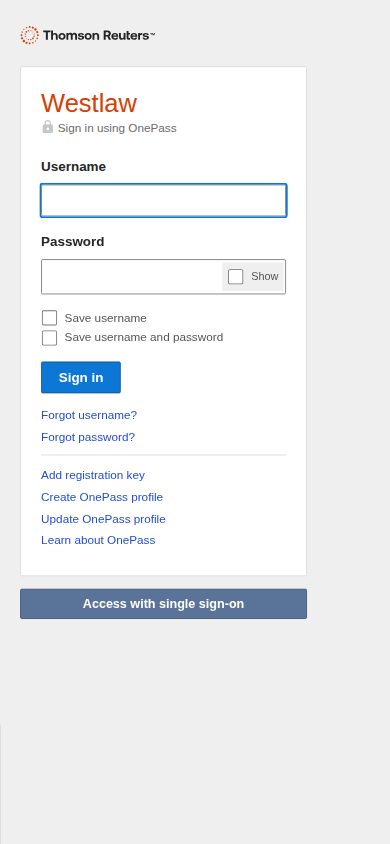
Delivery is web-based through the standard Westlaw application, with no separate desktop or mobile client required beyond a browser; access is gated by an existing Westlaw subscription.

Features

AI Research

  • AI Jurisdictional Surveys

    Generates multi-jurisdiction legal surveys from a single query, summarizing how each jurisdiction treats the issue.

  • AI-Assisted Research synthesized answers

    Pose complex legal questions in natural language and receive an LLM-generated synthesized answer with citations back to Westlaw cases, statutes, and regulations.

  • Retrieval Augmented Generation grounding

    Uses RAG over Westlaw editorial content to constrain the LLM and prevent fabricated case names or citations.

Analytics

  • Litigation Analytics

    Reports on judge, court, attorney, and case data to inform strategy decisions and predict litigation outcomes.

Citation Validation

  • KeyCite Overruling Risk

    Surfaces cases whose holdings are implicitly undermined because they rely on overruled or invalid prior decisions.

  • KeyCite citator

    Flags cited authorities as bad law, distinguished, or criticized so users can verify the reliability of every cited case.

Document Analysis

  • Quick Check brief analyzer

    Uploads a draft brief or opponent filing and identifies missed authority, contrary cases, and weak quotations using AI text analysis.

  • Regulations Compare

    Cross-jurisdictional comparison of regulatory text to surface differences and amendments between regulations.

  • Statutes Compare

    Side-by-side comparison of statutory provisions across versions and jurisdictions to track legislative changes.

Integration

  • Drafting Assistant Microsoft Word integration

    Microsoft Word add-in that runs cite-checking, formatting, and KeyCite verification directly inside draft documents.

Search

  • KeySearch taxonomy

    Navigate Westlaw content using the West Key Number System taxonomy to drill into legal topics and subtopics.

  • Precision Research filters

    Filter case law by attorney-coded attributes including legal issue, issue outcome, fact pattern, motion type, motion outcome, cause of action, and party type.

Preview

Westlaw AI-Assisted Research desktop previewWestlaw AI-Assisted Research mobile preview

Pricing Plans

Contact Sales

Contact sales

Pricing requires contacting the vendor. Thomson Reuters uses a sales-led model with quotes based on firm size, practice areas, and content packages. Analyst sources (TrustRadius, G2, Capterra, Lawyerist) cite flat-rate ranges of approximately $78-$381/user/month for Westlaw products, with Westlaw Edge (AI-Assisted Research) typically starting around $194.40/month for single-state primary law and scaling up for all-states/federal coverage; firms of 7+ attorneys receive fully customized pricing.

  • AI-Assisted Research powered by generative AI
  • KeyCite citation analysis and Westlaw Precision
  • Case law, statutes, regulations, and secondary sources
  • Named-user licensing with multi-year commitments
  • Customized content packages by practice area
  • Free trial and demo available via sales contact

AI Panel Reviews

The Decision Maker

The Decision Maker

Strategic bet, vendor viability, timing, adoption approval
8.4/10

Thomson Reuters' $650M Casetext bet wired into Westlaw with KeyCite-grounded answers — defensible legal research AI.

Westlaw AI-Assisted Research launched November 15, 2023, pairing RAG-grounded answers with KeyCite citator flags and Quick Check brief analysis. Pricing lands around $428 per user per month on the Westlaw Precision with CoCounsel bundle, with no public rate card below that tier.

Thomson Reuters paid $650M cash for Casetext in August 2023 and turned that into AI-Assisted Research on Westlaw, live since November 15, 2023. The board recognizes the name. Reputation risk is near zero.

What you get is RAG-grounded answers wired to actual Westlaw authority, with KeyCite flags surfacing bad law on every cited case and Quick Check scanning uploaded briefs against missed precedent. Westlaw Precision with CoCounsel runs about $428 per user per month on a one-year deal. LexisNexis Lexis+ AI pulls at the same buyer, and vLex Vincent AI undercuts on price.

However, the catch is lock-in. CoCounsel only ships bundled with Westlaw, contracts are multi-year, and the sticker climbs fast above seven attorneys. Pilot one practice group for 90 days against a measurable hours-per-matter delta before standardizing the firm.

Competitive Positioning8.2

Most U.S. law firms already run on Westlaw; the AI extension keeps them current against Lexis+ AI without a migration.

Reputation Risk8.8

Westlaw is the default the board expects; KeyCite-grounded answers make the AI choice easy to defend.

Speed to Value7.8

Drop-in inside the existing Westlaw search bar means no rollout project, but the $428/user/month sticker delays ROI math.

Strategic Fit8.2

AI-Assisted Research extends an existing Westlaw subscription rather than introducing a new vendor or workflow.

Vendor Viability9.0

Thomson Reuters is public, decades-old, and the Casetext acquisition closed in August 2023 — three-year horizon is not in question.

Pros

  • RAG architecture grounds every answer in actual Westlaw editorial content, sharply reducing fabricated citations.
  • KeyCite citator flags bad law and overruling risk directly inside AI answers, not as a separate step.
  • Quick Check uploads a draft brief (PDF up to 30MB) and surfaces missed authority before filing.
  • Thomson Reuters is a public, durable vendor — the board never asks who Westlaw is.

Cons

  • Pricing is sales-led and lands around $428/user/month on the Precision with CoCounsel tier — no public rate card below.
  • CoCounsel is bundled exclusively with Westlaw, so leaving the platform forfeits the AI investment.
  • Multi-year named-user commitments make a 90-day pilot harder to negotiate than with newer entrants like vLex Vincent AI.

Right for

Litigators who already pay for Westlaw.

Avoid if

Solo practitioners who can't justify $428 per month.

The Domain Strategist

The Domain Strategist

Craft and strategy in the product's domain — adapts identity per category, same lens
8.3/10

Westlaw's moat is content plus KeyCite — the AI is the wrapper, and that's the right architectural call.

Thomson Reuters paid $650M for Casetext in August 2023, then shipped AI-Assisted Research on Westlaw Precision that November — both feeding one editorial corpus with KeyCite layered through. The catch is procurement gravity: sales-led quotes around $428/user/month for the Precision-plus-CoCounsel bundle, with no published pricing.

Most generative legal tools have a corpus problem. Westlaw doesn't — that's the whole architectural call. AI-Assisted Research uses Retrieval Augmented Generation against Westlaw's editorial classification, not open-web training data, which is why the citations actually resolve.

KeyCite is the layer competitors can't replicate by training a bigger model. Treatment flags, KeyCite Overruling Risk, and Quick Check's brief-scan run through a century of attorney-coded headnotes. Lexis+ AI has Shepard's, vLex Vincent AI doesn't — that asymmetry shapes the 3-year decision for any litigation-heavy firm.

However, the tradeoff is procurement shape. Pricing is sales-led — analyst sources cite roughly $428/user/month for Precision with CoCounsel, with named-user licensing and multi-year terms. For a 200-attorney firm standardizing on one research stack, that's the right bet. For a five-lawyer boutique evaluating Bloomberg Law, it isn't.

Category Positioning8.4

Clear leader vs Lexis+ AI on citator depth, with vLex Vincent AI and Bloomberg Law trailing on editorial coverage.

Domain Fit8.5

Built into the existing Westlaw search bar with Quick Check, Litigation Analytics, and a Word add-in — shaped to how attorneys actually work.

Integration Surface7.6

Microsoft Word add-in and CoCounsel bundle land cleanly; sales-led procurement and no public API limit downstream flexibility.

Long-term Implications7.8

Three-year path is durable but creates ecosystem lock-in to Thomson Reuters content licensing and named-user contracts.

Strategic Depth8.6

KeyCite plus a RAG architecture grounded in Westlaw's editorial classification is a best-in-class moat in legal research.

Pros

  • RAG over Westlaw's editorial corpus prevents the fabricated-citation failure mode that broke generic LLM legal research.
  • KeyCite Overruling Risk and Quick Check brief-scan turn citation verification into a workflow, not a manual step.
  • AI Jurisdictional Surveys and Precision Research filters reflect a deep attorney-coded taxonomy competitors can't reproduce overnight.
  • Sits inside the existing Westlaw interface — no separate platform to roll out or train attorneys on.

Cons

  • Sales-led pricing around $428/user/month with multi-year commitments is heavy for small firms and solos.
  • No published API or extensibility surface — integration depth depends on what Thomson Reuters ships next.
  • CoCounsel is bundled exclusively with Westlaw, deepening single-vendor lock-in across research and drafting.

Right for

Litigation-heavy firms who need citation-grounded answers tied to KeyCite treatment.

Avoid if

Solo practitioners who want flat-rate pricing without sales negotiation.

The Finance Lead

The Finance Lead

Money, total cost of ownership, contracts, procurement math
7.2/10

No rate card, but the counterparty is NYSE:TRI — analyst bands run $194 to $428 per user/month.

Sales-led pricing with named-user licensing and multi-year commitments. The content moat justifies the sticker; the contract paper is the negotiation.

Thomson Reuters is NYSE:TRI. Audited financials, real disclosure. That matters when the rate card isn't on the page.

Analyst sources cite Westlaw Edge with AI-Assisted Research starting around $194.40/month for single-state primary law. Westlaw Precision with CoCounsel bundles run roughly $428/user/month. Fifty attorneys × $428 × 12 = $256,800/year before practice-area add-ons. Quick Check uploads briefs to surface missed authority — Word up to 20MB, PDF up to 30MB. Compare LexisNexis Lexis+ AI — same sales-led motion, slightly leaner content moat.

But the catch is sales-led pricing with named-user licensing and multi-year commitments. No published overage. No standalone CoCounsel — bundled exclusively with Westlaw. Ask the seat-creep clause, the renewal uplift cap, and the termination-for-convenience window before signing.

Billing & Procurement8.0

Thomson Reuters is a mature public vendor; standard invoicing, AP terms, and procurement onboarding clear most legal-IT review boards.

Contract Flexibility6.0

Multi-year terms with auto-renewal and no published termination-for-convenience window — category norm, not buyer-friendly.

Pricing Transparency5.5

No published rate card; analyst sources fill the gap with $194.40 single-state and $428 Precision-with-CoCounsel ranges.

ROI Clarity8.0

KeyCite verification and Quick Check brief analysis give measurable citation-defect catch rates auditable per matter.

Total Cost of Ownership7.0

Named-user licensing is predictable at scale but practice-area add-ons and multi-year commitments inflate year-3 spend.

Pros

  • RAG grounding on Westlaw editorial content reduces fabricated-citation risk versus open-web LLMs.
  • KeyCite and Quick Check produce auditable verification artifacts the bar can defend.
  • Thomson Reuters is NYSE:TRI — counterparty risk is low and financials are public.
  • Named-user pricing makes per-attorney budget allocation clean for partner-track cost-center accounting.

Cons

  • No published pricing — every quote requires a sales call, slowing procurement cycles.
  • CoCounsel only sold bundled with Westlaw — no unbundling for firms wanting drafting-only AI.
  • Multi-year commitments with auto-renewal and no published overage rate favor the seller at renewal.

Right for

Law firms who already standardize on Westlaw for primary research.

Avoid if

Solos who need a published flat rate without a sales call.

The Domain Practitioner

The Domain Practitioner

Daily hands-on reality in the product's domain — adapts identity per category, same lens
7.9/10

RAG-grounded answers with KeyCite flags inline, but Quick Check's 30MB PDF ceiling bites on long briefs.

Westlaw's AI-Assisted Research wraps generative answers around KeyCite-validated citations from Thomson Reuters' editorial corpus, with Quick Check scanning uploaded briefs for missed authority. The catch is opaque sales-led pricing around $428 per user per month in the CoCounsel bundle and a 30MB upload cap that fails on consolidated appellate records.

Every cited case in an AI answer carries its KeyCite flag right in the response — red, yellow, or clean. That's the verification step junior associates burn an hour on after every Lexis+ AI session. KeyCite Overruling Risk goes further, surfacing precedent quietly undermined by overruled prior decisions.

Quick Check eats a draft brief and returns missed authority plus weak quotations. Word at 20MB, PDF at 30MB. Fine for a motion in limine; tight for a consolidated appellate record. AI Jurisdictional Surveys is the daily-driver feature — a 50-state survey in one query instead of running KeySearch across every jurisdiction manually.

But pricing is opaque sales-led negotiation. The Precision-with-CoCounsel bundle clocks around $428 per user per month per published vendor guidance, and Lexis+ AI competes on the same workflow with a transparent price list. Drafting Assistant's Word add-in works, but the citator pivot still drops you back into the browser. Solo attorneys without an existing Westlaw seat will feel the floor.

Day-3 Reality8.0

KeyCite flags appearing inline on every AI-cited case cut the daily verification round-trip junior associates run after Lexis+ AI.

Documentation Practitioner-Fit7.6

Thomson Reuters training portal covers Quick Check and KeyCite workflows in working-attorney language, but access is subscription-gated.

Friction Surface7.4

Quick Check caps at 20MB Word and 30MB PDF, pricing is sales-gated, and the citator pivot kicks you out of the AI answer pane.

Power-User Depth8.0

Precision Research filters, KeySearch taxonomy, Litigation Analytics, and the Deep Research multi-step mode give a senior associate real depth past the conversational layer.

Workflow Integration8.2

Lives inside the Westlaw browser app with a Drafting Assistant Word add-in, no separate desktop client to install.

Pros

  • KeyCite flags appear inline on every AI-cited case for instant bad-law verification.
  • AI Jurisdictional Surveys returns a multi-state legal survey from a single natural-language query.
  • RAG architecture constrains the LLM to Westlaw editorial content, not open-web training data, cutting fabricated-citation risk.
  • Drafting Assistant Word add-in keeps cite-checking inside the document you are already editing.

Cons

  • Quick Check caps uploads at 20MB Word and 30MB PDF, tight for consolidated appellate records.
  • Pricing is opaque and sales-negotiated, with the CoCounsel bundle clocking around $428 per user per month.
  • No self-serve trial; access is gated by an existing Westlaw subscription.
Right for

Litigators who already work inside Westlaw daily.

Avoid if

Solo attorneys who need published transparent pricing.

The Power User

The Power User

Daily human experience, onboarding, polish, learning curve, reliability
7.8/10

Westlaw's AI cites every claim back to KeyCite-flagged authority, but pricing stays behind a sales call

Westlaw AI-Assisted Research launched November 2023 and pins a RAG-grounded LLM to Westlaw's editorial corpus, with Quick Check, KeyCite Overruling Risk, and AI Jurisdictional Surveys layered on top. There is no public price and no self-serve trial — Westlaw Precision with CoCounsel reportedly runs around $428 per user per month.

Type a question in plain English into the Westlaw bar and the answer comes back with every sentence linked to a case, statute, or regulation. Not a chatbot pretending to be a lawyer — a RAG pipeline pinned to Westlaw's editorial content since November 2023.

Quick Check eats your draft brief — Word up to 20MB, PDF up to 30MB — and tells you which authority you missed and which cites went bad. KeyCite Overruling Risk flags precedent built on undermined holdings. Lexis+ AI sells a similar pitch; Westlaw's edge is the editorial weight underneath.

But the price is a sales call. Westlaw Precision with CoCounsel reportedly runs around $428 per user per month, nothing posted publicly. Day three you trust the citations. Day thirty you're either renewing a firm-wide contract or watching a solo shop pick vLex Vincent for half the money.

Daily Polish7.8

AI answers click through cleanly to KeyCite-flagged cases inside a mature, dense Westlaw interface.

Learning Curve7.4

Natural-language search lowers the entry bar, but the wider Westlaw platform stays dense by month three.

Mobile Parity7.5

Browser-based with no dedicated mobile client; neutral score for a research tool used at a desk.

Onboarding Experience6.5

Gated by an existing Westlaw subscription and a sales call — no self-serve sandbox to feel out.

Reliability Feel8.4

RAG over Westlaw editorial content plus KeyCite citator flags make fabricated citations structurally unlikely.

Pros

  • RAG architecture grounds every answer in Westlaw's editorial content, not open-web LLM training data.
  • KeyCite Overruling Risk surfaces precedent built on undermined holdings, not just directly overruled cases.
  • Quick Check accepts briefs up to 20MB Word or 30MB PDF and flags missed authority or bad cites.
  • Every cited statement links back to the underlying case, statute, or regulation for verification.

Cons

  • No public pricing — every evaluation routes through Thomson Reuters sales and a multi-year commitment.
  • Westlaw Precision with CoCounsel reportedly runs around $428 per user per month, pricing solos out.
  • No free trial or sandbox to test AI quality before signing.

Right for

Litigators who need citation-backed answers grounded in Westlaw authority.

Avoid if

Solos who can't justify a six-figure annual subscription.

The Skeptic

The Skeptic

Contrarian. Watch-outs, deal-breakers, broken promises, category patterns
7.3/10

Stanford's June 2024 study clocked Westlaw's AI hallucinating on 33 percent of queries — the number to watch.

Westlaw AI-Assisted Research launched November 2023 after Thomson Reuters' $650 million Casetext deal, layering RAG-grounded answers over the KeyCite citator. The catch is a peer-reviewed Stanford study that found a 33 percent hallucination rate, roughly double Lexis+ AI.

A $650 million Casetext acquisition in August 2023. Launch on Westlaw Precision November 15 of the same year. Then Stanford's RegLab tested it in June 2024 and found AI-Assisted Research hallucinated on 33 percent of queries — roughly double Lexis+ AI in the same study. That's the number that matters.

Thomson Reuters disputed the methodology, and the product has shipped since. KeyCite Overruling Risk, Quick Check brief analyzer, AI Jurisdictional Surveys, Deep Research mode. The RAG grounding on Westlaw editorial content is the real moat. But "grounded in our content" doesn't mean "won't misread our content."

Pricing is sales-led. Analyst sources cite roughly $194/month entry, $428 bundled with CoCounsel. Exit means losing the citator nobody else has. Lexis+ AI is the only honest comparable. Watch the next Stanford redo.

Competitive Differentiation7.8

KeyCite Overruling Risk plus editorial content depth is a real moat versus open-web LLMs and most rivals.

Exit Portability5.5

KeyCite citator data and editorial classification are proprietary; nothing ports cleanly to Lexis+ AI or vLex Vincent AI.

Long-term Viability8.5

Public parent, sales-led enterprise contracts, multi-year commitments, and visible shipping cadence on Quick Check and Deep Research.

Marketing Honesty6.5

RAG-grounded marketing reads cleaner than Stanford's June 2024 finding of a 33 percent hallucination rate.

Track Record Match8.0

Thomson Reuters is a public, profitable, decades-deep legal incumbent — survivor profile, not graveyard pattern.

Pros

  • KeyCite citator plus KeyCite Overruling Risk surface bad law and at-risk precedent inline with every AI answer.
  • Quick Check brief analyzer accepts Word up to 20MB and PDF up to 30MB to find missed authority.
  • Thomson Reuters is a durable public incumbent with the legal-editorial content depth no startup can replicate.
  • Deep Research mode and AI Jurisdictional Surveys extend the workflow beyond single-question lookups.

Cons

  • Stanford's peer-reviewed June 2024 study found a 33 percent hallucination rate, roughly double Lexis+ AI.
  • Sales-led pricing with no public rate card; analyst ranges put entry around $194/month and $428 with CoCounsel.
  • No free trial without sales contact and no self-serve plan — every evaluation goes through procurement.

Right for

Attorneys who already pay for Westlaw and need citation-linked AI answers inside the same screen.

Avoid if

Solos who balk at $194+ per month and accept open-web AI for first-pass research.

Buyer Questions

Common questions answered by our AI research team

Pricing

How much does Westlaw AI-Assisted Research cost?

Westlaw AI-Assisted Research is included with Westlaw Precision subscriptions and offered as an add-on for legacy Westlaw plans. The Westlaw Precision with CoCounsel bundle runs around $428 per user per month.

Features

What AI features does Westlaw AI-Assisted Research include?

It delivers conversational answers with direct links to Westlaw authority, plus Quick Check for missed or contrary citations, AI Jurisdictional Surveys, KeyCite Overruling Risk, and Litigation Analytics.

Integration

How does Westlaw AI-Assisted Research work with CoCounsel?

Westlaw AI handles research inside the Westlaw interface while CoCounsel covers drafting, document review, deposition prep, and timelines. CoCounsel is bundled exclusively with Westlaw and is not sold standalone.

Features

Who is Westlaw AI-Assisted Research built for?

It targets litigators, solo and small firms, large law firms, corporate legal departments, and government attorneys who need citation-backed answers grounded in Thomson Reuters editorial authority rather than generic LLM output.

Features

Does Westlaw AI verify citations against bad law?

Yes. Every answer links to Westlaw authority, KeyCite flags negative treatment, and Quick Check scans briefs for missed or contrary cases. KeyCite Overruling Risk surfaces precedent at risk of being undermined.

Product Information

Platforms

web

About Thomson Reuters

Thomson Reuters is a Toronto-based information services company providing legal, tax, and news professionals with research platforms including Westlaw, Checkpoint, and Practical Law.

Also in AI Legal