ADP Workforce Now logo

ADP Workforce Now Review

Visit

HR, payroll, and workforce management in one platform

ADP Workforce Now is a cloud-based human capital management platform for midsize businesses.

AI Panel Score

7.4/10

6 AI reviews

Reviewed

About ADP Workforce Now

ADP Workforce Now is a cloud-based human capital management (HCM) platform developed by ADP, one of the largest payroll and HR service providers in the United States. The platform is designed to serve midsize businesses, typically those with 50 to several thousand employees, that need a unified system for managing the full employee lifecycle from hiring through offboarding.

At its core, Workforce Now handles payroll processing, including automated tax calculations, direct deposit, and compliance reporting at the federal, state, and local levels. ADP maintains its own compliance teams and updates the platform to reflect changes in tax law and labor regulations, which reduces the administrative burden on HR and finance teams.

Beyond payroll, the platform includes modules for HR management, time and attendance tracking, benefits enrollment and administration, performance management, and recruiting. These modules share a common employee record, which means data entered in one area is available across the system without manual re-entry. Reporting and analytics tools allow HR and business leaders to pull workforce data and generate standard or custom reports.

Workforce Now integrates with a range of third-party applications including accounting software, ERP systems, and specialized HR tools through ADP Marketplace, the company's integration ecosystem. It also includes an employee self-service portal and a mobile app, enabling workers to view pay stubs, request time off, and update personal information without involving HR staff.

In the HCM market, Workforce Now competes with platforms such as Paylocity, Paycom, UKG Ready, and Ceridian Dayforce. ADP's scale and long history in payroll processing are notable differentiators, though the platform is often noted for its breadth of features rather than depth in any single functional area.

Features

Analytics

  • Real-Time Dashboards & Insights

    Provides real-time dashboards that surface workforce data and insights to support operational decision-making.

  • Reporting

    Generates payroll and HR reports to help organizations monitor workforce costs, compliance, and operational metrics.

Automation

  • Tax Filing & Compliance

    Handles automated tax filings and regulatory updates across jurisdictions as part of ADP's payroll compliance infrastructure.

Core

  • Benefits Administration

    Manages group health benefits including flexible plan options, enrollment tools, and healthcare network access for employees.

  • Employee Self-Service

    Gives employees direct access to their own pay, HR, and benefits information through self-service options within the platform.

  • HR Management

    Consolidates HR operations including workforce tools, compliance management, and employee data into a single integrated platform.

  • Integrated HCM Suite

    Combines payroll, time, benefits, and compliance functions into a single unified platform designed for midsize organizations.

  • Payroll Processing

    Automates payroll calculations and disbursements with direct deposit support for businesses ranging from midsize to large enterprises.

  • Time & Attendance Tracking

    Tracks employee hours using physical and mobile time clocks with biometric options that integrate directly into payroll processing.

Security

  • Secure Data Management

    Stores and manages payroll and HR data with security controls designed for enterprises handling sensitive workforce information.

Preview

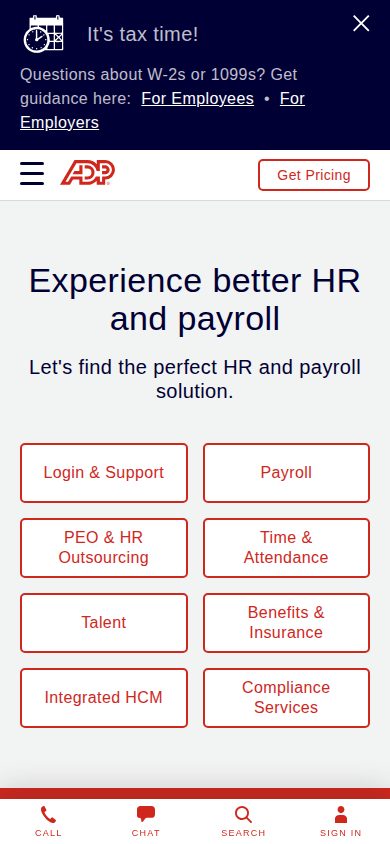
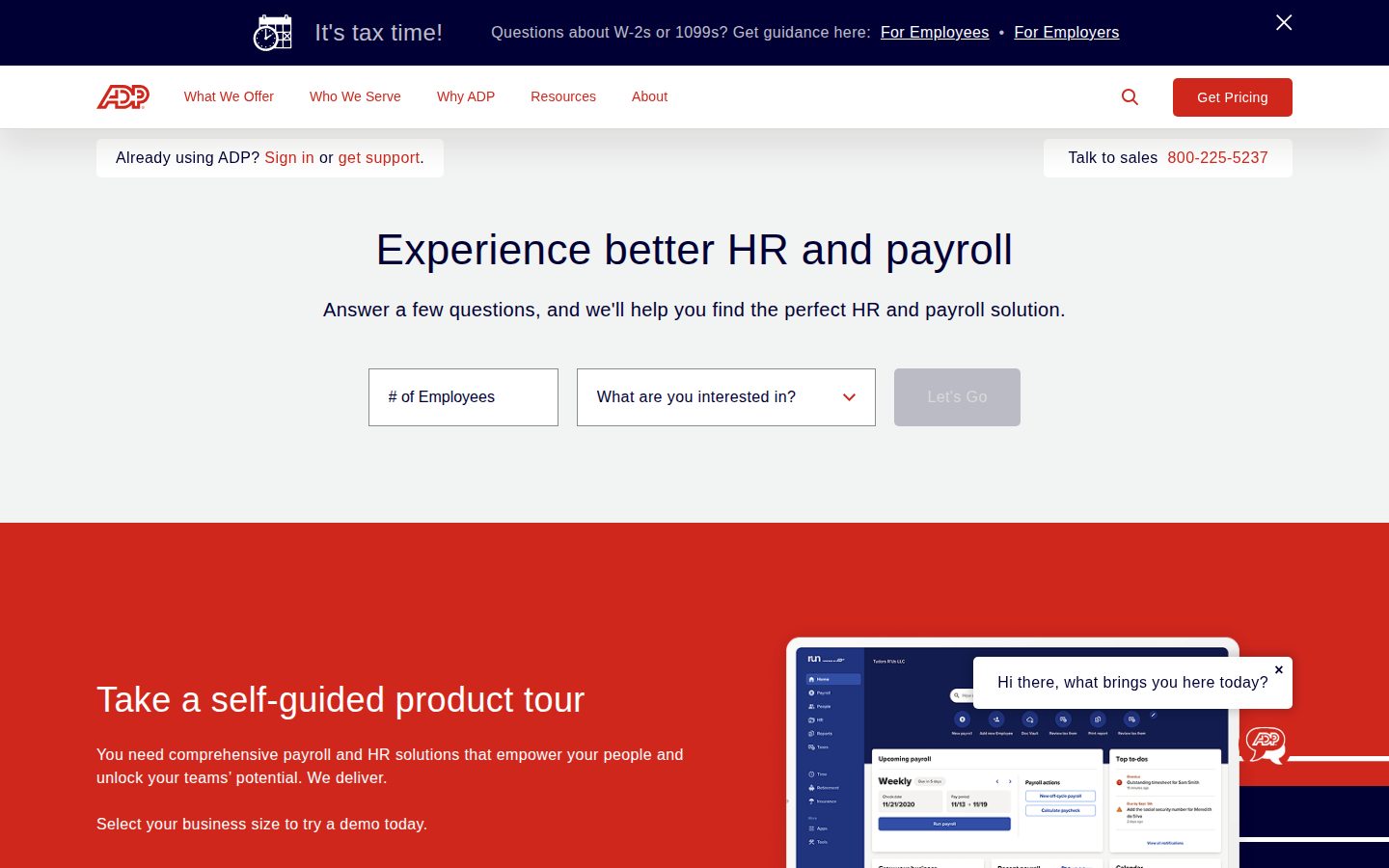
ADP Workforce Now desktop previewADP Workforce Now mobile preview

Pricing Plans

ADP Workforce Now

Contact sales

Integrated platform for mid-sized businesses covering payroll, time, benefits, and compliance with real-time dashboards and insights. Pricing is custom and requires contacting ADP sales.

  • Integrated payroll processing
  • Time and attendance tracking
  • Benefits administration
  • Compliance management
  • Real-time dashboards and workforce insights

AI Panel Reviews

The Decision Maker

The Decision Maker

Strategic bet, vendor viability, timing, adoption approval
7.8/10

ADP's 70-year payroll machine: safe, broad, and never exciting.

ADP Workforce Now is the default choice for midsize companies that want consolidated HR, payroll, and compliance without betting on a startup. Breadth is the strength; depth in any single module isn't.

No pricing page. Custom quotes only. That's a negotiating game, and ADP plays it well. The compliance infrastructure — automated tax filings across federal, state, and local jurisdictions — is the real product. Paylocity and Ceridian Dayforce compete here, but neither has ADP's compliance scale or time-in-market.

The integrated HCM suite means payroll, time tracking, benefits, and HR share one employee record. No re-entry. That alone kills a category of spreadsheet errors midsize companies live with. The ADP Marketplace adds third-party integrations for accounting and ERP systems. Solid foundation.

The tradeoff: this platform is wide, not deep. Performance management and recruiting modules exist, but buyers who need best-in-class talent tools will feel the gap. You're buying operational consolidation, not a competitive edge in HR.

Competitive Positioning6.8

Peers in midsize use ADP, Paylocity, and UKG Ready interchangeably — choosing ADP Workforce Now is table stakes, not a differentiator.

Reputation Risk9.0

Nobody ever got fired for choosing ADP — it's the default credible answer when the board asks who handles payroll.

Speed to Value6.5

Custom pricing and enterprise onboarding mean no quick wins; the shared employee record pays back in reduced re-entry errors, but timeline depends on implementation complexity.

Strategic Fit7.0

Strong fit for consolidation and compliance; won't move the needle if you're trying to differentiate on talent strategy or people analytics depth.

Vendor Viability9.5

ADP has processed payroll for decades, serves hundreds of thousands of businesses, and maintains dedicated compliance teams — existential risk is essentially zero.

Pros

  • Automated tax compliance across all jurisdictions — the core reason most buyers choose ADP over newer platforms
  • Single employee record across payroll, time, benefits, and HR eliminates manual data re-entry
  • ADP Marketplace integrations connect to ERP and accounting systems without custom builds
  • Mobile and employee self-service reduces HR ticket volume from day one

Cons

  • No public pricing — custom quotes favor ADP in negotiations, especially at renewal
  • Talent management and recruiting modules lag behind specialists like Greenhouse or Lever
  • No changelog or public roadmap visible, so you're trusting ADP's prioritization without transparency
  • Breadth over depth means power users in any single module will eventually want more

Right for

Midsize companies with 100-2000 employees that want payroll compliance and HR consolidation handled by a vendor that won't disappear.

Avoid if

You need best-in-class talent acquisition or deep people analytics — ADP's suite won't match point solutions there.

The Domain Strategist

The Domain Strategist

Craft and strategy in the product's domain — adapts identity per category, same lens
7.8/10

ADP's compliance moat is real, but the integration layer demands scrutiny before you commit.

ADP Workforce Now is the default midsize HCM choice for a reason: multi-jurisdictional tax filing handled at infrastructure level is a genuine engineering advantage. The tradeoff is a platform built for breadth, not depth, and a closed-quote pricing model that complicates 3-year TCO planning.

The compliance infrastructure is the real story here. Automated tax filings across federal, state, and local jurisdictions isn't a feature ADP bolted on — it's been their core engineering investment for decades. For any CTO whose team has manually reconciled payroll tax discrepancies, that moat is worth real money.

The ADP Marketplace API surface is the architectural decision I'd interrogate hardest. Integrating ERP, accounting, and specialized HR tooling through a vendor-controlled marketplace means your integration topology lives on ADP's roadmap, not yours. Paycom and Ceridian Dayforce both offer more documented API extensibility, and the changelog absence on ADP's public properties makes versioning visibility unclear.

Biometric time clocks feeding directly into payroll is solid systems design — single data entry point, no reconciliation layer. But no public pricing means you're committing to discovery calls before you can model 3-year costs. For a 200-seat org, that opacity is a procurement friction problem, not a dealbreaker.

Category Positioning8.5

ADP is the default incumbent in midsize HCM; payroll compliance scale separates it from Paylocity and UKG Ready, though Ceridian Dayforce is closing the gap on unified architecture.

Domain Fit8.2

Unified employee record across payroll, time, benefits, and HR is the right architecture for midsize HCM; biometric clock-to-payroll integration reflects real operational workflow.

Integration Surface7.3

ADP Marketplace provides API connectivity to third-party tools, but the docs absence from scraped evidence raises questions about integration depth and versioning transparency.

Long-term Implications7.0

If you adopt this, in 3 years your compliance risk is low but your integration flexibility depends entirely on what ADP Marketplace supports — vendor-controlled topology is a real constraint.

Strategic Depth7.5

Multi-jurisdictional compliance infrastructure is genuinely deep, but the platform trades single-module depth for suite breadth — a known pattern vs. Paycom's single-database depth.

Pros

  • Multi-jurisdictional tax filing at infrastructure level — genuine compliance moat
  • Single employee record across payroll, time, benefits, and HR eliminates reconciliation overhead
  • Biometric time clock integration feeding directly into payroll is clean systems design
  • ADP Marketplace provides a documented integration ecosystem for ERP and accounting connectors

Cons

  • No public pricing — 3-year TCO modeling requires sales engagement before any architectural planning
  • Changelog not publicly available, making API versioning and deprecation risk hard to assess
  • Breadth-over-depth design means specialized needs in talent or performance may require supplemental tooling
  • Integration topology lives on ADP's roadmap via Marketplace, not on your own infrastructure decisions

Right for

A midsize org with 100–2,000 employees that needs bulletproof multi-state payroll compliance and can tolerate a vendor-controlled integration layer.

Avoid if

Your stack demands deep API extensibility or you need best-in-class depth in a single HCM module like performance management or talent acquisition.

The Finance Lead

The Finance Lead

Money, total cost of ownership, contracts, procurement math
6.2/10

No published pricing, full sales-call required — classic enterprise opacity on a midmarket product.

ADP Workforce Now bundles payroll, time, benefits, and compliance into one platform. But no price is visible without a sales call, and that's a procurement problem.

No pricing page. Zero. For a product targeting 50-to-several-thousand-employee companies, that's a procurement tax. Budget owners can't model Year 1, let alone Year 3. Category norm for Paylocity and Paycom is published per-seat tiers. ADP doesn't comply.

The module breadth is real — payroll, time and attendance with biometric clocks, benefits enrollment, tax filing across jurisdictions, all on a shared employee record. That's genuine consolidation value. But breadth without a price is an RFP, not a purchase. Expect 60-to-90-day procurement cycles and multi-year term pressure. Auto-renewal windows and termination-for-convenience clauses are not public. That matters at contract time.

ROI story depends entirely on replacing headcount or avoiding compliance penalties. Tax Filing & Compliance automation is the strongest measurable lever. Everything else is softer. Compare Paycom at a roughly $25-per-seat published floor — ADP's number could land higher or lower, and you won't know until the demo is done.

Billing & Procurement4.5

Full sales-call requirement adds 60-to-90 days of procurement friction before a number appears on a quote.

Contract Flexibility4.5

No public auto-renewal or cancellation terms; category norm for ADP-scale vendors is annual or multi-year contracts with limited termination-for-convenience clauses.

Pricing Transparency2.5

No pricing page, no published tiers, no starting price — contact sales only, per the evidence.

ROI Clarity6.0

Tax Filing & Compliance automation and headcount reduction are measurable; talent management ROI is harder to quantify from available evidence.

Total Cost of Ownership5.0

Module breadth suggests consolidation savings, but unknown per-seat cost plus likely multi-year term makes Year 3 TCO unmodelable without a sales engagement.

Pros

  • Payroll, time, benefits, and compliance on one shared employee record — genuine consolidation
  • Automated tax filing across federal, state, and local jurisdictions is a hard compliance moat
  • ADP Marketplace integrations reduce custom API work
  • Employee self-service portal reduces HR ticket volume

Cons

  • Zero pricing transparency — every competitor comparison requires a sales cycle
  • Contract terms not public; auto-renewal risk is real
  • No free trial, no free tier — high evaluation cost before commitment
  • Feature breadth doesn't mean feature depth; Paycom often wins on UX in specific modules

Right for

Midsize companies (100-plus employees) that want a single vendor for payroll, compliance, and benefits and can absorb a multi-month procurement process.

Avoid if

You need published pricing to build a budget or want contract flexibility without a negotiation.

The Domain Practitioner

The Domain Practitioner

Daily hands-on reality in the product's domain — adapts identity per category, same lens
7.6/10

ADP Workforce Now: Payroll compliance muscle, UX patience required

For midsize orgs running 50-to-several-thousand employees, the multi-jurisdiction tax filing alone justifies the contract conversation. Breadth is real; daily smoothness is negotiable.

The compliance infrastructure is the anchor here. Automated tax filings across federal, state, and local jurisdictions — maintained by ADP's own compliance teams — is something Paylocity and Paycom sell hard too, but ADP's decades in the rails give practitioners genuine confidence at year-end. That's not marketing copy; that's fewer Saturday firefighting sessions.

Day three looks like this: the integrated employee record means HR data flows into payroll without re-entry, which is a real daily win. But no public changelog, no visible pricing page, and contact-only sales signal a sales-heavy motion that slows every configuration decision. When you need to adjust a benefits enrollment rule mid-cycle, you want docs, not a ticket.

The tradeoff is breadth versus depth. Real-time dashboards, biometric time clocks, ADP Marketplace integrations — it's all there, but each module is wide, not deep. Power users migrating from a best-of-breed stack will feel the ceiling. This is a consolidation play, not a specialization play.

Day-3 Reality7.2

Shared employee record removes re-entry friction daily, but contact-only pricing and no changelog suggest configuration changes require vendor involvement rather than self-service.

Documentation Practitioner-Fit6.5

No public changelog or blog flagged in evidence; docs availability is unconfirmed, which is a weekly friction point for any power user troubleshooting payroll rules independently.

Friction Surface6.8

No public docs visibility and a sales-gated model means routine configuration questions pile up as support requests rather than self-resolved lookups.

Power-User Depth7.0

ADP Marketplace API integrations and custom reporting exist, but the platform is built wide across HCM functions rather than deep in any single one — advanced users hit ceilings faster than in single-function tools.

Workflow Integration7.8

Payroll, time and attendance, and benefits sharing one record fits the midsize HR generalist workflow; mobile app and employee self-service reduce HR ticket volume meaningfully.

Pros

  • Multi-jurisdiction tax filing automation backed by ADP's own compliance teams — fewer year-end surprises
  • Single employee record across payroll, time, benefits, and HR cuts manual re-entry
  • Biometric time clock integration feeding directly into payroll is a meaningful ops win
  • ADP Marketplace provides a real third-party integration ecosystem for accounting and ERP connections

Cons

  • No public pricing — every change conversation runs through sales, which slows mid-cycle adjustments
  • No visible changelog means practitioners can't track what changed after a platform update
  • Module depth is uneven; teams with specialized needs in talent or performance will feel the ceiling
  • No free trial means commitment happens before daily workflow fit is validated

Right for

Midsize orgs with 100-plus employees that want payroll compliance handled by someone else and can tolerate a vendor-relationship model.

Avoid if

Your team needs deep self-service configuration, transparent pricing, or best-of-breed depth in talent or performance management.

The Power User

The Power User

Daily human experience, onboarding, polish, learning curve, reliability
7.6/10

ADP's payroll muscle is real, but the daily feel lags behind hungrier competitors

Workforce Now is the safe, comprehensive choice for midsize HR teams who need consolidated payroll, time, benefits, and compliance without stitching tools together. The breadth is there; the polish isn't always.

Fifty to several thousand employees, one system, no manual re-entry between modules — that's the actual promise here, and ADP mostly delivers it. Tax filing automation across jurisdictions is the genuine killer feature. Paylocity and Paycom are sharper on UX, but neither has ADP's compliance infrastructure depth. That matters at 2am on a payroll deadline.

The tradeoff is that breadth-over-depth approach you feel on day three. The integrated HCM suite covers payroll, time tracking, benefits, and talent management, but the experience in any single module can feel like software designed in committee. No public pricing means every conversation starts with a sales call, which is its own signal about where the friction lives.

Mobile exists — iOS and Android, employee self-service — but the changelog and docs availability in the evidence suggest this isn't a team sweating every pixel on a 5-inch screen. Good for HR administrators who live in the web app. Rougher if your workforce is hourly and mobile-first.

Daily Polish6.5

Real-time dashboards are present but no changelog or public docs suggests a team that isn't iterating visibly on daily-use details.

Learning Curve6.2

An integrated HCM suite covering payroll, time, benefits, and talent across 50-to-thousands of employees is inherently complex, and no public docs or blog in the evidence makes self-guided learning harder.

Mobile Parity6.8

iOS and Android exist with employee self-service for pay stubs and time-off requests, but the evidence doesn't suggest the mobile app matches the full web experience for managers or admins.

Onboarding Experience5.8

No free trial, no self-serve pricing, contact-sales-only entry point means onboarding starts with a sales process, not the product itself.

Reliability Feel8.2

ADP's scale and decades in payroll compliance infrastructure signal solid uptime expectations; automated tax filing across jurisdictions isn't a feature you ship without serious reliability engineering.

Pros

  • Automated tax filing and compliance updates across federal, state, and local jurisdictions — genuinely hard to replicate
  • Single employee record shared across payroll, time, benefits, and HR means no duplicate data entry
  • ADP Marketplace integrations cover accounting and ERP connections without custom dev work
  • Employee self-service on iOS and Android reduces HR ticket volume for routine requests

Cons

  • No public pricing — every evaluation starts with a sales call, which slows down buying decisions
  • Breadth-over-depth design means individual modules feel thinner than point solutions like Paycom
  • No free trial makes it hard to evaluate daily feel before committing
  • Mobile experience appears geared toward employees, not managers or admins who need to act on the go

Right for

Midsize companies between 100 and 1,000 employees that need payroll, compliance, benefits, and time tracking in one system and don't want to manage integrations between five vendors.

Avoid if

Your team is small, mobile-first, or wants to evaluate the product without a sales conversation first.

The Skeptic

The Skeptic

Contrarian. Watch-outs, deal-breakers, broken promises, category patterns
7.2/10

50 years of payroll muscle, mid-tier UX, zero pricing transparency

ADP has survived every HCM consolidation wave since the 1970s — that longevity is the real differentiator. But no public pricing, no changelog, and 'contact sales' gating put buyers at an information disadvantage before they even start.

Three tells upfront. One: no pricing page — custom quote only, which means negotiation leverage sits entirely with ADP. Two: the scrape shows no changelog and no blog, which makes shipping cadence invisible. Three: 'Integrated HCM Suite' appears as both a category label and a named feature. That's the kind of redundancy that suggests marketing wrote the feature list.

The real story is the compliance infrastructure. Tax Filing & Compliance across jurisdictions, maintained by ADP's own compliance teams, is genuinely hard to replicate. Paylocity and Paycom compete on UX; UKG Ready competes on scheduling depth. None of them match ADP's multi-jurisdiction payroll audit trail at scale. For a 500-person company with employees in 12 states, that matters.

The tradeoff is breadth over depth. Every module — time, benefits, talent — is present but rarely best-in-class individually. Exit portability is the other flag: no public API docs page, opaque data export story, and ADP's historical lock-in reputation. Could go either way in 18 months. Watch it.

Competitive Differentiation7.5

Multi-jurisdiction Tax Filing & Compliance maintained by in-house compliance teams is a concrete moat vs. Paylocity or Paycom, especially for 200-plus-employee orgs spread across states.

Exit Portability4.5

API exists per the scrape, but no public API docs page, no data export SLA, and ADP's category reputation for lock-in make migration risk real.

Long-term Viability9.2

Publicly traded, decades of operation, and payroll infrastructure at enterprise scale — ADP isn't going anywhere; viability risk here is essentially zero.

Marketing Honesty6.5

Headline 'Experience better HR and payroll' is soft aspiration; the feature list has 'Integrated HCM Suite' as both descriptor and named feature, which is lazy double-counting.

Track Record Match9.0

ADP has processed payroll through every regulatory cycle since the 1970s — no comparable competitor has that survival record; this is the pattern of a durable infrastructure winner.

Pros

  • Multi-jurisdiction payroll compliance handled in-house — rare at this scale
  • Single employee record shared across payroll, time, benefits, and HR modules reduces re-entry errors
  • Mobile self-service app covers pay stubs, time-off requests, and benefits — category standard but well-executed
  • ADP Marketplace integrations with ERPs and accounting tools reduces custom glue work

Cons

  • No public pricing — 'contact sales' only, which ages poorly for buyers who want fast vendor comparison
  • No visible changelog makes shipping cadence impossible to verify from outside
  • Breadth over depth: each module competes against point solutions that go deeper in their lane
  • Exit portability is murky — no public data export or API docs page visible

Right for

Midsize companies with 150-plus employees across multiple states who need bulletproof payroll compliance above everything else.

Avoid if

You want best-in-class UX, transparent pricing, or a clean migration path if you outgrow it in 18 months.

Buyer Questions

Common questions answered by our AI research team

Features

Does ADP Workforce Now handle payroll tax filings automatically?

Yes, ADP Workforce Now connects to ADP's payroll compliance infrastructure, which handles tax filings and regulatory updates across jurisdictions automatically.

Features

Can ADP Workforce Now manage time and attendance tracking?

Yes, time and attendance is a core module within ADP Workforce Now, covering workforce management as part of its integrated HCM suite.

Features

Is benefits administration included in ADP Workforce Now?

Yes, benefits administration is included in ADP Workforce Now as part of its integrated HCM suite alongside payroll, HR, time, and talent management.

Features

Does ADP Workforce Now support talent acquisition?

Talent acquisition is listed as a standalone compliance service offering on ADP's platform, though talent management broadly is included in the ADP Workforce Now HCM suite.

Features

Can midsize companies consolidate HR and payroll in one platform?

Yes, ADP Workforce Now is designed specifically for midsize organizations to consolidate payroll, HR, time and attendance, benefits, and talent management into a single system.

Also in AI Workforce Management