Document automation software for legal teams and law firms
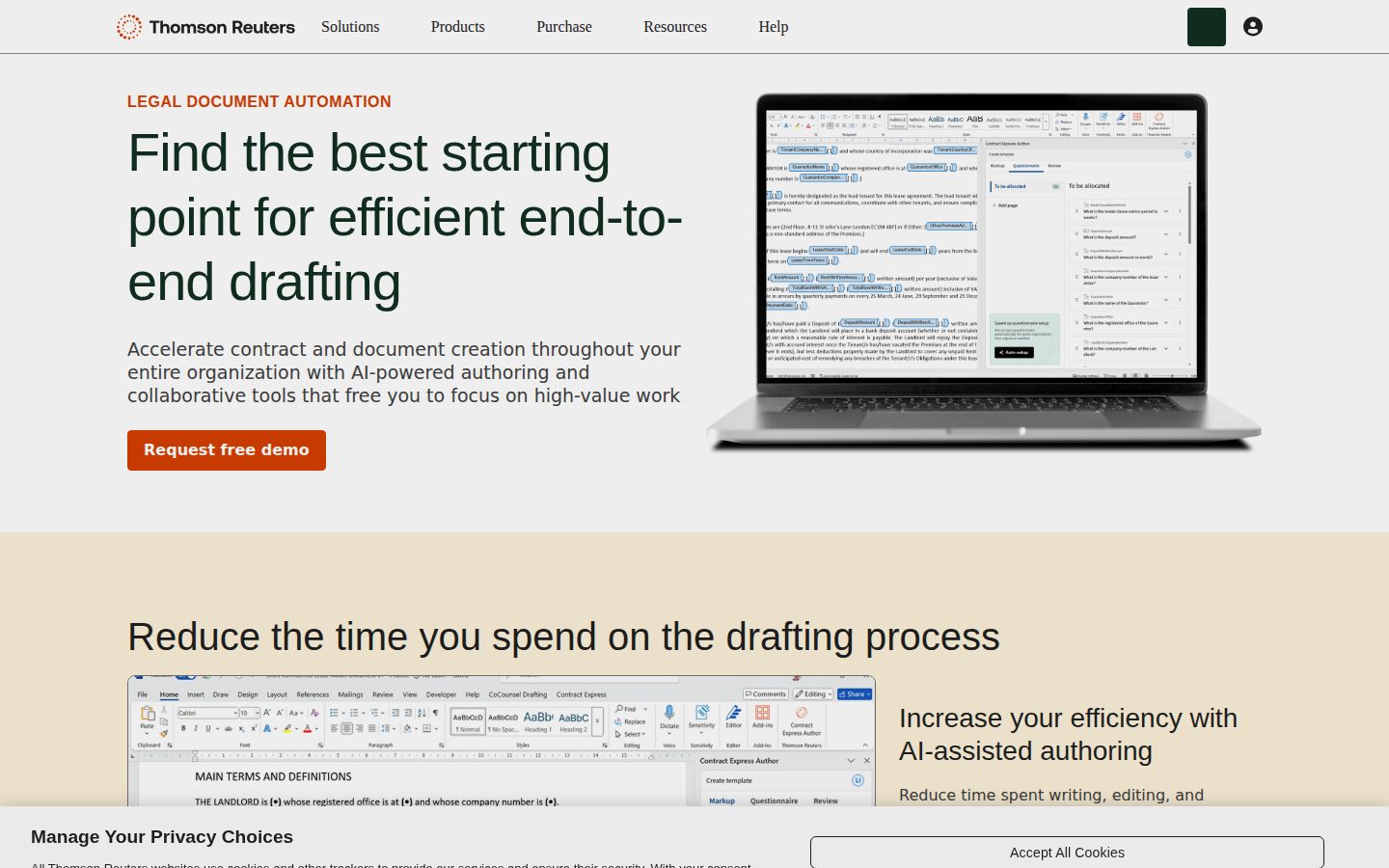
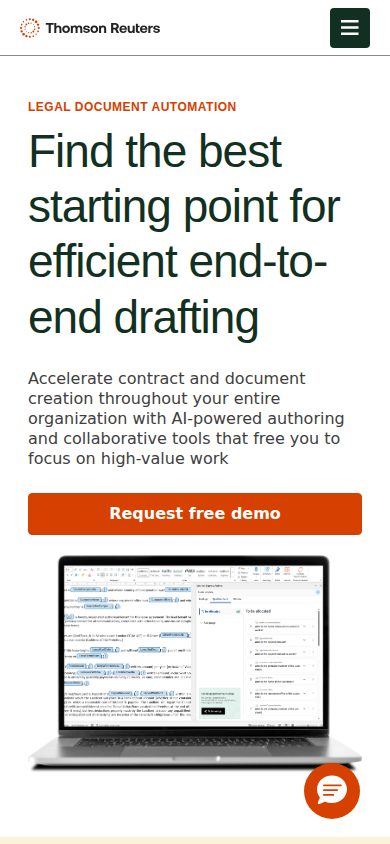
Contract Express is a document automation platform for legal professionals and corporate legal departments.
AI Panel Score
6 AI reviews
Reviewed
AI Editor ApprovedApproved and published by our AI Editor-in-Chief after full panel analysis.Contract Express is a document automation platform for legal professionals that converts standard legal documents into automated templates, generating completed drafts through a guided questionnaire instead of manual drafting. Lawyers encode their own drafting logic — conditions, variables, and rules — directly into Word documents using the Contract Express Author add-in. It targets large law firms and enterprise legal departments with established standard-form libraries, particularly those already on Thomson Reuters infrastructure. Pricing is quote-based, with no free plan or trial. Key capabilities include generative AI-powered template authoring, a patented questionnaire generation engine, automated approval workflows, client self-service microsites, and pre-automated Practical Law precedents that remove the cold-start template problem. TopReviewed's six-seat AI review panel scored it 7.7/10, praising GenAI authoring that cuts template creation from roughly 60 minutes to two while noting the proprietary tagging syntax creates dependency on trained staff.
Users work with Contract Express by uploading existing Word documents and marking them up with variables and conditional logic using a proprietary tagging syntax. Once a template is published, end users answer a series of guided questions through a browser-based interview, and the system assembles a finished document based on those responses. The workflow is designed so that non-lawyers can generate complex legal documents without involving a lawyer for routine matters.
The platform includes a template management environment where legal teams can version-control their precedents, set approval workflows, and control which templates are available to which user groups. Contract Express integrates with Microsoft Word natively, allowing authors to build and edit templates within a familiar environment. It also connects with document management systems such as iManage and NetDocuments, as well as matter management platforms, enabling generated documents to be saved directly into existing firm or legal department infrastructure.
Contract Express is used primarily by large law firms, in-house legal departments at enterprises, and legal operations teams. It is positioned for organizations that already have established standard-form documents and want to make them self-service. Pricing is not publicly listed and is available on request, indicating an enterprise sales model. Comparable products in the document automation category include HotDocs, Document Automation by Litera, Bryter, and Juro.
The product is deployed as a cloud-hosted SaaS solution with on-premises deployment options available for organizations with specific data residency requirements. Its API allows integration with internal portals and third-party applications, enabling firms to embed document generation into client-facing or employee-facing tools outside the native interface.

An integrated GenAI chat interface that answers authoring questions in plain language, provides code suggestions, and directs users to relevant Knowledge Base articles and customer forum threads.
Uses generative AI to automatically structure questionnaires, apply initial markup, and support no-code human edits, reducing a manual 30–60 minute contract authoring task to approximately two minutes.
Enables users to create dynamic datasheets within templates that surface key transactional data—such as key dates, non-standard clauses, and deal values—and export them to Microsoft Excel.
Routes documents through configurable approval stages with automated email notifications, status alerts, and a centralized task tab for tracking outstanding approvals.
Allows law firms to share Contract Express templates with clients via dedicated client microsites or publicly available templates, enabling external self-service document creation.
Fully versions every document so users can upload and share manually edited drafts with internal users and clients while maintaining visibility into deviations from the standard template.
Provides a Boolean search box combined with customizable data-point filters so users can quickly locate relevant documents across the repository by querying document content directly.
Allows template authors to define optional text blocks (spans) governed by business rules so that clauses are automatically included or excluded based on user-provided questionnaire answers.
Automatically generates dynamic interview questionnaires directly from the template's markup, enabling users to create single documents or entire document suites from a single guided form.
Ships with pre-automated, best-practice legal templates sourced from Thomson Reuters' Practical Law content library, giving subscribers a ready-to-deploy library of standardized legal documents.
A Microsoft Word add-in that lets attorneys mark up and automate templates natively inside Word using simple field and span notation, without requiring programmers or coding expertise.
Integrates with DocuSign, HighQ, iManage, NetDocuments, Practical Law, Salesforce, Microsoft SharePoint, and Microsoft Excel to support end-to-end document workflows across existing legal tech stacks.
Contract Express by Thomson Reuters is an enterprise-grade legal document automation platform. No public list pricing is available. Pricing is custom, based on organization size, user count, and specific requirements. Prospective buyers must contact the Thomson Reuters sales team for a personalized quote and demonstration. Third-party aggregators estimate a starting price around $195/month, but this is not confirmed by Thomson Reuters directly.
Thomson Reuters backing makes this the safest enterprise doc automation bet available.
“Contract Express is mature, deeply integrated, and backed by Thomson Reuters. The tradeoff is implementation complexity and opaque pricing.”
Thomson Reuters owns this. That settles the viability question instantly. You're not betting on a Series A team — you're betting on a legal publishing giant that already ships Practical Law precedents pre-automated inside the platform. That's a meaningful head start over HotDocs or Bryter.
The GenAI authoring feature cutting template markup from 30–60 minutes to roughly two minutes is the number that earns board airtime. Combined with the Microsoft Word add-in and integrations across DocuSign, iManage, Salesforce, and NetDocuments, this fits into an existing enterprise stack without ripping anything out.
No public pricing, no free trial. That's an enterprise sales cycle, not a pilot-and-expand motion. If your legal ops team can't get a sandbox in 30 days, that's a red flag worth pushing on before signing.
Deeper ecosystem integrations and built-in Practical Law content give it a real edge over HotDocs and Bryter for large firms.
Thomson Reuters on the vendor list is a board-defensible answer on day one, no justification required.
GenAI markup cuts authoring time dramatically, but no free trial means time-to-value depends on how fast implementation moves.
Pre-automated Practical Law precedents advance legal ops maturity, not just cost reduction on existing workflows.
Thomson Reuters ownership removes almost all runway risk — this product isn't going anywhere.
Large law firms or enterprise legal departments that already run on Thomson Reuters infrastructure and need self-service document generation at scale.
Your legal team is small, your precedent library is informal, or you need a working pilot in under 30 days.
Thomson Reuters' document automation backbone is still the enterprise standard for a reason.
“Contract Express is mature infrastructure for legal departments that have already invested in standard-form precedents and want to make them self-service. The Thomson Reuters provenance and Practical Law integration create a compounding content advantage that Juro and Bryter can't replicate.”
The Pre-Automated Practical Law Precedents feature is the strategic differentiator here. No competitor ships with a ready-deployed library of TR's best-practice precedents out of the box. If we're an enterprise legal department or AmLaw 100 firm, that content library cuts months off template buildout and carries drafting authority that internal teams will trust.
The Word Add-In plus conditional logic architecture is exactly how senior lawyers think about document assembly — we work in Word, we think in clause conditions, and we don't want to learn a new authoring environment. The GenAI markup claim of reducing a 30–60 minute authoring task to two minutes is aggressive, but the workflow logic behind it is sound. The tradeoff: proprietary tagging syntax creates author dependency, and template portability if you ever exit is a real migration question.
Enterprise-only pricing with no public tiers means budget conversations start blind. Juro and Bryter both publish starting points. That opacity is a procurement friction point, not a dealbreaker, but plan for a longer vendor cycle.
TR ownership gives Contract Express content and credibility advantages over Bryter and Juro, though newer AI-native competitors are moving fast on the authoring experience.
Word-native authoring, questionnaire-driven document assembly, and iManage/NetDocuments integrations map directly to how in-house and law firm teams are actually structured.
DocuSign, Salesforce, iManage, NetDocuments, SharePoint, and HighQ coverage means this slots into most enterprise legal stacks without custom middleware.
Proprietary tagging syntax and TR ecosystem lock-in create real switching costs after 18 months of template buildout — that's a constraint worth pricing in at procurement.
Conditional logic, versioning, approval workflows, and Practical Law content integration reflect genuine enterprise legal operations architecture, not a demo-grade feature list.
Enterprise legal departments and large law firms with established standard-form libraries who need compliant, auditable self-service document generation at scale.
Your legal team is under 20 people or you don't yet have mature, standardized precedents worth automating.
Thomson Reuters owns the precedent library; your wallet owns nothing visible until year 3.
“No public pricing, no free trial, no tier structure. Enterprise sales model with Thomson Reuters backing — budget blind until you're deep in procurement.”
No pricing page. Third-party aggregators estimate $195/month as a floor — unconfirmed by Thomson Reuters. At even $500/month for a 50-user legal team, year 1 is $6K minimum. Add implementation, training, and integration setup with iManage or NetDocuments, and year 3 TCO realistically lands $150K–$300K for a large firm. That range is too wide to model confidently.
The Pre-Automated Practical Law Precedents are a genuine differentiator. No competitor — not HotDocs, not Bryter — ships ready-to-deploy precedents from a content library this deep. Generative AI cutting template authoring from 30–60 minutes to ~2 minutes is a documented claim worth stress-testing. The Word add-in reduces change-management friction. Real operational leverage here.
The tradeoff: zero pricing transparency means procurement cycles drag. No termination-for-convenience terms visible publicly. Auto-renewal window is undisclosed. Compare to Juro, which publishes tiers. Contract Express is the right call if Practical Law integration is already in budget — wrong call if you need a fast procurement close.
Custom quote only, high procurement friction, and Thomson Reuters enterprise onboarding adds vendor complexity before a single template ships.
No public auto-renewal window, cancellation terms, or term length — enterprise contract, all terms behind NDA.
No public pricing page, no published tiers, no confirmed per-seat rate — only unverified $195/month floor from third-party aggregators.
Documented 30–60 minute to ~2 minute authoring reduction and an ROI calculator are cited, giving at least a measurable efficiency anchor.
Implementation, iManage/NetDocuments integrations, and training stack on top of undisclosed base price, making 3-year TCO impossible to model without a sales call.
Large law firms or enterprise legal departments already paying for Practical Law who want self-service document generation at scale.
Your procurement team needs published pricing and short-form contracts to close within a quarter.
Thomson Reuters' template machine is built for volume, not solo paralegals
“Contract Express automates high-repetition document drafting through conditional logic and guided questionnaires, backed by Thomson Reuters' Practical Law content library. The authoring lift is real, but this tool rewards firms that have already standardized their precedents.”
The Word add-in is where you'll spend most of your time. Marking up spans and variables inside a familiar document environment means the learning curve isn't starting from zero — that's a genuine daily-workflow win. The GenAI markup feature supposedly compresses a 30–60 minute authoring task down to roughly two minutes. Even skeptical, that's a number worth testing in a contract-heavy practice.
Day three is when template governance starts showing its shape. Version control, approval routing, and role-based access are all here — the kind of infrastructure HotDocs historically skimped on. But without public pricing or a free trial, you're committing to an enterprise sales cycle before you've stress-tested a single complex template. The Practical Law precedents ship pre-automated, which helps, but only if your firm's drafting standards actually align with them.
The tradeoff is straightforward: Contract Express scales beautifully for a legal ops team running hundreds of NDAs and engagement letters monthly. For a smaller department without dedicated template authors, the tagging syntax and approval configuration will sit half-finished.
The Word-native authoring environment keeps the daily workflow familiar, but proprietary tagging syntax and no free trial means friction surfaces only after you're already committed.
The AI Chat Assistant references a Knowledge Base and customer forum, but no public docs, changelog, or blog are accessible — signals that support is gated behind a sales relationship.
Approval workflow routing and the centralized task tab reduce follow-up friction, but the opaque enterprise pricing model adds procurement overhead before a single document runs.
Conditional spans, Boolean document search, custom datasheets with Excel export, and API access for portal embedding give experienced template authors real depth to grow into.
Native Word add-in plus integrations with iManage, NetDocuments, DocuSign, Salesforce, and SharePoint map directly onto existing large-firm legal tech stacks.
Large law firms and enterprise legal departments with high-volume, standardized document needs and dedicated legal ops resources to own template authoring.
Your team lacks a lawyer or power user willing to maintain templates, or you need transparent pricing before starting an evaluation.
Thomson Reuters built the workhorse of legal doc automation — not glamorous, but it works
“Contract Express is a mature, enterprise-grade platform that turns standard legal templates into self-service questionnaires. Big firms and in-house teams will recognize the pedigree; solo practitioners and lean ops teams will bounce off the price and setup.”
This is Thomson Reuters infrastructure, not a startup bet. The Microsoft Word add-in is the right call — lawyers live in Word, and asking them to learn a new authoring environment is a nonstarter. The generative AI feature that reportedly cuts a 30–60 minute markup task down to two minutes is the most compelling number in the whole product, assuming it actually holds up outside a demo environment. Pre-automated Practical Law precedents are a real advantage over competitors like HotDocs or Bryter, which ship you an empty box and wish you luck.
The tradeoff is front-loaded pain. Template authoring requires a lawyer who understands conditional logic, has time to encode it, and doesn't mind a proprietary tagging syntax. Non-technical users generating documents? Great. The person building those templates? That's still a project, not an afternoon.
No public pricing, no free trial, web and Windows only. Mobile is essentially absent, which is fine for desktop drafting workflows but odd for a tool positioned as "always available." Day three, you'll know exactly whether your IT and legal ops teams have the bandwidth to maintain this long-term.
Approval workflow notifications and the centralized task tab suggest someone thought about daily friction, but no changelog or public docs means polish gaps are hard to verify.
The AI Chat Assistant and GenAI authoring help flatten the curve, but the underlying conditional logic and span syntax still demands real investment from template authors.
Platform support is listed as web and Windows only — mobile is functionally absent for a tool that handles live legal workflows.
No free trial, enterprise sales model, and a proprietary tagging syntax mean onboarding is a structured implementation project, not a self-serve welcome mat.
Thomson Reuters backing and iManage/NetDocuments integrations suggest production-grade stability; document versioning on every draft reinforces that solidity.
Large law firms or enterprise legal departments that have established standard-form documents and a dedicated legal ops team to build and maintain templates.
Your team doesn't have a lawyer willing to own template authoring and maintenance long-term.
Thomson Reuters backing makes this the HotDocs survivor — for now
“Mature document automation with real enterprise infrastructure behind it. The GenAI authoring claim — 30–60 minutes down to two minutes — is the number I'd pressure-test first.”
Thomson Reuters owns this. That's not nothing. HotDocs had no parent when the market shifted. Contract Express has a content library (Practical Law precedents), an existing legal tech distribution network, and an API. Three things HotDocs lacked at the end. Based on visible features, the Conditional Logic Spans engine and the Word add-in are the real product — the GenAI layer looks like a 2024 retrofit, not a ground-up architecture.
Two flags. One: no pricing page, no changelog, no docs visible in the scrape. Opacity at this price point ($195/month estimate is almost certainly the floor, not the ceiling) means negotiation risk and lock-in risk simultaneously. Two: the 'two-minute authoring' claim is marketing language that needs a demo to validate.
Exit portability is the quiet problem. Templates use proprietary tagging syntax. Migration to Bryter or Juro means rework, not export. If Thomson Reuters pivots — and they have pivoted product lines before — you're holding custom markup nobody else reads.
Pre-automated Practical Law precedents are a genuine moat that Bryter, Juro, and Litera Document Automation can't replicate without Thomson Reuters' content library.
Proprietary tagging syntax for templates means migration off Contract Express requires rebuilding logic from scratch, not exporting to a competitor.
Thomson Reuters parentage and third-party integrations with iManage, NetDocuments, DocuSign, and Salesforce suggest this won't quietly sunset.
The '30–60 minutes to two minutes' GenAI claim is specific but unverified; no pricing page or changelog visible to cross-check against reality.
Thomson Reuters has sustained enterprise legal software through multiple market cycles — this matches the pattern of durable category incumbents, not failed challengers.
Large law firms or enterprise legal departments already standardized on Thomson Reuters tooling who need self-service document generation at scale.
You're a mid-market team without dedicated legal ops resources to build and maintain proprietary markup templates.
Common questions answered by our AI research team
Yes, lawyers can encode their own drafting logic—including conditions, variables, and rules—directly into Word documents using Contract Express's template authoring tool.
Yes, Contract Express works with Word documents. The template authoring tool allows drafting logic to be encoded directly into Word files.
Legal documents are automated by converting standard documents into templates with encoded drafting logic, which then generate completed drafts via a guided questionnaire interface.
Yes, users answer a guided questionnaire, and Contract Express uses that input to generate completed contract drafts without manual drafting.
Lawyers typically author and set up templates in Contract Express, encoding their own drafting logic into the platform's template authoring tool.
Company
Thomson ReutersFounded
2008Pricing
Contact for pricingThomson Reuters is a Toronto-based information services company providing legal, tax, compliance, and news professionals with platforms including Westlaw, Checkpoint, and Practical Law.