AI-powered 3D model generation from text and images
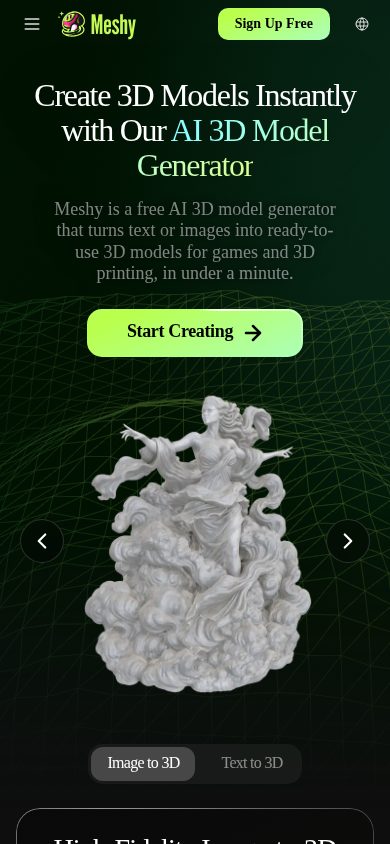
Meshy is an AI-powered 3D content generation platform for game developers, 3D artists, and designers.
AI Panel Score
6 AI reviews
Reviewed
AI Editor ApprovedApproved and published by our AI Editor-in-Chief after full panel analysis.Users generate 3D models by typing a text description or uploading reference images, including multiple views for better geometry accuracy. Meshy processes these inputs into a textured 3D mesh within minutes, which can then be refined using the platform's texture generator, remeshing tools, or animation system. Finished models can be exported directly to major 3D file formats or sent to connected applications like Blender, Unity, Unreal Engine, and Bambu Lab 3D printers through dedicated plugins.
Beyond core generation, Meshy offers texture healing and smart repair tools to fix imperfections in AI-generated materials, a low-poly mode for game-ready topology, and auto-rigging for bipeds and quadrupeds paired with a library of over 500 animation presets. The platform also provides free standalone tools, including a 3D file format converter and an in-browser 3D model viewer, alongside a developer API with SDKs for Python, JavaScript, and Unity covering text-to-3D, image-to-3D, retexturing, remeshing, and rigging/animation endpoints.
Meshy is used by game developers, 3D artists, VFX studios, product designers, and educators for tasks such as generating game assets, prototyping products, creating print-ready STL files, and building VR/AR content. It competes with other AI 3D generation tools such as Luma AI's Genie, Tripo3D, and Rodin. Meshy offers a free tier alongside paid subscription plans, and the company states it holds ISO 27001 and SOC2 certification for enterprise use.

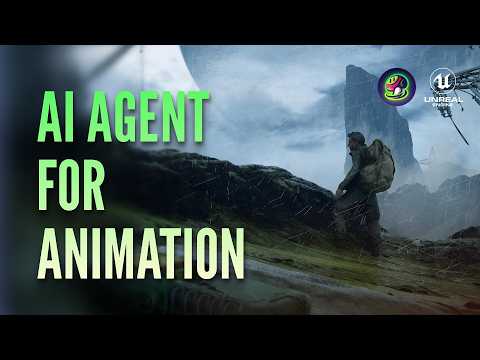
Automatically rigs and animates 3D characters using one-click auto-rigging for bipeds and quadrupeds and 500+ motion presets, exporting to Unity, Unreal, and Blender.
Applies AI-generated PBR textures to any 3D model, including texture healing and smart repair tools to fix imperfections.
Transforms 2D images, concept art, and photos into detailed 3D models, supporting single or multiple reference images for multi-view consistency.
Generates 3D models from multiple reference images, such as front, side, and back views, to improve geometry reconstruction accuracy.
Generates production-ready 3D models with PBR textures from text descriptions, supporting low-poly mode for game assets and high-detail sculpting for cinematic quality.
Optimizes and retopologizes 3D meshes by reducing polygon count while preserving detail, preparing models for real-time applications.
Converts 3D models between formats like FBX, OBJ, GLB, GLTF, STL, USDZ, and BLEND, with batch conversion and texture preservation.
Adds cleaner geometry, sharper hard-surface details, a dedicated Low Poly Mode, and multi-color 3D printing support for production-ready assets.
Lets users view and inspect 3D models directly in the browser, including geometry, textures, and animations, without installing software.
Sends AI-generated models directly to Bambu Studio for printing, with support for multi-color 3MF export.
Official plugins for Blender, Unity, Unreal Engine, Godot, Maya, and 3ds Max allow generating and importing AI 3D models directly inside these editors.
Provides RESTful endpoints and SDKs (Python, JavaScript, Unity) for Text-to-3D, Image-to-3D, texturing, rigging/animation, and remeshing to integrate 3D generation into custom applications.
For individuals starting out with 3D generation, no credit card required
For individual creators wanting faster generation and private ownership of assets
For power users and small teams needing higher credit volumes
Custom pricing for enterprise workflows and teams; contact sales for details, wire transfer payment supported
Real product-market fit for game asset pipelines, priced to try cheaply and scale later.
“Meshy solves a genuine bottleneck for small studios: fast, riggable 3D assets with real export paths. No public funding data, so viability rests on product traction alone.”
20-30 second generation, Blender and Unity plugins, 500+ animation presets, exports to FBX/USDZ/BLEND. That's not a toy. That's a pipeline tool for teams who currently pay contractors for low-poly game assets.
Two questions: does the output quality hold up in production, and will Meshy still exist when your Unreal pipeline depends on it? No public funding data here, so I'm judging by feature depth and SOC2/ISO 27001 claims, which suggest they're courting enterprise deals, not just hobbyists.
$20/month Pro tier is a rounding error for any studio. Competes directly with Tripo3D and Rodin, and the plugin ecosystem (Blender, Unity, Unreal, Maya, 3ds Max) is wider than most rivals claim. Free tier lets you test real output before committing budget.
Competes with Tripo3D, Rodin, and Luma AI's Genie; wider plugin coverage (Maya, 3ds Max, Godot) is a differentiator.
AI-generated 3D assets are still novel to boards; defensible if outputs ship in real products, not just demos.
20-30 second generation and $20 Pro tier mean a studio can validate value within a single sprint.
Replaces contractor spend on low-poly assets and speeds prototyping, a real capability shift not just cost-cutting.
No public funding data; SOC2/ISO 27001 claims and broad plugin investment suggest real revenue, not vaporware.
Small game studios or VFX teams needing fast, riggable prototype or background assets.
Skip if you need hero-quality, hand-finished character assets for a flagship title.
A real production pipeline for game-ready 3D, not just a novelty generator.
“Meshy's plugin depth into Blender, Unity, Unreal, Maya, and 3ds Max signals a team building for studio pipelines, not just hobbyist prompt-to-mesh demos. The craft ceiling is genuinely competitive with Tripo3D and Rodin, though texture fidelity still needs a human pass before shipping.”
500+ animation presets with one-click auto-rigging for bipeds and quadrupeds is deep asset-pipeline thinking, not a gimmick feature. Low Poly Mode plus the Meshy-6 update on hard-surface geometry shows they understand game topology constraints, which is where most text-to-3D tools fall apart.
The plugin surface — Blender, Unity, Unreal, Godot, Maya, 3ds Max, plus Bambu Lab printer export — means this slots into an existing DCC stack rather than living as an isolated web tool. That's the right shape for how studios actually work: generate, refine, retarget, ship.
At $20/month for Pro with private ownership and API access, this is accessible for solo artists but the free tier's CC BY 4.0 attribution requirement is a real constraint for teams building unbranded IP. Texture healing and smart repair tools are a tacit admission that AI textures still need cleanup — that's honest, but it's also labor you're still budgeting for.
$20 gets 1,000 credits. Real cost depends on how many models you throw away.
“Three visible tiers, credit-based, no sales call required. The math hinges on a number Meshy doesn't publish: credits per generation.”
Free tier: 100 credits/month, CC BY 4.0 output, no top-ups. Pro: $20/month, 1,000 credits, private ownership, API access. Studio: $60/month, more credits, same features. Enterprise: custom, wire transfer accepted.
TCO problem: credit cost per model isn't published here. A studio generating hundreds of assets monthly could blow past 1,000 credits fast, forcing the $60 tier or top-up purchases. 12 seats × $20 × 12 = $2,880/year at Pro alone — before overages. Compare Rodin or Tripo3D, similarly credit-metered; category norm is opaque consumption pricing, not just Meshy.
No stated contract term or auto-renewal language in the evidence — monthly billing implied, which is low-risk if true. ISO 27001 and SOC2 claims help procurement move faster. Real ROI: measurable in artist-hours saved on blockout assets, hard to measure on final production quality without testing your own asset pipeline first.
Wire transfer supported for Enterprise, SOC2/ISO claims ease vendor review.
Monthly billing implied, no stated lock-in term found in evidence.
Four tiers listed publicly, no sales call needed except Enterprise.
Time-to-asset is measurable; final-quality yield rate is not disclosed.
Credit-per-generation cost undisclosed, making year-3 spend hard to project.
Solo artists and small studios needing occasional game-ready 3D assets at predictable low volume.
Avoid if your studio needs high-volume daily generation without a clear per-model cost forecast.
Solid mesh-out pipeline, but topology cleanup is still your job on day three
“Meshy gets a workable textured mesh out fast, with real DCC plugins instead of just an export button. The gap between generated blob and game-ready asset is still yours to close.”
First session is genuinely fun: type a prompt, get a textured mesh in the 20-30 second window they advertise. By week two, the questions change. Low Poly Mode helps, but retopology for anything beyond a hero prop still needs Blender's remesh tools or a pass in ZBrush, this isn't Rodin-level clean-mesh-out-of-the-box, it's a strong first draft generator.
The plugin story is the real win. Blender and Unity plugins mean I'm not exporting/importing FBX all day, and the Unreal, Maya, 3ds Max, and Godot coverage is wider than Tripo3D or Luma's Genie currently offer. Auto-rigging plus 500+ motion presets is a genuine time-save for background characters.
Credit economy is the daily friction: 100/month free, 1,000 on the $20 Pro tier, no top-ups on free. Burn through a batch of iterations testing a concept and you're queue-throttled until reset.
20-30 second generation holds up, but texture healing and remesh passes become routine manual steps.
Docs and SDKs (Python, JS, Unity) cover real endpoints, though depth on rigging edge cases is thin.
Free tier's 100 credits/month with no top-ups forces workflow pauses mid-project.
API access, remesh endpoints, and 500+ animation presets on Pro/Studio scale well beyond the free demo experience.
Native Blender, Unity, Unreal, Maya, 3ds Max, Godot plugins mean minimal import/export friction versus competitors.
Solo game devs and small studios who want fast blockout assets and already work inside Blender or Unity.
You need clean, print-perfect topology straight out of generation with zero manual cleanup.
Turns a text prompt into a printable model in 20-30 seconds, which is genuinely wild
“Meshy does the hard part fast and exports everywhere that matters. Whether it survives daily use past the demo depends on stuff the site doesn't show you.”
Twenty to thirty seconds from prompt to textured mesh, per their own meta description. That's the headline and it's a real one — for anyone who's waited on a render, that speed is the whole pitch. Free tier gives you 100 credits a month, no card needed, which is a fair way to kick tires before the $20 Pro plan.
What I can't tell from the outside is the day-3 feel. Texture healing and smart repair tools exist, which tells me the AI output needs fixing often enough to justify building repair tools for it. That's not a knock, it's just honest about where generative 3D still is. Low-poly mode versus high-detail sculpting is a smart split for game devs vs VFX folks.
Plugins for Blender, Unity, Unreal, Godot, Maya cover the real workflows people actually work in, which beats Tripo3D on breadth. No mobile app listed, web/Windows/Mac only — for 3D work that's forgivable, nobody's rigging a character on a phone anyway.
Texture healing and smart repair tools suggest the team is actively patching rough AI output rather than ignoring it.
Plugins for Blender, Unity, Unreal, Godot, Maya, and 3ds Max mean it slots into existing workflows instead of demanding a new one.
Platforms listed are web, Windows, Mac only — no mobile app at all, not even read-only.
Free tier with 100 credits/month and no credit card required is a low-friction first ten minutes.
ISO 27001/SOC2 claims and AWS storage suggest solid backend, but no changelog visible to verify iteration cadence.
Game devs and 3D artists who want fast draft assets to refine, not final art out of the box.
You need mobile access or expect zero cleanup work on generated textures.
Six export formats and a real API. Still text-to-3D in a field full of it.
“Meshy ships breadth — texturing, rigging, 500+ animation presets, plugins for Blender and Unity — that most competitors don't bundle. But 'easiest way to create 3D models' is the kind of superlative every player in this space uses.”
H1 says 'The Easiest Way to Create 3D Models.' I've heard that from Luma's Genie pitch and Tripo3D's landing page too. Doesn't make it false. Means the differentiation has to live in the feature list, not the headline.
And it mostly does. Auto-rigging plus 500+ motion presets is a real bundle — most text-to-3D tools stop at the mesh. Bambu Lab printer integration is a nice specific touch, not vague 'ecosystem' talk. Free tier gives 100 credits/month with CC BY 4.0 licensing, Pro is $20 for 1,000 credits and private ownership.
Exit is fine — GLB, FBX, USDZ, all standard, no lock-in on the output side. What's missing: no changelog visible, no named funding, no team page in the evidence. ISO 27001 and SOC2 claims are good signals for enterprise trust, but I'd want shipping cadence proof before calling this a 3-year bet.
500+ animation presets and Bambu Lab integration are real gaps vs. Luma's Genie, Tripo3D, and Rodin, which lean generation-only.
Exports to FBX, OBJ, GLB, USDZ, STL, BLEND — standard formats, low lock-in if you leave.
ISO 27001/SOC2 claims help, but no changelog, no funding data, no team info visible in evidence.
'Easiest way' is a superlative every 3D-gen competitor also claims; feature list backs some but not all of it.
Bundling generation, texturing, rigging, and animation matches the pattern of tools that survive vs. single-feature ones that got acquired or died.
Game developers and 3D artists who need rigged, textured, export-ready assets without touching a full DCC pipeline.
You need proof of a multi-year roadmap before committing a production pipeline to it.
Common questions answered by our AI research team
Meshy exports 3D models in FBX, OBJ, USDZ, GLB, STL, and BLEND formats. For AI texturing, you can upload models in FBX, OBJ, STL, GLTF, and GLB formats (up to 50MB in the web app).
Yes, Meshy offers a Blender plugin along with a Unity plugin, plus additional integrations for Bambu Studio and Creality Print.
Yes, free users receive 100 credits every month, which automatically reset at 00:00 UTC on the first day of each month. Extra credits can also be earned through other reward methods.
Yes. Premium subscribers fully own their generated models and can distribute and sell them freely. Free users can also sell their models but are asked to credit Meshy in their commercial page description.
Yes. Web app data is stored securely with Amazon Web Services in the United States, and Meshy will not share your data or use it for training without your consent.
Company
MeshyFounded
2023Pricing
From $20/moFree Plan
Available


Meshy is a Los Angeles-based startup that develops an AI platform for generating 3D models from text prompts and images.