DeepDream Generator logo

DeepDream Generator Review

Visit

Text-to-image and video generation across 30+ AI models

Deep Dream Generator is an AI art platform for creating images and videos from text prompts or uploaded images.

AI Panel Score

6.5/10

6 AI reviews

Reviewed

AI Editor Approved

What is DeepDream Generator?

DeepDream Generator is an AI art platform that creates images and videos from text prompts or uploaded base images, drawing on more than 30 AI models including Flux, Stable Diffusion, DALL-E, Ideogram, and ChatGPT image models, plus video generators such as Veo 3, Kling, and Sora 2. Image-to-video animation turns static pictures into short clips, with synchronized AI audio available for video output. A free plan runs on an energy-point system with daily recharge; paid tiers start at $9 per month for Basic and scale through Advanced at $19, Professional at $39, and Ultra at $99. Other capabilities include Deep Style neural style transfer, a surreal Deep Dream image mode, an image and video upscaler, negative prompts, community social features, and commercial use rights on generated work. It suits users who want multi-model image and video generation consolidated in one place.

About DeepDream Generator

The core workflow on Deep Dream Generator involves selecting an AI model, entering a text prompt, and optionally uploading a base image to guide the output. Users can adjust settings such as aspect ratio and image size before generating. Results are displayed in a community gallery where other users can view, like, and comment on creations. Every generated image includes metadata showing the prompt and model used, making it possible to inspect and replicate other users' outputs.

The platform distinguishes itself by aggregating a wide range of third-party and proprietary models under one interface. Proprietary models include SeeDream and DaVinci2, alongside licensed access to models from OpenAI, Google, and others. Video generation is a dedicated feature, with a separate gallery and support for animating still images into clips of up to ten seconds. An energy-based credit system governs generation limits, with different models consuming different amounts of energy per generation.

Deep Dream Generator targets hobbyist artists, digital creators, and users exploring AI-generated imagery without needing technical setup. A free tier is available without requiring an account sign-up, providing a limited energy allowance. Paid subscription plans unlock more energy, access to higher-resolution outputs, and Pro-tier models. Comparable platforms in the category include Midjourney, Adobe Firefly, NightCafe, and Playground AI.

The platform is web-based and requires no local installation or hardware. Community features include trending and latest feeds, user profiles, tagging, and a blog with prompt tutorials. There is no publicly documented API for external developers based on available page content.

Features

AI

  • AI Video Generation (Multi-Model)

    Offers 7 top-tier AI video models in a single platform—including Veo 3, Sora 2, Kling, Hailuo, Seedance, Grok, and MiniMax—supporting text-to-video and image-to-video generation up to Full HD 1080p at 30 FPS.

  • Deep Dream Surreal Image Mode

    Uses Google's original DeepDream convolutional neural network to iteratively enhance and amplify patterns in an image, producing surreal and psychedelic visuals.

  • Deep Style Neural Style Transfer

    Applies a chosen artistic style to a user-uploaded base image using neural networks, with a controllable Effect Strength slider to determine how dominant the style is over the original.

  • Synchronized AI Audio for Video

    Select video models (Veo 3.1, Seedance 1.5, Sora 2, and Kling 2.6) automatically generate contextual sound effects and ambient audio synchronized to the visual content of the video.

  • Text-to-Image Generation (Text 2 Dream)

    Generates art and photorealistic images from text prompts alone, or from a combination of a text prompt and an uploaded base image.

Collaboration

  • Community Social Features

    Provides a social platform where users can create profiles, follow other artists, comment on images, send personal messages, pin favorite works, share to Trending, and iterate on others' creations via a 'Try It' feature.

Core

  • AI Image & Video Upscaler

    Enhances generated images and videos up to maximum supported resolution, available to all paid subscribers with full access unlocked on higher-tier plans.

  • Commercial Use Rights

    All paid monthly subscribers and energy pack purchasers are granted rights to use their generated images and videos for commercial purposes.

  • Energy Point System with Daily Recharge

    Uses a credit-based energy system where rechargeable points regenerate daily (not monthly), supplemented by purchasable one-time energy packs that never expire.

Customization

  • Negative Prompts

    Allows users to specify elements they do not want included in generated images, giving finer control over the AI's creative output to better match their artistic vision.

Security

  • Secure Payment via Stripe

    Processes all payments through Stripe (PCI DSS Level 1 certified) without storing full card data, retaining only the last four digits and country of residence.

Support

  • Help & Support Center with Discord Community

    Offers a dedicated Help & Support page with guides and FAQs, plus an active Discord community for instant help, feature announcements, and peer-to-peer assistance among AI artists.

Preview

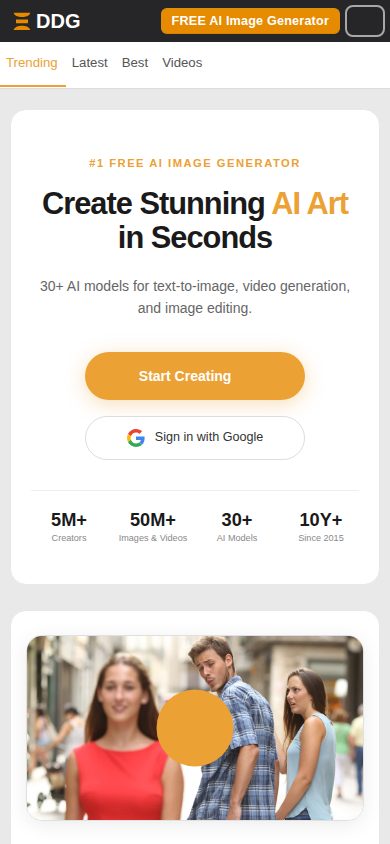
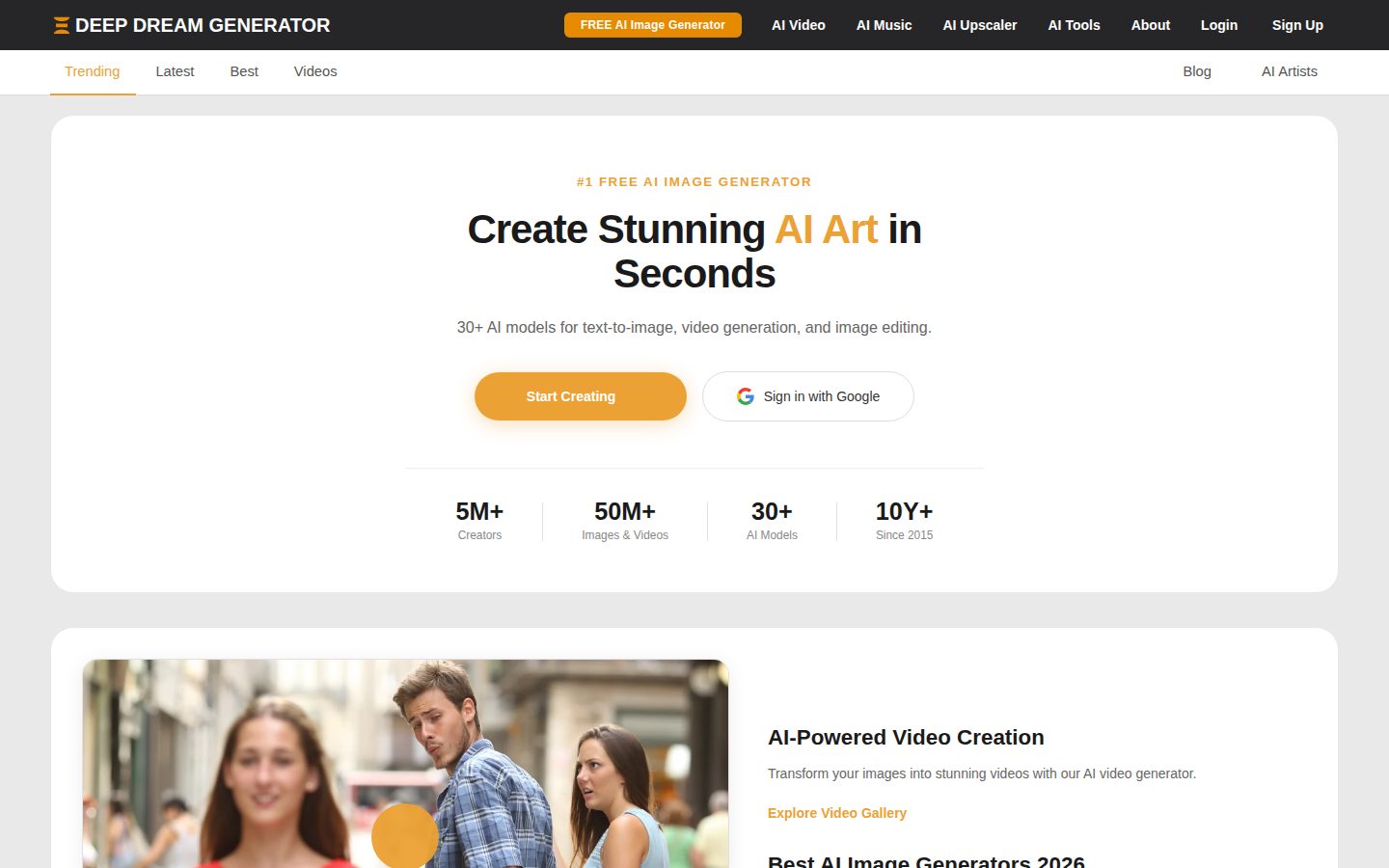
DeepDream Generator desktop previewDeepDream Generator mobile preview

Pricing Plans

Free

Free

Basic access for casual users with limited energy based on user level

  • Rechargeable energy based on user level
  • Storage based on user level
  • Post to Trending based on user level
  • No AI videos or music included
  • No PRO model access

Basic

$9/monthly

Entry-level paid plan for users wanting PRO features and regular AI creation

  • 750 energy per month (up to 150 AI images or 10 AI videos)
  • 10 AI music generations per month
  • 10GB storage
  • Post 5 images/day to Trending
  • Access to PRO models and AI video generators
  • Commercial use rights

Advanced

$19/monthly

Mid-tier plan for regular creators needing more energy and storage

  • 2,000 energy per month (up to 500 AI images or 30 AI videos)
  • 30 AI music generations per month
  • 20GB storage
  • Post 10 images/day to Trending
  • Access to PRO models and AI video generators
  • Commercial use rights
Popular

Professional

$39/monthly

Best value plan for serious creators with high output needs

  • 5,000 energy per month (up to 1,250 AI images or 80 AI videos)
  • 80 AI music generations per month
  • 50GB storage
  • Post 15 images/day to Trending
  • Access to PRO models and AI video generators
  • Commercial use rights

Ultra

$99/monthly

High-volume plan for power users and professionals with maximum limits

  • 15,000 energy per month (up to 3,750 AI images or 250 AI videos)
  • 250 AI music generations per month
  • 200GB storage
  • Post 25 images/day to Trending
  • Access to PRO models and AI video generators
  • Commercial use rights

AI Panel Reviews

The Decision Maker

The Decision Maker

Strategic bet, vendor viability, timing, adoption approval
5.2/10

A model aggregator for hobbyists, not a vendor you bring to the board.

Thirty-plus models under one roof is a real convenience play. It's a consumer toy dressed up as a platform, and that's fine — just know which one you're buying.

$9 a month gets you 150 AI images or 10 videos, aggregating Flux, GPT Image 2, Sora 2, and Veo 3 behind one login. No API. No docs. Releases are logged on an updates page. That tells you who this is built for — solo creators posting to a Trending feed, not teams building a pipeline.

Three questions: does the vendor survive three years running licensed access to OpenAI and Google models at consumer prices? Unknown — no funding data, no team size disclosed. Does this advance anything strategic, or just let hobbyists avoid five separate subscriptions?

Compared to Midjourney or Adobe Firefly, this has no enterprise story, no governance, no commercial infrastructure play. Fine for a creator experimenting. Nothing here I'd defend to a board in 18 months.

Competitive Positioning5.0

Peers use Midjourney or Firefly for real work; DDG's model breadth is a novelty, not a market-moving choice.

Reputation Risk4.5

Not sketchy, but a community gallery with public prompts and likes reads as consumer, not enterprise-credible.

Speed to Value6.5

No signup needed to start generating; $9/month unlocks 150 images immediately — fast for individual output.

Strategic Fit3.5

Consumer hobbyist tool with no API — doesn't integrate into a company workflow or advance a business capability.

Vendor Viability4.0

No public funding, team size, or time-in-market data; margin depends on reselling licensed third-party model access.

Pros

  • 30+ models including Flux, GPT Image 2, Sora 2, Veo 3 in one interface
  • Free tier with no signup required
  • Commercial use rights included on all paid tiers

Cons

  • No public API for developers or workflow integration
  • No funding or team transparency to assess vendor durability
  • Energy credit system adds friction versus flat-rate competitors

Right for

Solo hobbyists who want to try many AI models without juggling subscriptions.

Avoid if

Avoid if you need an API, governance, or a vendor you can defend to a board.

The Domain Strategist

The Domain Strategist

Craft and strategy in the product's domain — adapts identity per category, same lens
6.6/10

A model aggregator, not a creative point of view — useful, but nobody builds a brand system on it.

Thirty-plus models under one roof is a real convenience, not a craft advantage. This is a sampler platter, and sampler platters don't produce a signature look.

Thirty-plus models — Flux, SD, GPT Image 2, Ideogram, plus Veo 3 and Sora 2 for video — is breadth, not depth. That's the tell: no proprietary pipeline discipline, just licensed access stitched into one UI. Compare that to Midjourney's single aesthetic obsession, refined version over version, or Adobe Firefly's tight integration into Photoshop layers and brand kits. DDG doesn't build a visual identity, it brokers other people's.

The community gallery with public prompts and 'Try It' remixing is fine for hobbyists exploring style, wrong for any studio protecting a client's visual language. Energy-based credits ($9 for 750 energy, 150 images) work for casual output, not sustained production sprints.

No API or docs I could find, though releases are logged on an updates page. That's a dead end for any senior creative wanting to pipe outputs into a real production stack — Figma, DAM, automated pipelines. Fine as an exploration sandbox; a constraint the moment you need repeatability or brand control at scale.

Category Positioning7.5

Genuinely differentiated by model breadth (Veo 3, Sora 2, Kling, DaVinci2) versus single-model rivals like Midjourney or Playground AI.

Domain Fit6.0

Built for hobbyist exploration via community gallery and remixing, not studio-grade brand consistency work.

Integration Surface5.5

No public API or docs means zero pipeline into Figma, DAM, or production tooling — a dead end at scale.

Long-term Implications6.0

Energy credits and model-hopping create no durable visual language; you're renting looks, not building one.

Strategic Depth5.5

Aggregates 30+ third-party models rather than refining a proprietary aesthetic the way Midjourney does.

Pros

  • 30+ models including Veo 3, Sora 2, Kling under one interface
  • No signup required to start generating
  • Commercial use rights included on all paid tiers

Cons

  • No API or docs — can't integrate into a real production pipeline
  • Public prompt metadata undermines any proprietary creative direction
  • Energy system caps serious output at low tiers ($9 gets you 150 images)

Right for

Hobbyist creators and solo experimenters who want to sample many AI models without committing to one aesthetic.

Avoid if

You're a studio needing brand-consistent output, API integration, or a defensible creative point of view.

The Finance Lead

The Finance Lead

Money, total cost of ownership, contracts, procurement math
7.2/10

$9 gets you 150 images. Energy math is honest, just granular.

Five tiers, all visible, no sales call needed. Credit system takes math to model real cost.

$9/month Basic gets 750 energy, up to 150 images or 10 videos. Professional at $39 — the 'popular' tier — jumps to 5,000 energy, 1,250 images. That's a 4.3x price step for 8.3x image output. Decent unit economics if you scale up.

Team of 50 doesn't fit this product — it's built for solo hobbyists, not seat-based procurement. Year 3 TCO for one power user: Professional plan × 36 months = $1,404, plus energy packs when you blow through monthly allotment (packs don't expire, at least). No published overage rate per-generation, so budgeting past your tier means guessing.

Cancel anytime, benefits run to end of billing period — cleaner than most SaaS auto-renewal traps. Stripe billing, no stored card data. Compare to Midjourney's flat $10-$120 tiers — similar shape, different currency (energy vs. fast-hours). No API, so this stays a consumer tool, not a pipeline you can invoice against.

Billing & Procurement6.5

Stripe-processed, PCI DSS Level 1, but no invoicing option suited to procurement teams — this is a consumer card-on-file model.

Contract Flexibility7.8

Monthly billing, cancel anytime, benefits persist through paid period — no long-term lock-in evident.

Pricing Transparency8.5

Five tiers with exact energy-to-output ratios listed publicly, no sales call required.

ROI Clarity6.0

Commercial use rights are clear but value per energy point requires manual math across 30+ models.

Total Cost of Ownership7.0

Energy packs never expire, but no published overage rate makes above-tier costs unpredictable.

Pros

  • Full pricing visible with exact energy-to-output ratios, no demo gate
  • Energy packs never expire, unlike typical monthly-reset credit systems
  • Cancel anytime with benefits through end of billing period

Cons

  • No published per-generation overage rate beyond plan limits
  • No API — unsuitable for teams wanting programmatic cost tracking
  • Energy system requires math to compare against flat-rate competitors like Midjourney

Right for

Solo hobbyist creators who want multi-model access without per-seat contracts.

Avoid if

Avoid if you need API access or predictable per-unit costs for team budgeting.

The Domain Practitioner

The Domain Practitioner

Daily hands-on reality in the product's domain — adapts identity per category, same lens
6.8/10

30+ models under one roof, but no layer panel, no history, no real editing surface

DeepDream Generator is a model aggregator, not a workspace. Great for prompt-and-pray sessions, thin for anyone doing iterative creative direction.

Model breadth is the pitch — Flux, SDXL, DALL-E, Sora 2, Veo 3 in one dropdown. That's genuinely useful for comparing outputs without juggling five tabs. But the workflow stops at 'generate, view in gallery, maybe upscale.' No layer stack, no masking tools, no inpainting mentioned anywhere in the feature list. Compare that to Playground AI's canvas or Firefly's Photoshop tie-in — those let you keep working on an image. Here, iteration means re-rolling with a tweaked prompt and hoping.

The energy-credit system is the daily fight. Different models burn different amounts, so you're doing mental math before every generation instead of just making. Daily recharge helps casual use but Basic at $9/month caps you at 150 images — thin for someone testing styles across 30 models.

Community 'Try It' remixing is a nice discovery layer, but it's social, not a real production pipeline.

Day-3 Reality6.5

Model-switching novelty fades fast once you need to actually refine a piece, not just regenerate it.

Documentation Practitioner-Fit5.0

Blog has prompt tutorials but no docs or API that I could find — no deep technical reference for power users.

Friction Surface6.0

Energy accounting per-model adds a constant background calculation to every session.

Power-User Depth6.5

Negative prompts and Effect Strength sliders exist, but no batch tools or version history to scale a real practice.

Workflow Integration5.5

No API, no docs for external tooling — it's a destination site, not something that plugs into a design pipeline.

Pros

  • 30+ models including Veo 3, Sora 2, Kling accessible without separate accounts
  • No signup needed to start generating
  • Commercial use rights included on all paid tiers

Cons

  • No API or docs for integrating into a broader design pipeline
  • Energy-credit math varies per model, adding cognitive overhead to every generation
  • No inpainting, layers, or masking — limited iterative control compared to Playground AI

Right for

Hobbyist artists who want to sample many AI models without committing to one ecosystem.

Avoid if

Avoid if you need an editable canvas or pipeline integration rather than a prompt-and-gallery workflow.

The Power User

The Power User

Daily human experience, onboarding, polish, learning curve, reliability
6.9/10

30 models under one roof, but the meter's always running on you

No signup to start playing is a genuinely nice touch. The energy system, though, is the kind of thing you only fully understand after you've burned through it once.

No account needed to start, which is rare and refreshing. You throw in a prompt, pick from 30-plus models including Flux, GPT Image 2, and Sora 2, and you're generating in under a minute. That first ten minutes feels like play, not paperwork. Compare that to Midjourney's Discord-only onboarding for years, and this feels downright generous.

But the energy credit system is the kind of thing that reads clean on a pricing page and gets confusing fast in practice. Different models eat different amounts, daily recharge versus monthly packs, and at $9/month for Basic you're capped at roughly 150 images or 10 videos. That math takes a spreadsheet to internalize.

Mobile isn't mentioned anywhere in the platform list — web only. For a tool built around casual, on-the-go creation, that's a real gap three months in, not a footnote. The community gallery and 'Try It' remix feature are the sleeper strength here, honestly more engaging than the generation itself.

Daily Polish6.5

Community feed, tagging, and metadata-on-every-image show real care, and an updates page tracks releases, but no docs page for a tool this feature-dense.

Learning Curve6.5

30+ models and an energy economy across 5 tiers means real depth, but that same sprawl means a slow climb to mastery.

Mobile Parity4.0

Platform is web-only, no mobile app or responsive claims anywhere on the site.

Onboarding Experience8.0

No signup required to generate is a genuinely low-friction start, rare in this category.

Reliability Feel6.0

Stripe-based payments and cancel-anytime billing suggest solid plumbing, but no public uptime or error-state evidence to lean on.

Pros

  • No signup needed to start generating
  • 30+ models including Veo 3, Sora 2, and Kling under one roof
  • Commercial use rights included on paid tiers
  • Community remix feature ('Try It') adds real stickiness

Cons

  • Energy credit system takes real effort to understand
  • No mobile platform at all
  • No public API for developers
  • Free tier locks out video and music entirely

Right for

Hobbyist creators who want to experiment across many AI models without committing to one ecosystem.

Avoid if

You need mobile creation or predictable flat-rate pricing instead of a credit meter.

The Skeptic

The Skeptic

Contrarian. Watch-outs, deal-breakers, broken promises, category patterns
6.4/10

A model aggregator, not a moat. Wrapper risk is the whole story here.

DeepDream Generator bundles 30+ third-party models — Flux, GPT Image 2, Veo 3, Sora 2 — behind one credit system. The value is convenience, not proprietary tech, and convenience is the first thing that gets copied.

No API or docs I could find, though releases are logged on an updates page. That's the flag I'd start with. Category norm for a platform this size is at least a public roadmap or changelog cadence — this one has a blog and a Discord. Fine for hobbyists, thin for anyone betting three years on it.

The pitch — 'best free AI image generator', 'in seconds' — is the kind of superlative every NightCafe and Playground AI clone uses too. Underneath, most of the actual generation is licensed: OpenAI, Google, Kling, Sora 2. Two proprietary models, SeeDream and DaVinci2, are the only real differentiation, and they're unproven against Midjourney's brand pull.

Exit portability's actually decent — prompts and metadata are visible, so recreating work elsewhere is possible. But the energy-credit system ($9 gets you 150 images) locks you into their math, and nothing here suggests they own any foundation model long-term. If Google or OpenAI changes licensing terms, this whole layer could get squeezed overnight.

Competitive Differentiation5.5

Model breadth is real but Midjourney and Adobe Firefly compete on brand and quality, not model count.

Exit Portability7.0

Visible prompt/model metadata means outputs are reproducible elsewhere, a genuine plus.

Long-term Viability6.0

Updates page aside, no docs, API, or named company I could find — thin public signal for a 3-year bet.

Marketing Honesty6.0

Headline superlatives ('in seconds', 'best free') aren't unusual, but feature claims (30+ models, 1080p video) match what's listed.

Track Record Match5.8

Aggregator-of-models pattern has produced both survivors (Playground AI) and quiet shutdowns; no funding data shown here.

Pros

  • 30+ models including Veo 3, Sora 2, Kling under one credit system
  • No signup required to start generating
  • Commercial use rights included on all paid tiers

Cons

  • No public API or docs limits integration into other workflows
  • Differentiation rests on licensing, not proprietary tech
  • Energy-credit pricing is opaque compared to flat per-image cost

Right for

Hobbyists who want to try many models without juggling separate subscriptions.

Avoid if

Avoid if you need an API, enterprise support, or a platform with a visible long-term roadmap.

Buyer Questions

Common questions answered by our AI research team

Pricing

How much does DeepDream Generator cost per month?

The Basic Plan is $9/month with 750 monthly energy, 150 AI images, and 10GB storage. Higher tiers are Advanced at $19/month, Professional at $39/month, and Ultra at $99/month, plus a $0/month Free Plan.

Features

What AI models does DeepDream Generator support?

It offers 30+ AI models including Flux, Stable Diffusion, GPT Image 2, and Ideogram, plus video models Veo 3, Kling, and Sora 2. Tools include the AI Image Generator, AI Video, AI Music, and AI Upscaler.

Setup

Do I need an account to use DeepDream Generator?

No signup is required to begin creating — you enter a text prompt, select an AI model, and generate. New users receive complimentary energy, and signing up for a free or paid plan unlocks expanded features and more capacity.

Security

Does DeepDream Generator store my credit card details?

Payments are processed through Stripe, and direct card details are not stored by the platform. You can cancel your subscription at any time via the billing portal, and benefits and energy remain active until the end of the billing period.

Pricing

Can I use DeepDream Generator images commercially?

Yes — you retain rights to the images you create for personal or commercial use, and downloads include no watermarks. Commercial use of generated images and videos requires a paid subscription or an energy pack purchase.

Product Information

Platforms

web

About Deep Dream Generator

Deep Dream Generator is an online AI art platform offering text-to-image and image-to-image generation tools using multiple AI models.

Resources

Blog
Changelog

Also in AI Image Generation